
How to Address Unresolved Resentment in Marriage

Unresolved resentment in marriage is defined as an ongoing emotional injury that quietly erodes trust, connection, and goodwill between partners. Unlike a single argument, it accumulates over months or years of unaddressed grievances, dismissed feelings, and repeated patterns of hurt. The good news is that resentment signals failing communication patterns and unmet emotional needs, not a broken marriage. Research-backed approaches built around structured communication, micro-repairs, and emotional safety give couples a clear path to heal. Couplesfightschool teaches these exact methods through its F.I.G.H.T. Plan® framework, helping couples move from bitterness back to genuine connection.
How to address unresolved resentment in marriage through structured communication
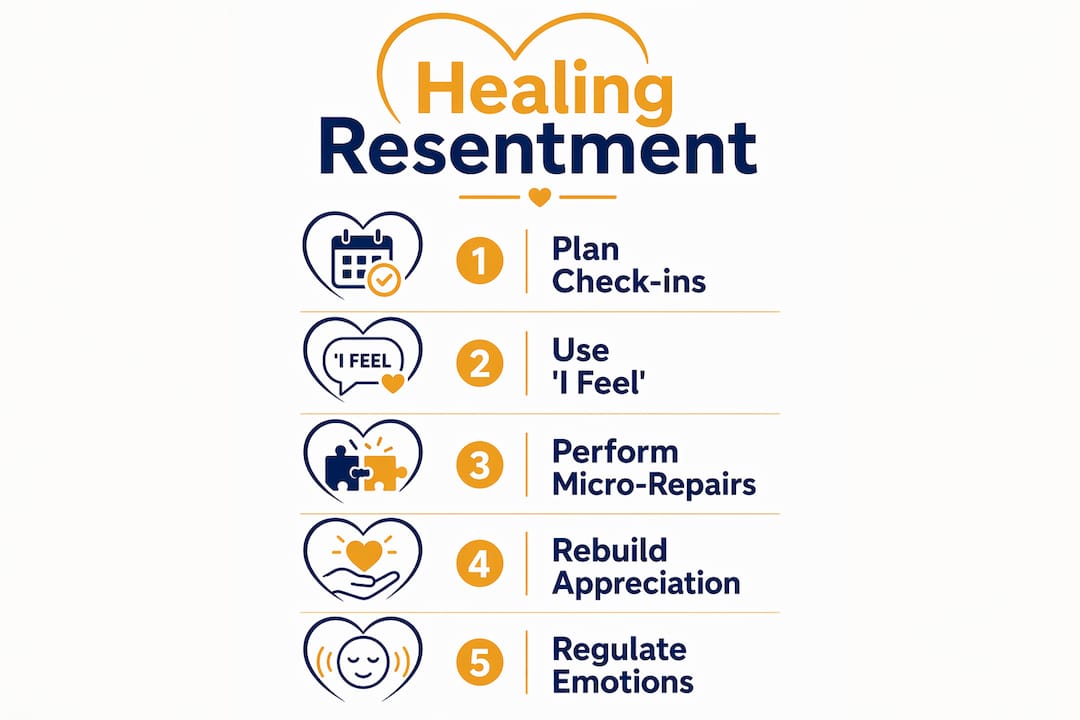
The most effective tool for stopping resentment before it hardens is a regular, planned conversation. Couples who dedicate weekly 20–30 minute check-ins using “I feel” statements prevent silent grievances from piling up. That consistency builds a habit of honesty that makes difficult conversations feel less threatening over time.
“I feel” statements are the engine of this process. Instead of saying “You never listen to me,” you say “I feel unheard when our conversations get cut short.” That single shift removes the accusation and opens space for your partner to respond with curiosity rather than defense. Effective communication in marriage depends on this kind of precision.

Each check-in should end with one concrete action item per partner. Vague commitments like “I’ll try harder” dissolve within days. A specific commitment like “I will put my phone away during dinner this week” creates a measurable moment your partner can acknowledge. That acknowledgment is itself a repair.
Here is a simple structure to follow for each weekly check-in:
- Open with appreciation. Name one thing your partner did well that week before raising any concern.
- Use “I feel” statements only. No “you always” or “you never” language.
- State one specific request. Make it concrete, observable, and achievable within seven days.
- Confirm understanding. Each partner repeats back what they heard before responding.
- Close with a positive. End the session with a shared moment, even a brief one.
Pro Tip: Set a recurring calendar reminder for your check-in. Couples who schedule these conversations are far more likely to hold them than couples who rely on “finding the right moment.”
What are micro-repairs, and how do small changes heal resentment?
Micro-repairs are small, specific behavioral changes completed within a short window, typically 12–24 hours after a request is made. Micro-repairs accumulate quick wins that rebuild trust gradually, without requiring a single dramatic breakthrough conversation. That is a critical distinction. Most couples wait for the “big talk” that will fix everything. It rarely comes, and waiting for it allows resentment to deepen.
The power of micro-repairs lies in their specificity and speed. Consider these examples:
- Send a message when running late. A two-sentence text prevents the story your partner tells themselves while waiting: “They don’t respect my time.”
- Complete one requested chore within 24 hours. Adopting a 24-hour rule for behavior changes breaks the cycle of perceived inaction that feeds resentment.
- Acknowledge your partner’s effort out loud. “I noticed you handled the kids’ bedtime alone tonight. Thank you.” That sentence costs nothing and deposits directly into the emotional bank account.
- Follow through on a small promise. Pick up the item you said you would grab from the store. Keep the appointment you committed to. Small follow-through signals reliability.
- Repair after a sharp word. If you snapped, circle back within the hour. “I was short with you earlier. That wasn’t fair.” A timely repair prevents one bad moment from becoming a stored grievance.
The goal is not perfection. The goal is a pattern your partner can see and trust. Micro-repairs dismantle resentment systematically without requiring emotional catharsis. That makes them sustainable even during high-stress periods.
Pro Tip: Keep a mental note of one micro-repair you can complete before the day ends. Consistency over two weeks produces a noticeable shift in emotional tone.
How does rebuilding appreciation help overcome resentment in marriage?
Contempt is resentment in its advanced form. Contempt is the strongest predictor of divorce, and it grows directly from unchecked bitterness. It shows up as eye-rolling, sarcasm, and a quiet sense of moral superiority over your partner. Once contempt takes hold, it poisons every interaction, including neutral ones.
The antidote is not simply “being nicer.” It requires a deliberate shift in the emotional ecosystem of the relationship. Gratitude cannot coexist with resentment. Practicing appreciation actively crowds out bitterness by redirecting attention toward what your partner contributes rather than what they fail to do.
Practical ways to shift from contempt mode to appreciation mode include:
- Name one specific thing you appreciate daily. Not “you’re great” but “you made coffee before I woke up and that mattered to me.”
- Use gentle start-ups in conflict. Begin difficult conversations with a soft tone and a specific behavior, not a character judgment.
- Validate emotional injuries. When your partner says they felt hurt, say “That makes sense” before explaining your side. Validation is not agreement. It is acknowledgment.
- Stop blaming in marriage and shift to mutual accountability. Both partners carry responsibility for the emotional climate of the relationship.
“Resentment is not a character flaw. It is an emotional injury that requires changing the relationship’s emotional ecosystem to heal. Shifting focus from blame to rebuilding shared emotional meaning is the path forward.”
— Dr. Daniel A. Franz
Successful couples use repair attempts during conflict, statements or actions that de-escalate negativity before it spirals. A repair attempt can be as simple as “I don’t want to fight about this. Can we slow down?” That sentence, delivered sincerely, interrupts the escalation cycle.
What common challenges arise when resolving marital conflicts?
The most common obstacle is trying to have a productive conversation while both partners are physiologically activated. Resentment is cyclical, and conversations escalate when emotional safety is absent. When heart rate climbs and adrenaline spikes, the brain shifts into threat mode. Rational problem-solving becomes nearly impossible.
The solution is regulated communication. Pause the conversation before it escalates. Take 5–20 minutes to self-calm through slow breathing, a short walk, or quiet distraction. Then return to the conversation with a specific agreement: “I want to talk about this. I need 10 minutes first.” That pause is not avoidance. It is preparation.
The table below compares two common approaches couples take when dealing with resentment, and what actually works:
| Approach | What couples do | What actually works |
|---|---|---|
| Wait for the right moment | Delay conversations indefinitely | Schedule weekly check-ins with a clear structure |
| One big cathartic talk | Expect one conversation to fix everything | Use micro-repairs and consistent small changes |
| Blame-focused discussion | Focus on who is at fault | Use “I feel” statements and mutual accountability |
| Silence after conflict | Withdraw and hope it passes | Use repair attempts within hours of the incident |
| Expecting instant forgiveness | Demand resolution immediately | Allow time while maintaining consistent behavior |
Another common mistake is avoiding conflict entirely. Avoidance feels like peace, but it is actually resentment storage. Every unspoken grievance adds weight to the relationship. The couples who heal are not the ones who fight less by saying nothing. They are the ones who learn to diffuse conflict constructively and address issues before they calcify.
Understanding your own emotional triggers in relationships is also part of this work. When you know what activates you, you can pause before reacting and choose a response that moves the conversation forward instead of sideways.
Key Takeaways
Addressing unresolved resentment in marriage requires consistent micro-repairs, structured communication, and a deliberate shift from contempt to appreciation, not a single breakthrough conversation.
| Point | Details |
|---|---|
| Schedule weekly check-ins | Use 20–30 minute structured sessions with “I feel” statements and one concrete action item per partner. |
| Apply the 24-hour rule | Complete small requested behavior changes within 24 hours to build measurable trust quickly. |
| Replace contempt with appreciation | Name specific daily appreciations to shift the emotional tone before contempt takes root. |
| Use repair attempts early | De-escalate conflict with a calm statement before physiological arousal shuts down rational conversation. |
| Avoid waiting for one big fix | Consistent small changes over time heal resentment more reliably than a single cathartic conversation. |
What I’ve learned about healing resentment that most articles won’t tell you
Most advice on resentment focuses on communication techniques, and those techniques matter. But after years of working with couples in high-conflict marriages, I have seen a pattern that goes deeper than any script or framework.
The couples who stay stuck are not the ones who lack communication skills. They are the ones who are waiting for their partner to go first. Each person holds their appreciation, their repair attempt, their vulnerability, waiting for proof that it is safe to offer it. That standoff can last years.
What actually breaks it is one partner deciding to move without a guarantee. Not because their grievances are invalid, but because they want the marriage more than they want to be right. That is not weakness. That is the most courageous thing I see in this work.
Consistent behavioral change is the pathway to healing, not a single dramatic conversation. I have watched couples transform their emotional climate in six to eight weeks simply by committing to micro-repairs and weekly check-ins. The resentment did not vanish overnight. But the direction changed. And direction is everything.
If you are reading this and feeling like the gap between you and your partner is too wide, I want you to know that the gap is almost always smaller than it feels. Resentment distorts perception. It makes distance feel permanent when it is not. Start with one micro-repair today. Not tomorrow. Today.
— Carlos
What Couplesfightschool offers couples dealing with resentment
Knowing what to do and actually doing it under emotional pressure are two different skills. Couplesfightschool was built to close that gap.

The couples communication conflict resolution course teaches the exact frameworks covered in this article, including structured check-ins, repair attempts, and emotional regulation tools, in a format you can work through at your own pace. For couples who want direct support, online coaching for couples connects you with licensed professionals who specialize in high-conflict and resentment-heavy relationships. Both paths are grounded in the F.I.G.H.T. Plan® and built for couples who are serious about lasting change.
FAQ
What is unresolved resentment in marriage?
Unresolved resentment in marriage is an accumulation of emotional injuries from repeated unaddressed grievances, dismissed feelings, or unmet needs. It differs from a single argument because it builds over time and erodes trust and connection steadily.
How long does it take to overcome resentment in marriage?
Healing resentment is a gradual process built on consistent behavioral change rather than a single conversation. Most couples notice a meaningful shift in emotional tone within six to eight weeks of applying micro-repairs and structured check-ins.
What is the difference between resentment and contempt?
Resentment is stored hurt and bitterness from unresolved conflict. Contempt is resentment that has hardened into sarcasm, eye-rolling, and moral superiority, and it is the strongest predictor of divorce in a marriage.
Can a marriage recover from deep resentment?
Yes. Resentment signals unmet needs and communication breakdowns, not permanent incompatibility. Couples who commit to consistent repair, emotional safety, and mutual accountability can rebuild connection even after years of accumulated hurt.
What is the fastest way to start healing resentment today?
Complete one micro-repair within the next 24 hours: acknowledge your partner’s effort, follow through on a small promise, or send a brief message that shows you are thinking of them. Small, timely actions build trust faster than waiting for the perfect conversation.