
Why Couples Feel Unheard During Arguments
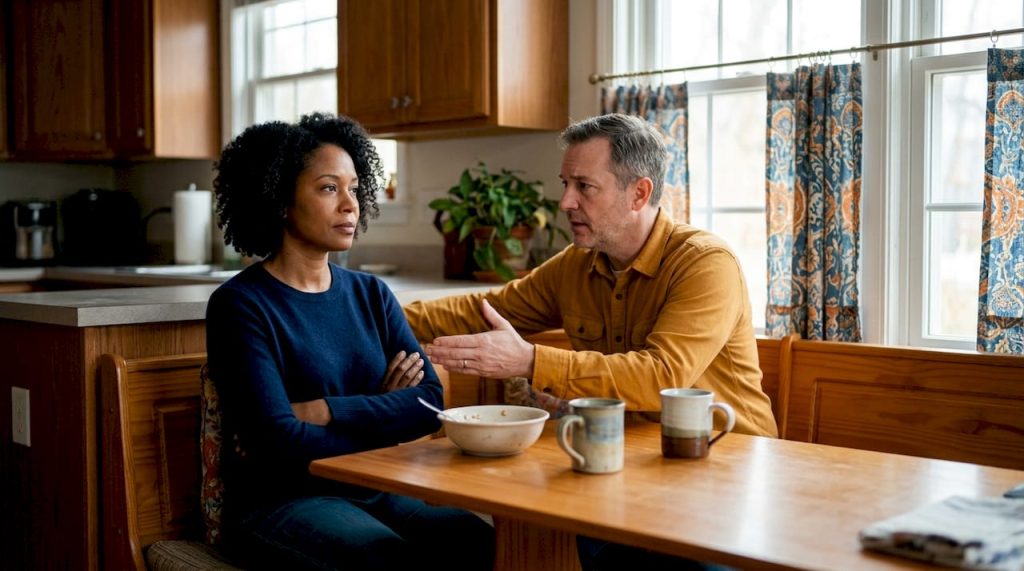
Feeling unheard during arguments is defined as a nervous system response, not a character flaw. When conflict triggers your brain’s threat detection system, your body shifts into survival mode. That shift physically reduces your capacity to listen, reason, and empathize. The result is two people talking past each other, not because they don’t care, but because their biology is working against them. Understanding this distinction is the first step toward changing it. Couplesfightschool, founded by licensed mental health professionals Carlos Todd and Natasha Pemberton-Todd, teaches couples exactly how to work with this biology rather than against it.
Why couples feel unheard during arguments: the neuroscience
The core reason partners feel unheard during conflict is nervous system activation that shuts down empathy and complex communication processing. When your brain perceives a threat, whether physical or emotional, it triggers fight, flight, freeze, or fawn survival responses. Your prefrontal cortex, the part responsible for reasoning, listening, and emotional regulation, goes offline. You are no longer fully capable of hearing your partner, even if you want to.
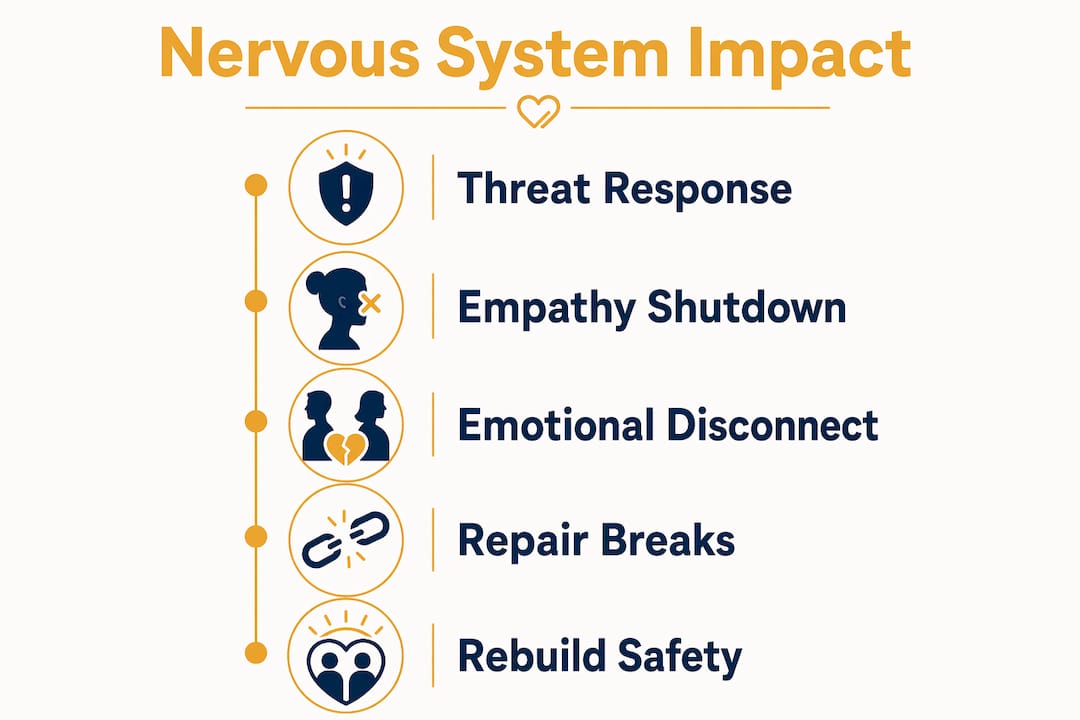
This state is called “flooding.” John Gottman’s research describes flooding as a physiological state where the body is so overwhelmed that rational conversation becomes impossible. Your heart rate rises, your muscles tense, and your mind narrows to self-protection. Your partner experiences the same thing on their end, creating a cycle of mutual nervous system activation that escalates conflict rather than resolving it.
The critical insight here is that neither partner is choosing to be dismissive. The brain is doing what it was designed to do: protect you. That protection comes at the cost of connection.
- Fight response: Raises voice, attacks, or criticizes to regain control.
- Flight response: Shuts down, leaves the room, or changes the subject.
- Freeze response: Goes blank, can’t speak, feels paralyzed.
- Fawn response: Agrees to end conflict without genuine resolution.
Each of these responses makes the other partner feel ignored, dismissed, or abandoned. The emotional disconnect in fights deepens with every unresolved cycle.
Pro Tip: Take a structured break of at least 20 minutes before resuming a heated conversation. This is the minimum time your nervous system needs to return to a regulated state where real listening is possible.

How do the Four Horsemen and demand-withdraw cycle make things worse?
Two well-documented patterns explain why communication breakdown in couples becomes self-reinforcing. The first is John Gottman’s Four Horsemen: criticism, contempt, defensiveness, and stonewalling. Gottman’s research shows these four behaviors predict relationship dissolution with over 90% accuracy when present without effective repair. That number reflects how destructive these patterns are when left unchecked.
Contempt is the most damaging of the four. It communicates disgust or superiority toward your partner. Eye-rolling, mockery, and sarcasm all qualify. Contempt is the single greatest predictor of divorce, and it destroys the emotional safety that listening requires. When your partner feels looked down on, they stop sharing. When they stop sharing, you stop hearing them. The cycle locks in.
The second pattern is the demand-withdraw cycle. One partner pursues connection or resolution by pressing, asking, or criticizing. The other withdraws to regulate their own overwhelm. The pursuer reads withdrawal as rejection and pushes harder. The withdrawer feels more flooded and pulls back further. A review of over 70 studies confirms this cycle is strongly linked to lower relationship satisfaction, anxiety, and increased risk of relationship breakdown.
Pro Tip: If you notice your partner withdrawing, resist the urge to pursue harder. Name what you see instead: “I can see you need a moment. I’ll be here when you’re ready.” That one sentence can interrupt the entire cycle.
The demand-withdraw pattern is often misread as a disagreement about the topic at hand. It is actually both partners trying to preserve their own emotional safety in the only way they know how. Resolution is impossible until safety is restored for both people.
Stable couples, by contrast, maintain roughly a 5:1 ratio of positive to negative interactions during conflict. That ratio is not about avoiding hard conversations. It is about building enough goodwill that repair attempts land.
Why do partners argue about surface issues and miss the real need?
Arguments about dishes, schedules, or money are rarely about dishes, schedules, or money. Couples argue about surface issues because they lack the safety to reveal the tender emotional needs underneath. The real conversation is usually about feeling unchosen, unappreciated, or afraid of being left.
Primary emotions like fear and hurt sit beneath the surface. Secondary emotions like anger and frustration are what partners actually express. Primary emotions get covered by secondary ones because vulnerability requires safety, and safety disappears fast during conflict. So your partner hears your complaint about the dishes and receives it as “you think I’m a bad partner.” You meant “I feel unseen.” Neither of you is wrong. Both of you are missing each other.
There is also a listening mode mismatch that makes this worse. One partner seeks emotional validation. The other processes analytically and offers solutions instead of empathy. The first partner feels dismissed. The second partner feels confused because they were trying to help. Both partners leave the conversation feeling unheard.
- Fear of rejection shows up as criticism or withdrawal.
- Fear of being unchosen shows up as jealousy or controlling behavior.
- Fear of being unseen shows up as repeated complaints about the same issue.
- Fear of abandonment shows up as clinging or escalating arguments.
Without a culture of appreciation between arguments, any conflict event gets interpreted as a character attack rather than a cry for connection. Building that culture is not optional. It is the foundation that makes hearing each other possible.
How can couples create safety and truly hear each other?
Effective conflict resolution starts before the argument begins. The nervous system needs a baseline of safety to function well during disagreement. Couples who fight less and connect more build that baseline through daily habits, not just conflict techniques.
Here is a practical sequence for creating safety during arguments:
- Regulate first. If you feel flooded, call a break. Use the 20-minute minimum. Do something genuinely calming, not ruminating on the argument.
- Use a soft startup. Begin with “I feel…” rather than “You always…” Soft startups reduce defensiveness before the conversation gains momentum.
- Name your need, not your complaint. “I need to feel like a priority” lands differently than “You never make time for me.”
- Match your partner’s listening mode. Ask: “Do you need me to listen, or do you want help solving this?” That one question prevents the empathy-versus-solutions mismatch.
- Make a repair attempt early. Humor, a touch on the arm, or a simple “I don’t want to fight with you” can interrupt escalation before it peaks.
Repair attempts during conflict predict long-term relationship resilience. Couples who prioritize repair even mid-conflict report better satisfaction outcomes over time. The goal is not a perfect conversation. The goal is a repaired one.
Pro Tip: Learn the conflict escalation patterns you and your partner repeat most often. Naming the pattern out loud during an argument (“We’re doing the pursue-withdraw thing again”) creates enough distance from it to choose a different response.
Feeling heard creates emotional safety, which reduces defensiveness and the threat response. That safety is not just a nice outcome. It is the mechanism that makes genuine communication possible. Nonjudgmental listening regulates stress and invites vulnerability. When your partner feels safe enough to be vulnerable, you finally hear what they actually need.
Key Takeaways
Couples feel unheard during arguments because nervous system threat responses disable empathy, and restoring emotional safety is the only reliable path to genuine listening.
| Point | Details |
|---|---|
| Biology blocks listening | Nervous system activation shuts down the prefrontal cortex, making real listening physically difficult during conflict. |
| Four Horsemen predict breakdown | Criticism, contempt, defensiveness, and stonewalling destroy emotional safety and must be replaced with repair attempts. |
| Surface arguments hide real needs | Partners argue about practical issues while fear, hurt, and unmet emotional needs drive the actual disconnection. |
| Regulation before conversation | A structured break of at least 20 minutes allows the nervous system to reset before productive dialogue is possible. |
| Repair beats perfection | Consistent repair attempts, not conflict-free conversations, predict long-term relationship satisfaction and resilience. |
What I’ve learned after years of working with couples in conflict
Most couples come to me convinced the problem is that their partner doesn’t listen. What I’ve found, after years of working with couples in high-conflict relationships, is that both partners are listening. They are just listening through a filter of threat and self-protection that distorts everything they hear.
The most freeing thing I tell couples is this: feeling unheard is neurologically normal under threat. You are not broken. Your partner is not cruel. Your nervous systems are doing exactly what they were built to do. The problem is that survival wiring was never designed for intimate relationships. It was designed for predators.
What changes everything is not learning to argue better. It is learning to recognize when you have left your window of tolerance, and choosing to regulate before you speak. I have watched couples who fought daily for years completely shift their dynamic once they understood the demand-withdraw cycle and started naming it instead of living inside it.
Small moments matter more than people realize. A hand on the shoulder mid-argument. A “I love you even when this is hard.” These are not soft gestures. They are neurological interrupts that signal safety to a threatened nervous system. Communication success depends more on repair attempts than on achieving conflict perfection. That truth has held up across every couple I have worked with.
The skills are learnable. The patterns are changeable. But change requires you to stop waiting for your partner to go first.
— Carlos
Couplesfightschool resources for couples ready to communicate better
Knowing why you feel unheard is powerful. Knowing what to do about it is what changes your relationship.
Couplesfightschool offers the Stop the Fighting course, a structured program built by licensed mental health professionals to help couples move from recurring arguments to genuine understanding. The course covers nervous system regulation, the Four Horsemen, repair strategies, and the F.I.G.H.T. Plan® framework in a format you can work through together. For couples who want direct support, online coaching connects you with expert guidance tailored to your specific conflict patterns. You can also explore practical conflict resolution techniques you can use starting today.
FAQ
Why do I feel unheard even when my partner is listening?
Feeling unheard often reflects a mismatch in listening modes. One partner seeks emotional validation while the other responds analytically, creating a disconnect even when both are genuinely engaged.
What is the demand-withdraw cycle in relationships?
The demand-withdraw cycle is a pattern where one partner pursues resolution while the other withdraws to manage overwhelm. A review of over 70 studies links this cycle to lower relationship satisfaction and increased risk of breakdown.
How long should a break be during a heated argument?
A structured break of at least 20 minutes is the minimum time the nervous system needs to self-soothe before productive conversation is possible.
What are Gottman’s Four Horsemen in relationships?
The Four Horsemen are criticism, contempt, defensiveness, and stonewalling. Gottman’s research shows these behaviors predict relationship dissolution with over 90% accuracy when present without effective repair.
How does emotional safety help couples feel heard?
Emotional safety reduces the threat response that blocks listening. When partners feel safe, they access vulnerability, share primary emotions, and receive each other’s words without defensiveness.
Recommended
- Why Couples Repeat the Same Arguments: Real Reasons
- Conflict Escalation Patterns Couples Repeat: 8 Cycles
- StripeM-Inner