
12 Active Listening Exercises for Couples and Teams
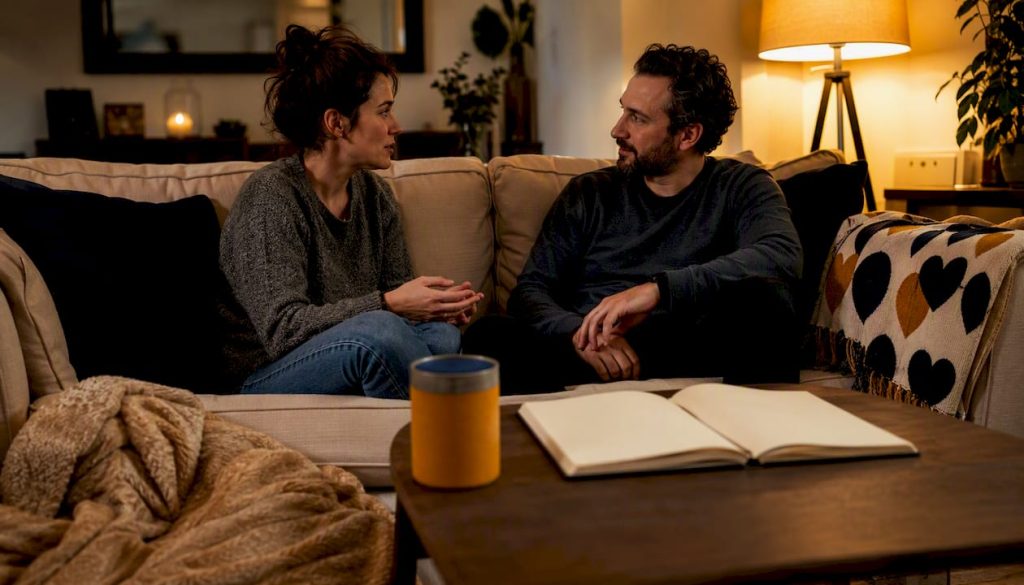
Start with these three active listening exercises today: a 60-second presence drill, a paraphrase challenge, and a short guided role-play. Together, they build the three skills that matter most fast: presence, accuracy, and the confidence to reflect without fixing.
Quick-start plan (pick one this week):
- 60-second presence drill (solo or paired, 1 minute): Sit with a partner or a recorded voice and commit to zero internal commentary. Just receive.
- Paraphrase challenge (paired, 5 minutes): One person speaks for 90 seconds; the other restates the core message before responding. Goal: accuracy, not agreement.
- Guided role-play (paired, 10 minutes): One person plays a frustrated colleague or partner; the other practices reflecting feelings and asking one open question before offering any solution.
These three work because they target the most common failure points: drifting attention, premature advice, and the reflex to respond before you’ve actually understood.
Key Takeaways
Active listening is a practiced skill built through short, repeated drills that target presence, paraphrase, and emotional reflection before any advice is offered.
| Point | Details |
|---|---|
| Start with three exercises | The 60-second presence drill, paraphrase challenge, and role-play cover the three most common failure points fast. |
| Use the six-step framework | Stanford’s model (attention, suspend judgment, reflect, clarify, summarize, share) is a reliable rubric for tracking your own progress. |
| Debrief every session | Two specific questions after each exercise produce more learning than the exercise itself. |
| Adapt to your context | Couples, teams, and classrooms each need small adjustments; the core skill set stays the same across all three. |
| Couplesfightschool resources | The Stop the Fighting course and 4-Hour Couples Intensive offer guided, coached practice for couples ready to apply these skills under real conditions. |
One-week starter plan:
- Days 1–3: Run the Paraphrase Challenge and 60-Second Presence Drill once daily (10 minutes total).
- Day 4: Try the Listening Without Fixing role-play with a partner.
- Day 5: Review the six-step framework and identify which step you skipped most often. That’s your focus for week two.
Table of Contents
- What active listening exercises actually train
- Why regular practice changes how you communicate
- Core techniques to practice: a skills checklist
- 12 practical active listening exercises with step-by-step instructions
- How to run a practice session that actually works
- Adapting exercises for different settings
- The six-step framework that anchors all of this
- Why practice-first matters more than theory
- Guided practice for couples who want to go deeper
- Sources
What active listening exercises actually train
Active listening is a learned skill, not a personality trait. The formal definition from clinical communication literature frames it as a two-way process where the receiver acknowledges receipt and provides feedback to confirm understanding, which reduces errors and improves outcomes across healthcare, workplace, and personal settings.
In plain terms: you’re not just being quiet while someone talks. You’re actively processing, reflecting, and confirming.
The core principles that every exercise in this article trains:
- Presence: Full attention, phone down, eye contact held.
- Nonjudgment: Suspending your evaluation until the speaker is finished.
- Reflection: Mirroring the emotional content, not just the words.
- Clarification: Asking questions that deepen understanding, not redirect the conversation.
- Summarizing: Looping back the key points so the speaker feels heard.
The Stanford six-step model sequences these as: pay full attention, suspend judgment, pause and reflect, ask clarifying questions, summarize, then share. The Center for Creative Leadership (CCL) maps the same six moves to leadership coaching, noting that withholding judgment and reflecting are the two behaviors most leaders underuse. Exercises that target these principles directly are the ones worth your time.
Why regular practice changes how you communicate
The payoff isn’t abstract. Consistent reflective listening practice produces concrete, observable changes in how conversations go.
- Fewer misunderstandings: When you paraphrase before responding, you catch misreadings before they become arguments.
- Stronger rapport: People open up more when they feel genuinely heard, not just tolerated.
- Better decisions: Teams that practice active listening skills in meetings surface more information before deciding.
- Reduced conflict: In couples, the habit of reflecting before reacting lowers the temperature of difficult conversations.
Two quick examples. In a workplace feedback session, a manager who paraphrases an employee’s concern (“So what I’m hearing is that the deadline feels arbitrary, not that you’re unwilling to meet it”) gets a more honest follow-up than one who immediately defends the timeline. In a marriage conversation, a partner who says “It sounds like you felt dismissed, not just inconvenienced” shifts the entire dynamic before a single solution is proposed.
Clinical communication research backs this up: receiver feedback and paraphrase reduce errors and improve patient outcomes in healthcare settings, a finding that transfers directly to any high-stakes conversation.
Core techniques to practice: a skills checklist
Before running any exercise, know what you’re measuring. This checklist covers the six to eight behaviors that active listening steps training targets:
- Be present: Body turned toward the speaker, devices away.
- Attend nonverbally: Nod, maintain eye contact, lean slightly forward.
- Mirror/reflect: Name the emotion you observe (“You sound frustrated”).
- Paraphrase: Restate the content in your own words before responding.
- Ask open-ended questions: “What did that feel like?” not “Did that bother you?”
- Summarize: At natural pauses, loop back the key points.
- Withhold advice until asked: Resist the urge to fix until the speaker invites it.
- Respond appropriately: Match your tone and pace to the speaker’s emotional state.
Sample phrases to use in practice:
- Reflection: “What I’m hearing is…” / “It sounds like you felt…”
- Clarification: “Can you say more about…?” / “What did you mean when you said…?”
- Summarizing: “So the main thing on your mind is…” / “Let me make sure I’ve got this right…”
What to avoid:
- Interrupting to finish sentences or redirect.
- Jumping to solutions before the speaker signals they want them.
- Half-listening while mentally composing your response.
The CCL coaching framework specifically flags “ask before you advise” as the move that most improves psychological safety. When people feel safe, they share more, and you get better information.
12 practical active listening exercises with step-by-step instructions
The exercises below range from solo drills to group triads. Each entry includes goal, setup, duration, and two debrief questions. Adaptations for couples, remote teams, and classrooms appear in the next section.
Exercise overview:
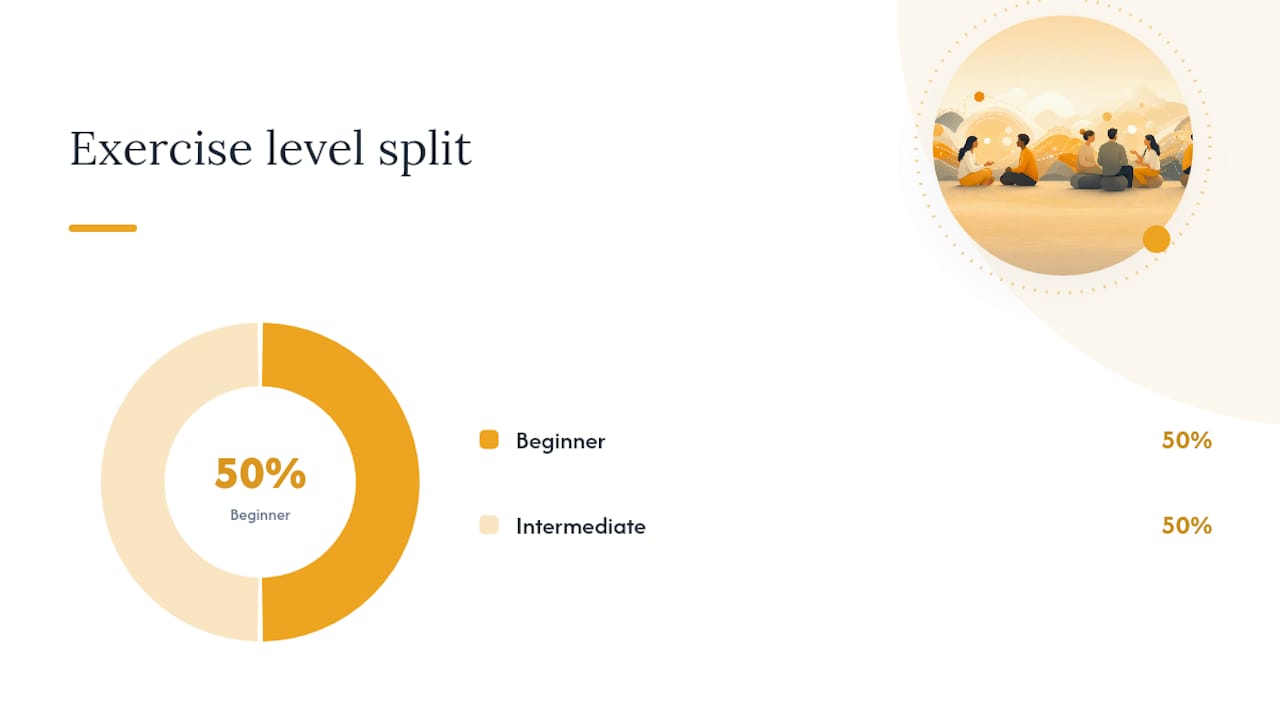
| Exercise | Group size | Duration | Core skill | Level |
|---|---|---|---|---|
| 60-Second Presence Drill | 1–2 | 1–2 min | Attention/presence | Beginner |
| Paraphrase Challenge | 2 | 5–7 min | Accuracy/reflection | Beginner |
| Emotion Labeling | 2 | 5 min | Empathy/reflection | Beginner |
| Listening Triads | 3 | 15–20 min | Full skill set | Intermediate |
| Listening in Parts | 4–8 | 20 min | All five components | Intermediate |
| Empathy Map | 2–4 | 20–25 min | Perspective-taking | Intermediate |
| Role-Play: Listening Without Fixing | 2 | 10–15 min | Withholding advice | Intermediate |
| Loud Brain Awareness | 1–2 | 5 min | Distraction awareness | Beginner |
| Dream Vacation | 2 | 10 min | Accurate summarizing | Beginner |
| Audio-Based Presence Practice | 1 | 10–15 min | Presence/focus | Beginner |
| Couples Reflection Round | 2 | 15 min | Emotional accuracy | Intermediate |
| Open Question Only | 2 | 10 min | Clarification | Intermediate |
## 1. 60-Second Presence Drill
Goal: Build the habit of full, undivided attention before a conversation starts.
Setup: Two people, no materials needed. One speaks, one listens.
Instructions: The speaker talks about anything, a weekend plan, a work frustration, for exactly 60 seconds. The listener’s only job is to maintain eye contact, stay still, and resist any urge to respond, nod excessively, or mentally plan a reply. After 60 seconds, the listener says nothing for five more seconds, then reflects back one thing they noticed.
Duration: 2 minutes total.
Debrief questions:
- What did you notice happening in your mind during the silence?
- Did the speaker feel heard? What gave that impression?
## 2. Paraphrase Challenge
Goal: Train accuracy in restating what was said before adding your own perspective.
Setup: Pairs. No materials.

Instructions: Speaker shares a real concern or opinion for 90 seconds. Listener must paraphrase the core message (“What I heard you say is…”) before making any comment. Speaker rates the accuracy on a scale of 1–5 and corrects anything missed. Switch roles.
Duration: 5–7 minutes per round.
Debrief questions:
- Where did the paraphrase miss the point?
- What did it feel like to be accurately summarized?
## 3. Emotion Labeling
Goal: Practice naming the emotional content of what someone says, not just the facts.
Setup: Pairs. Optional: a list of emotion words as a reference card.
Instructions: Speaker describes a recent situation that had some emotional weight. Listener reflects back the feeling they heard (“It sounds like you felt overlooked, not just busy”). Speaker confirms or corrects. Three rounds each.
Duration: 5 minutes per person.
Debrief questions:
- Which emotions were hardest to name accurately?
- Did labeling the emotion change how the speaker felt about the conversation?
## 4. Listening Triads
Goal: Practice the full active listening skill set with immediate observer feedback.
Setup: Groups of three: speaker, listener, observer. Observer has a checklist of the eight core techniques.
Instructions: Speaker shares a real or hypothetical scenario for 3 minutes. Listener practices presence, reflection, clarification, and summarizing. Observer tracks which techniques appear and which are missed, then gives specific feedback. Rotate roles.
Duration: 15–20 minutes for all three rotations.
Debrief questions:
- Which technique did the listener use most naturally?
- What did the observer notice that the listener didn’t?
The triad format is especially effective because observer feedback makes invisible habits visible. Most listeners don’t realize how often they redirect rather than reflect.
## 5. Listening in Parts
Goal: Demonstrate all five listening components (testing understanding, questioning, building, feedback, summarizing) in one structured group exercise.
Setup: Groups of 4–8. One facilitator. A short article or audio clip, 2–3 minutes long.
Instructions: Play or read the content once. Each participant is assigned one component to track. After the content ends, each person reports what they noticed from their assigned angle. The group then reconstructs the full message together.
Duration: 20 minutes.
Debrief questions:
- Which component was hardest to track while also listening?
- How did the group’s reconstruction compare to what you heard individually?
## 6. Empathy Map
Goal: Build perspective-taking by mapping what a speaker thinks, feels, says, and does.
Setup: Pairs or small groups. Paper divided into four quadrants: thinks, feels, says, does.
Instructions: One person describes a conflict or challenge for 3 minutes. Listeners fill in the empathy map silently. Then share what they wrote. Speaker responds to what was captured and what was missed.
Duration: 20–25 minutes.
Debrief questions:
- What surprised you about what the speaker was feeling versus what they said?
- Where did your assumptions fill in the gaps?
## 7. Role-Play: Listening Without Fixing
Goal: Practice listening without fixing, the hardest skill for most people.
Setup: Pairs. One plays a frustrated partner or colleague; the other practices listening only.
Instructions: The “frustrated” person describes a problem for 2 minutes. The listener’s rule: no solutions, no reassurances, no “at least.” Only reflections, open questions, and summaries. After 2 minutes, the listener summarizes what they heard. Switch roles.
Duration: 10–15 minutes.
Debrief questions:
- When did the urge to fix feel strongest?
- Did the speaker feel more or less understood than in a typical conversation?
This exercise is particularly useful for listening exercises for couples because the fix-it reflex is one of the most common sources of disconnection in relationships.
## 8. Loud Brain Awareness
Goal: Expose internal distraction so listeners can catch and redirect it.
Setup: Solo or pairs. No materials.
Instructions: While a partner speaks (or while listening to a recorded story), the listener mentally narrates their own distractions as they arise: “I’m thinking about dinner. I’m forming a rebuttal. I’m judging that word choice.” After 2 minutes, the listener reports what their “loud brain” said. Then tries again with the goal of quieting it.
Duration: 5 minutes.
Debrief questions:
- What types of thoughts pulled you away most often?
- Did naming the distraction make it easier to return to the speaker?
## 9. Dream Vacation
Goal: Practice accurate summarizing by listening for specific details.
Setup: Pairs.
Instructions: Speaker describes their ideal vacation in detail for 2 minutes. Listener must summarize it back with enough accuracy that the speaker would recognize it as their own description. No notes allowed.
Duration: 10 minutes.
Debrief questions:
- Which details did the listener miss or distort?
- What listening strategy helped you retain the most?
## 10. Audio-Based Presence Practice
Goal: Practice focused listening without visual cues, which sharpens auditory attention.
Setup: Solo or group. A short audio clip or podcast segment, 3–5 minutes.
Instructions: Play the audio once. No notes during playback. Afterward, write or say three things: the speaker’s main point, one emotion you detected, and one question you’d ask. The StoryCorps classroom lesson uses this format with a debrief structure that works equally well in workshops.
Duration: 10–15 minutes.
Debrief questions:
- What did you miss on first listen that you noticed on reflection?
- How did the absence of visual cues change your attention?
## 11. Couples Reflection Round
Goal: Build emotional accuracy and reduce defensiveness in close relationships.
Setup: Two partners. A quiet space, 15 uninterrupted minutes.
Instructions: Partner A shares something that has been on their mind, not a complaint, just a feeling or observation, for 3 minutes. Partner B reflects back the feeling and the core message before saying anything else. Partner A rates the accuracy and adds what was missed. Switch. No problem-solving during the exercise.
Duration: 15 minutes.
Debrief questions:
- Did your partner’s reflection match what you actually meant?
- What would you want them to reflect differently next time?
For couples working on active listening in marriage, this round builds the habit of emotional accuracy before conflict arises, not just during it.
## 12. Open Question Only
Goal: Break the habit of closed or leading questions by practicing open-ended inquiry.
Setup: Pairs.
Instructions: Speaker shares a topic for 2 minutes. Listener responds only with open-ended questions (“What was that like for you?” / “What do you think was driving that?”). Closed questions (“Did that upset you?”) are flagged by the speaker and the listener tries again. Five questions per round.
Duration: 10 minutes.
Debrief questions:
- Which questions opened the conversation up? Which closed it down?
- How did it feel to be asked rather than told?
The PositivePsychology exercise library includes variations of this drill for clinical and coaching settings, where open questioning is a foundational skill.
How to run a practice session that actually works
A well-run session teaches more in 20 minutes than an hour of passive reading. Here’s what makes the difference.
Recommended formats:
- 20-minute session: One exercise (presence drill or paraphrase challenge), one debrief, one key takeaway.
- 45-minute session: Two exercises (one solo/paired, one triad), structured debrief, group reflection.
- 60-minute session: Three exercises with role rotation, written observer notes, and a closing summary round.
Facilitation checklist:
- Set the ground rule before starting: the listener does not speak until the speaker finishes.
- Assign roles explicitly (speaker, listener, observer) before each round.
- Keep time visibly. Use a phone timer or a visible clock.
- Brief observers on what to track: which techniques appeared, which were absent.
- After each round, debrief with specific questions, not “How did that go?”
Common pitfalls and quick corrections:
- Listener interrupts: Pause the exercise, name it without judgment, restart the round.
- Listener jumps to advice: Ask them to restate the speaker’s feeling before continuing.
- Mind-wandering: Use the Loud Brain exercise (Exercise 8) as a warm-up.
- Discomfort with silence: Name it as normal. Silence after a reflection is not awkward; it’s the speaker processing.
Pro Tip: When someone struggles to summarize, ask them to say just one word that captures the speaker’s emotion. One word is almost always achievable, and it breaks the paralysis of trying to get the whole summary right.
Adapting exercises for different settings
Workplace and team settings
- Replace personal topics with work scenarios: a missed deadline, a miscommunication with a client.
- Use the Listening Triads exercise in team meetings with a rotating observer role.
- Frame the skill as a leadership behavior, not a soft skill. CCL’s research shows that leaders who ask before they advise build more psychologically safe teams.
- For remote teams: run paired exercises in video breakout rooms; use the chat window for observer notes so they don’t interrupt the live conversation.
Couples and partners
- Use the Couples Reflection Round and the Listening Without Fixing role-play as weekly check-ins.
- Keep sessions to 15 minutes maximum at first. Longer sessions can drift into actual conflict.
- Agree on a signal word (like “reflect”) that either partner can use mid-conversation to request a paraphrase.
- Asana’s workplace framework for structured listening translates well to couples when you swap work scenarios for relationship ones.
Classroom and educational settings
- The Dream Vacation and Loud Brain exercises work well with students because they’re low-stakes and slightly playful.
- The StoryCorps audio-based lesson is designed for classroom use and includes a ready-made debrief structure.
- Assign observer roles to students who tend to dominate discussions; it gives them a structured way to participate without speaking.
Remote and video calls
- Camera on is non-negotiable for presence exercises. You cannot practice nonverbal attending with a black square.
- Use breakout rooms for paired exercises; bring groups back together for debrief.
- For the Empathy Map exercise, use a shared digital whiteboard (Miro or Google Jamboard work well).
- Select beginner-level exercises first for remote groups: the Paraphrase Challenge and the 60-Second Presence Drill require no materials and work cleanly on video.
Selecting exercises by experience level: Start with presence and paraphrase drills (Exercises 1, 2, 9) for anyone new to structured practice. Move to emotion labeling and role-play (Exercises 3, 7, 11) once basic accuracy is established. Reserve triads and empathy mapping (Exercises 4, 6) for groups that have already done at least two beginner sessions.
The six-step framework that anchors all of this
Every exercise in this article trains one or more steps in the Stanford six-step active listening model, which provides a clinician-backed sequence for any high-stakes conversation:
- Pay full attention: Remove distractions, face the speaker, commit to the moment.
- Suspend judgment: Hold your evaluation until the speaker has finished.
- Pause and reflect: Before responding, take a breath and name what you heard.
- Ask clarifying questions: One open question that deepens understanding.
- Summarize (loop back): Restate the core message and check for accuracy.
- Share: Only now offer your perspective, response, or solution.
How exercises map to each step:
- Step 1 (Attention): 60-Second Presence Drill, Audio-Based Presence Practice, Loud Brain Awareness
- Step 2 (Suspend judgment): Listening Without Fixing, Open Question Only
- Step 3 (Reflect): Emotion Labeling, Paraphrase Challenge, Couples Reflection Round
- Step 4 (Clarify): Open Question Only, Listening Triads
- Step 5 (Summarize): Dream Vacation, Listening in Parts, Empathy Map
- Step 6 (Share): Role-Play exercises where the listener eventually responds
Use this framework as a personal rubric. After any conversation, ask yourself which step you skipped. That’s your next practice target.
Why practice-first matters more than theory
Most people who want to become better listeners read about it. They learn the principles, nod along, and then have the exact same conversation they always had.
The problem isn’t knowledge. It’s that listening is a motor skill as much as a cognitive one. You build it the way you build any physical skill: through repetition with feedback, not through understanding the concept.
What I’ve seen consistently in relationship education work is that the single biggest error learners make is trying to listen and evaluate simultaneously. They’re tracking the speaker’s words while also deciding whether those words are accurate, fair, or reasonable. That split attention is what makes people feel unheard, even when the listener is technically present. A simple paraphrase drill breaks that habit in one session because it forces the listener to defer evaluation until after they’ve restated the message.
The exercises in this article are built around that principle. They’re short, repeatable, and designed to isolate one skill at a time so the feedback is immediate and specific. At Couplesfightschool, that same practice-first approach runs through every course and coaching session, because tools you’ve actually practiced hold up under pressure in ways that tools you’ve only read about don’t.
Guided practice for couples who want to go deeper
If you and your partner have worked through a few of these exercises and want a structured program to build on them, the Stop the Fighting course at Couplesfightschool gives you a step-by-step communication and conflict-resolution curriculum built by licensed mental health professionals. It includes conversation scripts, guided reflection exercises, and session plans you can work through together at your own pace.

For couples who want live, coached practice rather than a self-paced course, the 4-Hour Couples Intensive puts you in a focused session with a trained coach who can give you real-time feedback on exactly the skills this article covers. It’s the fastest way to move from knowing the exercises to actually using them when a real conversation gets hard. Visit Couplesfightschool’s online coaching page to check availability and book a session.
Sources
- Six steps to active listening | Stanford Report
- Communication in healthcare settings (NCBI book/resource)
- Effective active listening: Examples, techniques & exercises – Asana
- Active Listening: Using Listening Skills to Coach Others | CCL
- Active Listening (MindTools)
- How to Practice Active Listening: 16 Examples & Techniques
- Lesson: The Power of Active Listening – StoryCorps
Recommended