
Boundaries After Betrayal: Therapist Tools and a 30–90 Day Plan

Start with a safety-first boundary: no emotional contact with the affair partner, one logistics-only channel for shared obligations, and temporary, targeted transparency around devices, not permanent surveillance. Keep it that narrow for now. Then call a therapist or a structured coaching program to build the next steps around actual repair, not guesswork.
TL;DR:
- Boundaries should focus on safety and predictability, like no contact with the affair partner, digital blocking, and temporary device transparency tied to specific repair goals.
- Clear, concise communication of boundaries with stated consequences and documented agreements prevents misunderstandings and reinforces accountability.
- Boundaries meant for short-term repair, such as device transparency, should be reassessed regularly, while some, like no contact with the affair partner, tend to be more permanent.
- Repeated boundary crossing, deception, or coercive behaviors indicate the need for outside support and may signal deeper issues beyond simple betrayal.
- Enforcing boundaries is an act of self-care that requires consistent effort, and seeking professional support improves the chances of genuine recovery.
Table of Contents
- Why Boundaries After Betrayal Matter More Than You Think
- Types of Boundaries to Set After Infidelity
- How to Set, Communicate, and Enforce a Boundary
- How Long Boundaries Should Last and How to Know They’re Working
- The Couples Fight School® Approach to Boundary Work
- Holding the Line Is an Act of Self-Care
- Where Couples Fight School® Fits in Your Recovery
- Sources
Why Boundaries After Betrayal Matter More Than You Think
Betrayal activates the same threat response your brain uses for physical danger. Your nervous system starts scanning for the next blow, which is exactly why vague reassurances (“I promise it won’t happen again”) don’t calm anyone down. Predictability does. A boundary is a structural way of saying “here’s what happens next,” and that structure is what lets the nervous system stand down even a little.
There’s a real difference between a boundary and punishment, though the line gets blurry when you’re hurting. A boundary protects you and states a consequence you control. Punishment tries to control the other person’s behavior or make them suffer. Effective boundaries are safety focused, not punitive, which is what actually reduces uncertainty instead of just redirecting anger into a new fight.
Good boundaries do three things at once:
- Lower the odds of re-injury by removing easy access to the affair partner or the triggers tied to the betrayal
- Give both people a shared, visible standard instead of unspoken expectations that quietly get violated
- Create a scaffold accountability can actually attach to, since “be trustworthy” is not measurable but “no unannounced contact with X” is
Types of Boundaries to Set After Infidelity
Boundaries after infidelity usually fall into a few practical categories. You don’t need all of them at once. Pick what applies to your situation and skip the rest.
- Behavioral boundaries. No contact with the affair partner, or logistics-only communication if a shared workplace or coparenting situation makes complete separation impossible.
- Digital boundaries. Block, delete, and unfollow across social platforms. Blocking and limiting social media access reduces triggers and intrusive recontact more reliably than trying to “just not look.”
- Technology transparency. Shared device access or location sharing can help rebuild trust, but only when it’s temporary and tied to a specific repair goal, not an open-ended surveillance arrangement.
- Emotional boundaries. Set topic limits (no discussing details of the affair after 9 p.m., for instance), keep a short deflection script ready, and lead with “I” statements instead of accusations.
- Financial boundaries. Separate any shared accounts you can, pause new joint financial commitments for now, and keep a written log of shared expenses so money doesn’t become another battlefield.
- Physical boundaries. A temporary separate bedroom, or a short move-out period, along with clear no-touch rules until both people feel ready. This isn’t about punishment. It’s about giving your body room to feel safe again.
- Time and social boundaries. Scheduled check-ins instead of ambush conversations, plus limits on how much you discuss the betrayal with mutual friends or family, since that can turn private pain into public spectacle fast.
Boundary plans after an affair commonly pair no contact or logistics-only rules with temporary, targeted device transparency, which is the combination most people land on because it addresses both the relational breach and the practical need to keep functioning as a household.
How to Set, Communicate, and Enforce a Boundary
A boundary that isn’t communicated clearly and enforced consistently isn’t a boundary. It’s a wish.
Step 1: Decide. Before you say anything to your partner, write down your non-negotiables and your known triggers. What situations make your stomach drop? What behaviors would tell you the boundary was crossed? Get specific. “I need honesty” is not a boundary. “I need you to tell me if you’re in contact with anyone from the affair, and I’ll know if I find out otherwise” is.
Step 2: Communicate. Keep it to one sentence plus one consequence. Over-explaining invites negotiation, and short, single-statement boundaries hold up better than drawn-out justifications. A few scripts to adapt:
- “I need you to have zero contact with [name]. If that happens again, I’m pausing this process and calling our therapist.”
- “For now, let’s keep communication about the kids to the co-parenting app only.”
- “I’d like to see your phone for a limited time while we rebuild trust. After that, we reassess together.”
- “I can’t talk about the details of the affair after dinner. Let’s set a specific time to revisit it.”
- “If you need to vent to friends about our marriage, I need to know who and roughly what, since that affects how safe I feel.”
Step 3: Document. Written agreements through text or a shared app reduce ambiguity far better than verbal promises that get remembered differently by both people. Pick one channel and stick to it.
Step 4: Enforce. Consistency is the whole game. If a boundary gets crossed, follow through on the stated consequence every time, not just when you’re angry enough to bother. Logging breaches with dates and specifics gives you clarity when memory gets fuzzy and gives a therapist something concrete to work with if mediation becomes necessary.
Pro Tip: Keep a private note on your phone with dates and short descriptions of anything that violates an agreed boundary. You’re not building a case against your partner. You’re protecting your own clarity when doubt creeps back in.

If a boundary gets tested more than once or the conversation keeps circling into blame, that’s usually the moment to bring in a licensed therapist who works specifically with couples therapy after betrayal. Ask directly what a structured repair timeline with them would look like.
How Long Boundaries Should Last and How to Know They’re Working
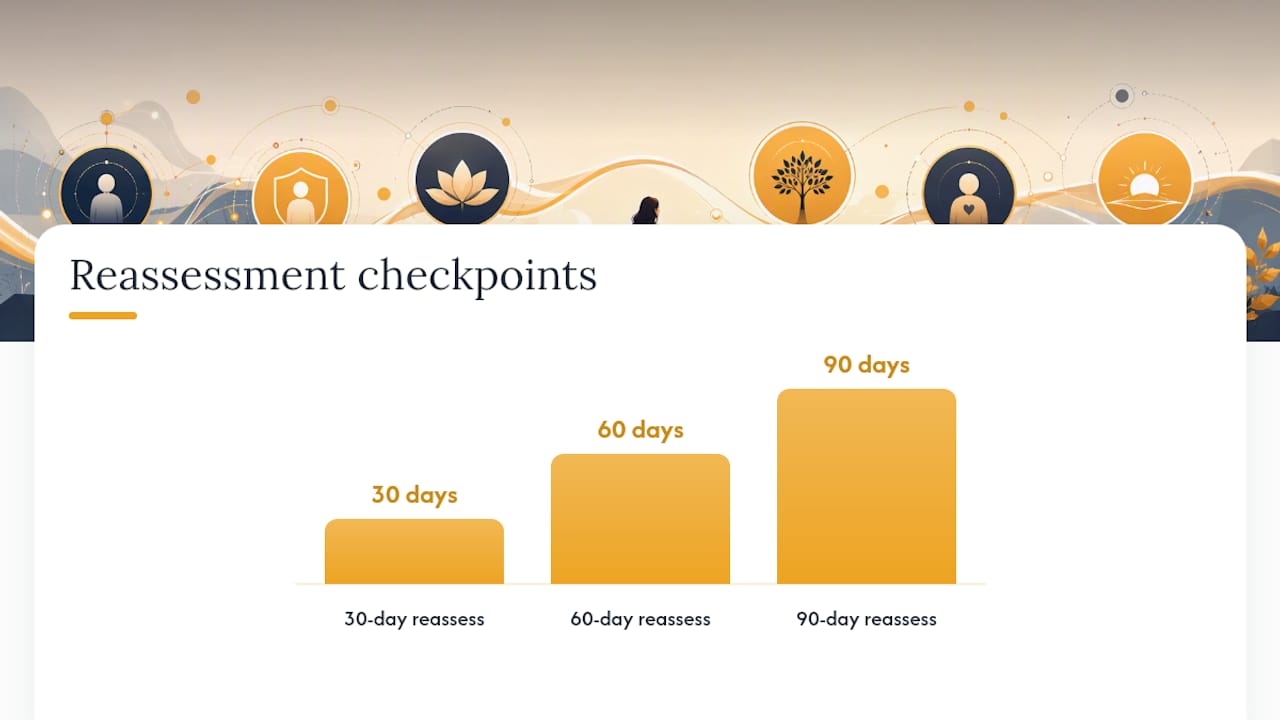
Some boundaries are temporary scaffolding. Device transparency, for instance, is meant to have an end date attached to it, not run indefinitely. Transparency works best as a time-limited repair strategy tied to concrete goals, reassessed at 30, 60, or 90 days rather than left open forever.
Other boundaries are closer to permanent, at least in their current form. No contact with the specific affair partner rarely has an expiration date. Neither does a rule against discussing intimate relationship details with certain people outside the relationship.
Signs the current boundaries are actually working:
- Your partner volunteers information before you have to ask for it
- Triggers happen less often and hit less hard over the weeks
- Small tests (an unexpected text, a schedule change) get handled transparently instead of defensively
Signs it’s time to tighten limits or pause the repair process altogether include repeated deception even after boundaries were clearly stated, gaslighting about what actually happened, or any pattern that looks like coercive control. Boundaries repeatedly ignored can signal something beyond a repairable betrayal, and at that point, safety planning and outside support matter more than another conversation about trust.
The Couples Fight School® Approach to Boundary Work
Couples Fight School® pairs boundary setting with structured communication training through the F.I.G.H.T. Plan®, a framework built around emotional regulation and repair rather than winning arguments. Boundaries hold up better when both partners have a shared language for de-escalating before a conversation spirals.
A few exercises worth trying alongside your boundary list:
- A written communication agreement specifying how and when to discuss sensitive topics
- Scheduled structured check-ins instead of spontaneous, high-stakes conversations
- Practice scripts for naming emotional triggers before they turn into full arguments
Holding the Line Is an Act of Self-Care
You will feel guilty enforcing boundaries. That guilt is not proof you’re doing something wrong. It’s proof you’re doing something unfamiliar. Prioritizing your own safety after betrayal isn’t selfish, and it isn’t punishment dressed up in nicer language. Hold the line consistently, and if it feels like too much weight to carry alone, get support before you white knuckle it any further.
— Carlos
Where Couples Fight School® Fits in Your Recovery
If you’re setting boundaries alone right now, a workbook or self-paced course can help you turn the scripts above into a written plan you’ll actually follow. The couples therapy workbook walks through exactly that: deciding your non-negotiables, drafting the language, and tracking whether agreements hold.

But boundaries after betrayal rarely stay simple for long, especially once you’re negotiating them with a partner who’s also flooded with guilt, defensiveness, or their own confusion about what repair should look like. That’s where guided support changes the outcome. Couples Fight School’s RESTORE® infidelity recovery counseling gives you a clinician-led structure for the exact conversations covered here, transparency timelines, consequence enforcement, rebuilding trust without turning your relationship into a surveillance operation. If you’d rather work through it live with support between sessions, online coaching for couples pairs the same F.I.G.H.T. Plan® tools with real-time guidance. Book a session and bring your boundary list. That’s the starting point.
Sources
Recommended
- Benefits of Couples Therapy After Betrayal: What to Expect
- Relationship Boundary Examples: 30 Scripts to Set Healthy Limits
- How to Deal With Issues in a Relationship Right Now
- RESTORE® Infidelity Recovery Counseling