
Personality Compatibility: Can Opposite Traits Work in a Relationship?
|
Getting your Trinity Audio player ready...
|
Is a successful relationship only possible for two people who are exactly alike? Many couples worry that their differences in personality might be a sign they are incompatible.
The concept of personality compatibility is often misunderstood. It is not a simple checklist of shared interests or identical temperaments.
True personality compatibility relationships thrive on is about how well two people’s unique traits interact, adapt, and complement one another over time.
While it’s natural to wonder if opposites can last, modern relationship science offers surprising and hopeful insights.
This article will explore the research behind personality matching, debunk common myths, and provide a practical guide to not just managing (but truly leveraging) your differences to build a stronger, more resilient partnership.
What Is Personality Compatibility in Relationships?

Personality compatibility is more than just having similar hobbies or agreeing on where to eat. At its core, it refers to how well two individuals’ fundamental personality traits (their consistent patterns of thinking, feeling, and behaving) allow them to function harmoniously as a couple. It’s about interaction and synergy.
Think of it like a puzzle: compatibility isn’t about two pieces being identical; it’s about how their unique shapes connect to create a stable, complete picture.
A highly compatible couple may have very different traits, but they have developed ways to make those differences work for them, not against them.
This involves key elements like mutual respect, effective communication, shared core values (which are different from personality), and the ability to provide emotional safety for one another.
Ultimately, personality compatibility is the degree to which you can navigate life together with understanding, support, and minimal friction, regardless of whether you share the same traits.
The Science Behind Personality Compatibility
For decades, the assumption was that “birds of a feather flock together,” and that similarity was the golden ticket to a happy relationship. However, contemporary psychological research paints a more complex and encouraging picture.
While having some things in common is beneficial, science suggests that the alignment of your personality traits is far from the most important predictor of a relationship’s success or failure.
A 2024 NCBI study found that personality similarity plays only a negligible role in relationship satisfaction; meaning couples with opposite traits can be just as satisfied as those with similar personalities.
This groundbreaking finding challenges the old paradigm. It indicates that what you do with your differences matters infinitely more than the differences themselves.
Research points to factors like emotional responsiveness, the ability to manage conflict constructively, and the presence of a secure emotional bond as being significantly more impactful on long-term happiness than whether both partners are extroverted or both are highly conscientious.
Compatibility, therefore, is less about your starting point and more about the journey you build together.
Do Opposites Really Attract? What Research Says
The age-old debate of “opposites attract” versus “similarity is key” has fascinated people for generations. So, what does the data actually say? The truth lies somewhere in the middle, with a strong lean toward the power of complementary balance.
Research in the Journal of Personality and Social Psychology showed that personality similarity such as both partners having high agreeableness or extraversion; is only weakly correlated with relationship success.
This means that while it might make initial connection easier, it is not a reliable guarantee of a lasting, fulfilling partnership.
The attraction to opposites is often real, especially in the early stages of a relationship. We can be drawn to traits we admire or feel we lack: the calm person is intrigued by the energetic one, the free spirit is captivated by the grounded planner.
The key for opposite personality traits couples is not whether they attract, but whether they can attach in a healthy way.
Differences can provide balance: an impulsive person might benefit from a partner who encourages forethought, while a cautious person might be gently nudged toward new experiences.
Conflict arises not from the differences alone, but from a lack of respect, empathy, or communication about those differences.
Successful couples don’t just tolerate their opposites; they learn to appreciate the balance and perspective they bring.
Understanding Personality Through the Big Five Framework
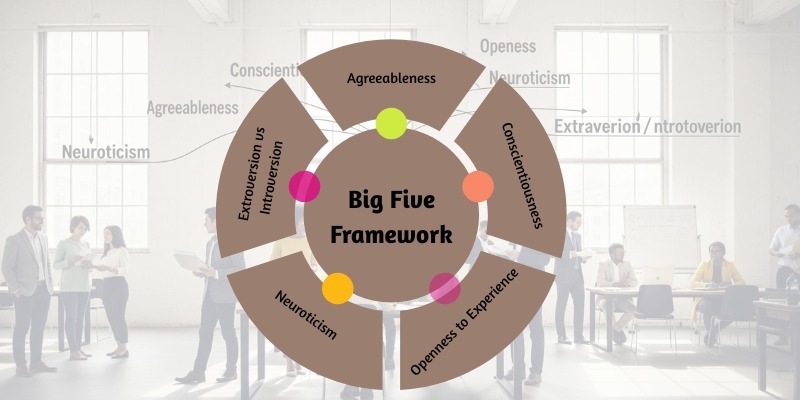
To understand how personalities interact, psychologists often rely on the “Big Five” personality model, which is widely considered the most scientifically validated framework. It breaks down personality into five core dimensions, each existing on a spectrum.
Understanding these can shed light on your own Big Five traits relationship success hinges on.
Agreeableness & Conflict Resolution
Agreeableness involves traits like kindness, empathy, cooperation, and a desire for social harmony. In the context of agreeableness conflict resolution, this trait is a powerhouse.
A partner high in agreeableness is typically more willing to compromise, consider their partner’s feelings, and de-escalate arguments. Even if one partner is lower in agreeableness, the presence of one highly agreeable person can significantly smooth conflict.
The challenge arises if both partners are very low in agreeableness, potentially leading to stubborn, win-lose battles.
Conscientiousness & Balance in Responsibilities
This trait spectrum ranges from organized, disciplined, and dependable (high) to more flexible, spontaneous, and easy-going (low). Conscientiousness partner balance is a classic area for complementary differences.
A highly conscientious partner often manages schedules, finances, and long-term plans, providing stability. A partner lower in conscientiousness might bring spontaneity, fun, and help the couple avoid rigidity.
Problems occur only if the planner becomes controlling or the spontaneous partner is seen as irresponsible. The balance lies in appreciating each other’s contributions to the whole.
Openness to Experience & Curiosity About Each Other
Openness involves imagination, intellectual curiosity, and an appreciation for art, emotion, and new experiences.
For openness to experience couples, similarity can be particularly rewarding, as they explore new ideas and adventures together.
However, a difference here can be enriching if the more traditional partner is supportive, and the more open partner is patient. It becomes a problem only if one partner dismisses the other’s interests as “boring” or “weird,” stifling the sense of shared growth.
Neuroticism & Emotional Dynamics
Neuroticism refers to a tendency toward experiencing negative emotions like anxiety, anger, or sadness more easily and intensely.
Neuroticism and emotional dynamics are crucial. A partner high in neuroticism may have big emotional reactions to stress, while a partner low in neuroticism (high in emotional stability) is typically calmer.
This can be complementary (the stable partner provides a soothing anchor) or it can be draining if the stable partner feels overwhelmed by constant emotional turbulence, or the sensitive partner feels dismissed. Managing this difference requires immense empathy and validation.
Extroversion vs Introversion in Real-Life Relationships
This is the most familiar difference. Extrovert introvert compatibility is a perfect case study in balancing needs.
Extroverts gain energy from social interaction, while introverts recharge through solitude. The success of an introversion extroversion balance depends on mutual respect for these needs.
It can work beautifully: the introvert might help the extrovert enjoy deeper, quieter connections, while the extrovert can help the introvert socialize and network.
Strategies include the extrovert attending some events solo, and the couple agreeing on a “recharge time” for the introvert after socializing.
CTA: Want to resolve conflicts peacefully? Get our Couples Conflict Toolkit to understand the issues and resolve them easily!
Myers-Briggs & Relationship Matching: Is It Accurate?
The Myers-Briggs Type Indicator (MBTI) is incredibly popular for Myers-Briggs relationship matching.
It categorizes people into 16 types based on preferences like Introversion/Extroversion or Thinking/Feeling. While it can be a fun and insightful tool for self-reflection and understanding general communication styles, it is important to recognize its limits.
Psychologists emphasize that MBTI is not a scientifically rigorous tool like the Big Five. Its types are not always stable over time, and it can oversimplify the complexity of human personality.
Using it to definitively predict compatibility can be misleading.
A more helpful approach is to use MBTI insights to start conversations (“It makes sense that you, as a ‘Thinker,’ focus on logic in arguments, while I, as a ‘Feeler,’ am focused on the emotional impact”).
The real key to compatibility isn’t your four-letter code, but how you communicate about the needs and preferences behind those letters.
Attachment Styles & Personality Interaction
Your personality doesn’t operate in a vacuum; it interacts powerfully with your attachment style; your pattern of relating to intimate partners, formed in early childhood. This attachment style and personality interaction is a critical layer of compatibility.
Anxiously attached individuals may crave constant reassurance, which can be amplified if they are also high in neuroticism.
Avoidantly attached individuals value independence and may pull away during conflict, a tendency that could mix with low agreeableness to create stonewalling.
The gold standard is a secure attachment high agreeable combination, where individuals feel comfortable with intimacy, communicate needs directly, and are empathetic.
A secure attachment style can actually soften the potential challenges of personality differences. A securely attached person is better equipped to reassure an anxious partner or give space to an avoidant partner without taking it personally.
Understanding your attachment dynamics is often more transformative for a relationship than analyzing personality traits alone.
Why Opposing Traits Can Strengthen a Relationship
Far from being a liability, complementary personality differences can be a relationship’s greatest asset. They create a natural system of checks and balances and broaden the couple’s collective skills.
The spontaneous partner reminds the planner to live in the moment, while the planner ensures bills are paid on time. The emotionally expressive partner helps the reserved one access their feelings, while the reserved partner helps the expressive one find calm.
The extrovert expands the couple’s social world, while the introvert ensures there is a peaceful home to return to.
This synergy turns the couple into a more adaptable, resilient, and well-rounded team than two identical people might be. The strength comes from viewing your partner not as your opposite, but as your complement: the piece that makes you more complete.
How to Leverage Personality Differences as a Strength
Moving from theory to practice, the art of leveraging personality strengths and relationship harmony requires intentional effort. It’s about making your differences work for you.
Learn Your Partner’s Emotional Language
Understand what their traits mean for their needs. An introvert’s quietness isn’t rejection; it’s a need for space. A highly conscientious partner’s planning isn’t nagging; it’s their way of showing care.
Adjust Expectations Instead of Forcing Similarity
Stop wishing your partner was more like you. Accept that they will experience and react to the world differently. Frame this as “different” rather than “wrong.”
Use Empathy to Bridge Trait Differences
Regularly practice seeing situations from your partner’s perspective. Ask yourself, “Given who they are, why does this bother them so much? Why is this so important to them?”
Celebrate Strengths Instead of Criticizing Differences
Verbally appreciate what your partner’s unique traits bring to your life. “I’m so grateful you’re so organized: it takes so much stress off me,” or “Your spontaneity always makes our life an adventure.”
Practical Tips for Making Opposite Traits Work
Trade-Off Decision Making: Let the more detail-oriented partner plan the vacation itinerary, while the more spontaneous partner chooses the daily activities once you’re there.
- Balanced Social Schedules: Negotiate a social calendar. Agree on the number of events per month you’ll attend together, and give the extrovert a “free pass” to attend some additional events with friends.
- Calming vs. Energizing Behaviors: The more emotionally stable partner can learn to validate (“I see you’re really stressed, that’s totally understandable”) rather than minimize (“Just calm down”). The more excitable partner can learn self-soothing techniques.
- Respecting Downtime vs. Together Time: Create clear signals. The introvert can say, “I need an hour to recharge,” and that time is respected. Then, they can fully engage in dedicated, phone-free together time.
FAQs
Do similar personalities make relationships easier?
They can make the initial stages easier due to shared preferences, but they don’t guarantee long-term success. Differences, when managed well, can create a stronger, more balanced partnership.
Can personality differences cause conflict?
Yes, but conflict is caused by how you handle the differences (through criticism, contempt, or rigidity) not by the differences themselves. With empathy and communication, differences can be managed.
Which personality traits predict long-term compatibility?
High agreeableness (for empathy/compromise) and low neuroticism (for emotional stability) are the strongest predictors from the Big Five. However, a secure attachment style is an even more powerful indicator of healthy relating.
Is MBTI or Big Five more accurate for relationships?
The Big Five is more scientifically validated for studying personality. MBTI can be a fun conversation starter about preferences, but it should not be used as a definitive compatibility test.
Conclusion
In the quest for love, we often worry about finding someone whose puzzle piece matches our shape exactly.
However, the science of personality compatibility reveals a more liberating truth: a successful relationship is less about matching shapes and more about learning how to connect them with flexibility, glue, and care.
While opposite personality traits couples face unique challenges, they also possess unique opportunities for growth, balance, and depth that similar couples may never experience.
The foundation of lasting compatibility isn’t found in a personality test score, but in the daily practices of respect, empathetic communication, and the conscious choice to view your partner’s differences as complementary strengths.
By focusing on building a secure, supportive bond, you can transform any combination of traits into a formula for a uniquely strong and fulfilling partnership.