
How to Strengthen the Friendship Foundation in Marriage

Strong marital friendship is built through daily, deliberate choices
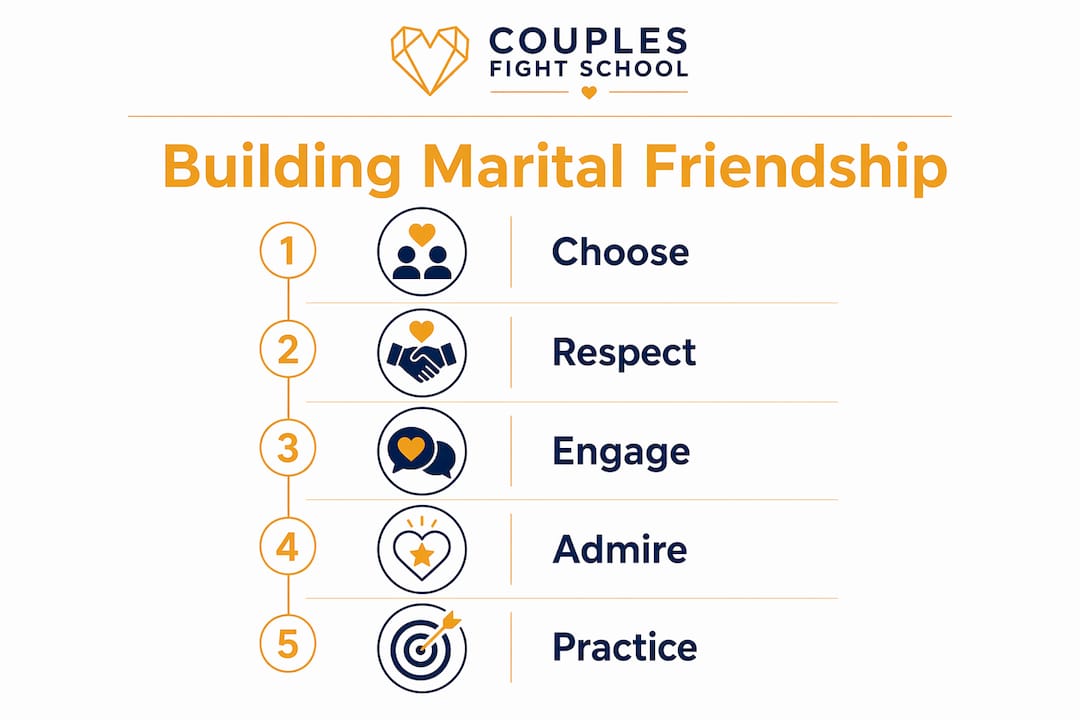
The couples who stay genuinely happy long-term share one thing: they treat each other like real friends. Not just romantic partners or co-parents or roommates, but people they actually like. That distinction drives everything else. To strengthen the friendship foundation in marriage, you need consistent, intentional habits, not grand gestures or annual retreats.
Here is what that looks like in practice:
- Spend 15 minutes of undistracted time together daily. Research links this kind of focused daily engagement to measurably stronger emotional bonds.
- Ask questions that go deeper than logistics. “What are you excited about this week?” beats “Did you pay the electric bill?” every time.
- Express appreciation out loud, specifically. “I noticed you handled that call so I didn’t have to” lands differently than a generic “thanks.”
- Pursue at least one shared interest regularly. It does not have to be elaborate. A Sunday walk, a show you both love, cooking a new recipe together.
- Turn toward your partner when they reach out. A bid for connection can be as small as “look at this funny video.” Responding matters more than the bid itself.
- Protect your friendship during conflict. Disagreements happen. How you fight either erodes the friendship or leaves it intact.
Pro Tip: Friendship in marriage is a chosen, maintained behavior that requires constant intentional practice, not an accidental feeling. Schedule it the same way you would a workout or a work meeting.
What qualities actually define a strong marital friendship?
Most couples know they want to “be close,” but closeness without a clear picture of what you are building toward tends to drift. The qualities below are what therapists and researchers point to when they describe marriages that stay genuinely connected over decades.
- Mutual respect. Couples therapist Tiffany Petite describes mutual respect and emotional responsiveness as the core binding system of marital friendship. Without it, even affection becomes transactional.
- Emotional intimacy. This means knowing your partner’s inner world: their current fears, evolving goals, and what they are quietly proud of. That knowledge does not stay current on its own.
- Genuine enjoyment of each other’s company. Humor, playfulness, and the ability to laugh together are not extras. They are load-bearing walls in a friendship.
- Shared positivity. Celebrating each other’s wins, not just tolerating them, keeps fondness alive. Couples who struggle here often find one partner minimizing the other’s good news without realizing it.
- Trust and goodwill. When you have a deep reservoir of goodwill, a bad week does not become a relationship crisis. That buffer is built through friendship, not through conflict management alone.
- Recognition of individuality. Licensed therapist Justin F. notes that maintaining separate interests alongside closeness sustains friendship. Being curious about who your partner is becoming, not just who they were when you married them, prevents emotional distance.
Romance may bring couples together, but friendship sustains them by honoring individuality and shared curiosity. That is not a soft idea. It is the architecture of a lasting marriage.

Practical habits that help you build friendship in marriage every day
Knowing what marital friendship looks like is one thing. Building it on a Tuesday when you are both tired and the kids need dinner is another. These habits are concrete, low-cost, and backed by what therapists actually recommend in session.
- Update your “love map” regularly. Gottman’s Sound Relationship House Model identifies love maps and bids for connection as foundational to trust and emotional safety. A love map is simply your detailed knowledge of your partner’s inner world. Ask one new question a week.
- Create small daily rituals. A real goodbye kiss in the morning, a check-in text at lunch, a few minutes of actual conversation before bed. These micro-moments accumulate into a felt sense of being known and prioritized.
- Practice active listening without an agenda. Ask curious, probing questions. Resist the urge to fix, advise, or redirect. Your partner needs to feel heard before they feel helped.
- Use physical affection intentionally. Holding hands, hugs, a hand on the shoulder during a hard conversation. These are not just romantic gestures. They signal safety and belonging.
- Schedule date nights and protect them. Studies link regular date nights to better communication, stronger commitment, and higher relationship satisfaction. The key word is “regular,” not “occasional when life allows.”
- Express gratitude with specifics. Vague appreciation fades fast. Intentional gratitude tied to a particular moment or behavior strengthens fondness and admiration over time.
- Adopt a teammate mindset during conflict. Scorekeeping kills friendship. When you approach a disagreement as “us against the problem” rather than “me against you,” repair becomes possible. Humor and empathy during conflict are not signs of weakness. They are signs of a strong friendship underneath.
- Maintain a positivity ratio during disagreements. Research shows happy couples maintain at least a 5:1 ratio of positive to negative interactions even during conflict. That does not mean avoiding hard conversations. It means keeping goodwill present in them.
Pro Tip: If you and your partner are struggling to break the emotional withdrawal cycle, start with the smallest possible bid for connection. A hand on the arm. A “how are you really doing?” These tiny moves rebuild the bridge.

How faith, mutual respect, and admiration deepen the friendship bond
Couples who share a spiritual or moral framework tend to have an additional layer of resilience. That is not coincidence. Research on commitment, shared religious attendance, and protective behaviors consistently links these factors to higher marital quality and stability for both men and women.
Here is how these elements work in practice:
- Faith reinforces commitment. Religious communities often emphasize the permanence of marriage, forgiveness, and prioritizing your partner’s needs above your own. Those values directly support the behaviors that sustain friendship. If faith is part of your marriage, faith-based marriage counseling can help you integrate those values into daily practice.
- Mutual respect creates emotional responsiveness. When your partner feels respected, they are more likely to stay open during conflict rather than shutting down. Respect is not just politeness. It is the decision to treat your partner’s perspective as worth engaging with, even when you disagree.
- Admiration protects against contempt. Contempt is one of the most corrosive forces in a marriage. Actively noticing and naming what you admire about your partner builds a counter-force. “I really respect how you handled that situation” is not flattery. It is a deposit into the friendship account.
- Shared moral frameworks support forgiveness. Couples who agree on core values tend to find it easier to repair after conflict. Forgiveness is not just a spiritual concept. It is a practical tool for protecting friendship through hard seasons.
- Expressing admiration regularly prevents drift. Admiration left unexpressed fades from both sides. Make it a habit to tell your partner specifically what you appreciate about who they are, not just what they do. The church community’s role in marriage support can also reinforce these habits through shared accountability and encouragement.
What licensed therapists say about nurturing marital friendship
The clinical picture on marital friendship is consistent: couples who treat friendship as a living system that needs tending fare dramatically better than those who assume early bonds will hold on their own. Couples who assume early relationship bonds require no effort often experience “drift,” a gradual emotional distance that feels sudden but has been building for years.
Carlos Todd and Natasha Pemberton-Todd, the licensed mental health professionals behind Couplesfightschool, ground their work in exactly this reality. Their F.I.G.H.T. Plan® framework addresses communication, emotional regulation, and relationship repair as interconnected systems, not isolated skills. The relationship skills every couple needs to thrive are the same ones that keep friendship alive under pressure.
| Therapist Recommendation | Why It Matters |
|---|---|
| Treat friendship as a chosen behavior, not a feeling | Feelings fluctuate; deliberate habits create consistency |
| Update your love map regularly | Emotional knowledge prevents drift and deepens intimacy |
| Maintain a 5:1 positivity ratio during conflict | Goodwill buffers the relationship through hard conversations |
| Use repair attempts with empathy and humor | Reduces escalation and signals safety to your partner |
| Express admiration and gratitude with specifics | Builds fondness and counters contempt before it takes hold |
| Pursue shared activities and protect date nights | Novelty and communion reinforce the friendship bond over time |
Positive sentiment override, largely represented by friendship, leads to goodwill, forgiveness, and trust that protect couples through conflict. Couples with weakened friendship, by contrast, tend toward guardedness and escalation even during minor disagreements. The friendship is not a nice backdrop to the marriage. It is the operating system.
Pro Tip: If you are not sure where your friendship stands, ask yourself: “Would I want to spend time with my partner if we were not married?” Honest answers to that question point directly to where the work needs to happen.
Ready to go deeper with your partner?
Couplesfightschool was built for exactly this: helping couples move from emotional distance and recurring conflict toward genuine connection and lasting friendship, with professional advice on things to consider before marriage that support lifelong marital growth. Whether you are starting from a strong base or rebuilding after a rough stretch, the tools are there.
The couples communication course gives you and your partner a structured path through the skills that protect friendship under pressure. And if you want personalized support, online coaching for couples connects you directly with licensed professionals who specialize in exactly what you are working on.
Friendship in marriage does not maintain itself. But with the right tools, it absolutely can be rebuilt, deepened, and protected for the long haul.
Key Takeaways
Strong marital friendship requires daily, deliberate choices rooted in curiosity, respect, and consistent emotional engagement, not romantic chemistry alone.
| Point | Details |
|---|---|
| Daily intentional time matters | Even 15 minutes of undistracted connection each day measurably strengthens emotional bonds. |
| Love maps prevent drift | Regularly updating your knowledge of your partner’s inner world keeps emotional intimacy alive. |
| Positivity ratio during conflict | Happy couples maintain at least a 5:1 positive-to-negative interaction ratio even in disagreements. |
| Admiration counters contempt | Naming what you respect and appreciate about your partner builds a protective buffer against resentment. |
| Faith and shared values add resilience | Joint religious attendance and shared moral frameworks are linked to higher marital quality and stability. |
Recommended
- 9 Ways to Strengthen Marital Friendship That Last
- StripeM-Inner
- Benefits of Faith-Based Marriage Counseling Explained
- StripeM-Inner