
What Is Destructive Conflict in Relationships?
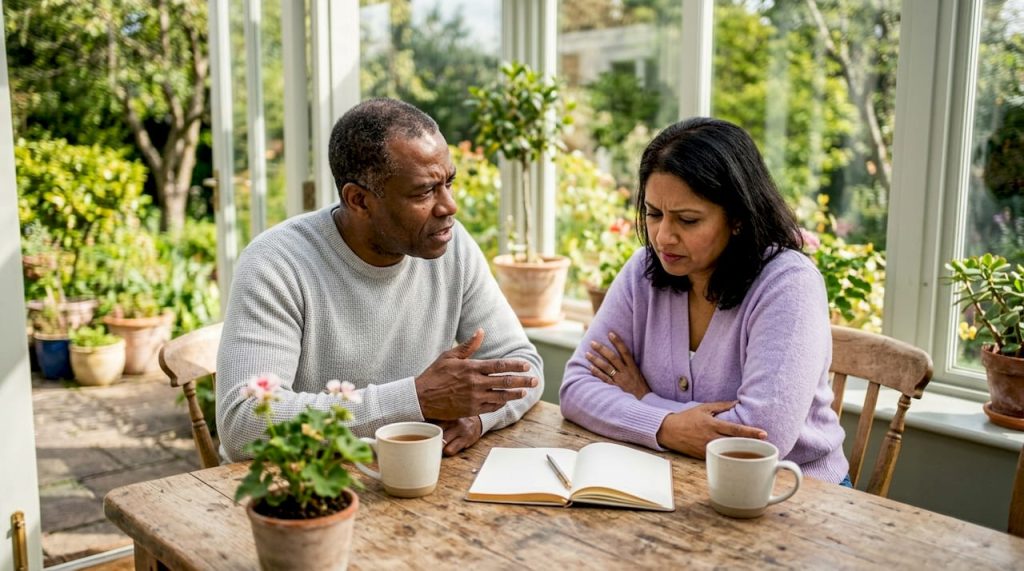
Destructive conflict in relationships is defined as hostile interaction focused on blaming, winning, or overpowering a partner rather than resolving the actual issue. Unlike constructive disagreement, which moves toward understanding and solutions, destructive conflict shifts focus to winning and creates emotional threat instead of resolution. This pattern erodes emotional safety, breaks trust, and traps couples in cycles that grow harder to escape over time. Recognizing it is the first step toward changing it. Couplesfightschool works with couples at every stage of this recognition, offering psychology-backed tools to move from hostile cycles toward genuine connection.
What is destructive conflict in relationships, and how does it show up?
Destructive conflict is not simply a heated argument. It is a pattern of interaction where the goal shifts from solving a problem to defeating your partner. The industry term for the opposite is constructive conflict, and understanding that contrast makes the destructive version much easier to spot.

Four specific behaviors signal that conflict has crossed into destructive territory. Research identifies criticism, contempt, defensiveness, and stonewalling as the key behaviors that shut down healthy dialogue and predict relationship deterioration. Each one replaces issue-focused conversation with personal attack or emotional shutdown.
Here is what each behavior looks like in practice:
- Criticism attacks the person, not the problem. “You never think about anyone but yourself” is criticism. “I felt hurt when you forgot our plans” is not.
- Contempt includes mocking, name-calling, eye-rolling, and the silent treatment. Contempt is the single biggest predictor of divorce or separation. That makes it the most dangerous of the four behaviors.
- Defensiveness blocks any chance of taking responsibility. When one partner plays the victim or reverses blame, defensiveness escalates the conflict cycle rather than slowing it down.
- Stonewalling is emotional withdrawal from the conversation entirely. Stonewalling breaks connection and makes resolution nearly impossible because one partner has simply left the room emotionally.
- Threats and ultimatums introduce fear into the relationship, replacing safety with control.
- Escalation cycles occur when one hostile move triggers another, and the original issue disappears under layers of accumulated anger.
Pro Tip: When you notice any of these behaviors in your own arguments, treat them as a signal that the conflict has become destructive, not just difficult. The behavior is the problem, not your partner’s character.
How does destructive conflict affect emotional safety and trust?
Emotional safety is the foundation of any close relationship. Destructive conflict attacks that foundation directly. Therapist Kristin Davin notes that destructive conflict leaves partners feeling emotionally unsafe, dismissed, or small. That feeling after a fight tells you more about the health of your relationship than the topic of the fight itself.
“The feeling left after conflict signals the health of the interaction more than the topic itself. If you consistently leave arguments feeling worse about yourself or your partner, the conflict pattern is the problem.”
— Therapist Kristin Davin
Chronic destructive conflict does measurable damage over time. Long-term exposure to destructive interpersonal conflict increases the likelihood of subsequent emotional violence by 5.5%. That figure reflects what happens when hostile patterns go unaddressed for years. The relationship does not simply stay stuck. It deteriorates.
The psychological toll shows up in daily life too. Partners in high-conflict relationships often report chronic stress, difficulty sleeping, and a growing sense of dread before conversations. Intimacy shrinks because vulnerability feels too risky. Attachment weakens because neither partner feels reliably safe with the other. The relationship becomes a source of pain rather than support.
Recurring fights also tend to stem from unaddressed underlying needs related to power, care, or respect, not the surface topic. A fight about dishes is rarely about dishes. When those deeper needs stay invisible, the same argument repeats in different costumes, and each repetition adds another layer of resentment.
How do you tell healthy conflict from destructive conflict?
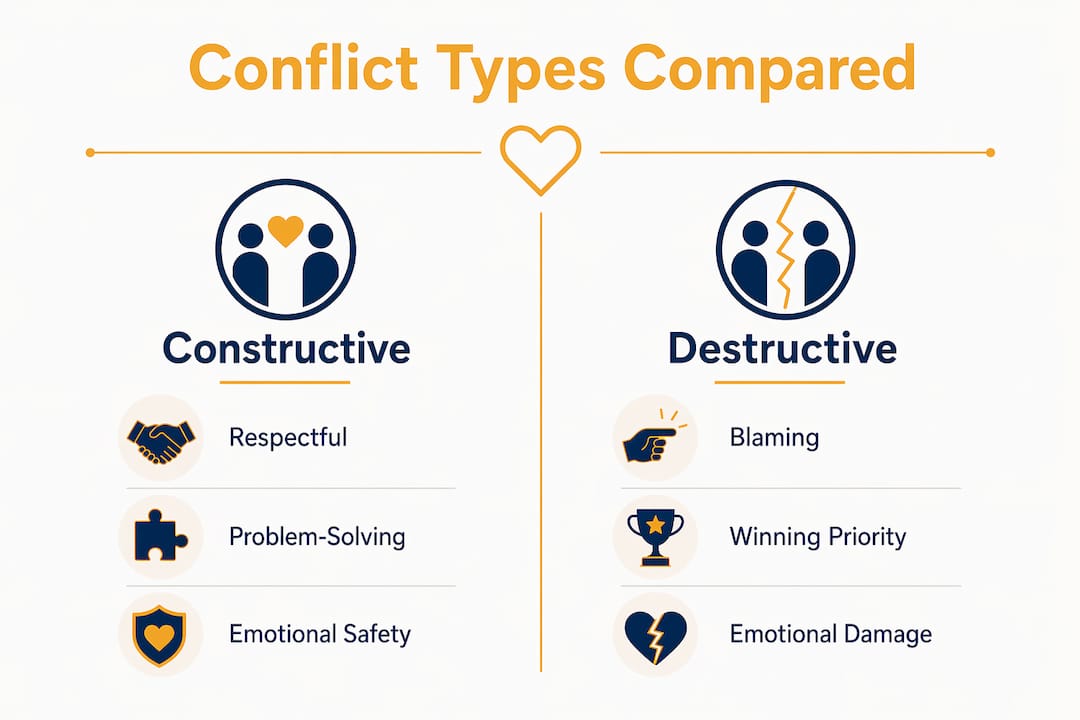
Not all conflict is harmful. Constructive conflict focuses on resolving the issue respectfully, avoids personal attacks, and builds trust and connection over time. The goal is understanding, not victory. That single difference in intent shapes everything else about how the conversation goes.
The table below shows the clearest distinctions between the two types.
| Feature | Constructive conflict | Destructive conflict |
|---|---|---|
| Primary goal | Understand and resolve | Win or overpower |
| Communication style | Respectful, issue-focused | Hostile, personal attacks |
| Emotional outcome | Both partners feel heard | One or both feel dismissed |
| Repair attempts | Welcomed and reciprocated | Rejected or ignored |
| Long-term effect | Builds trust and closeness | Erodes safety and connection |
The emotional safety in relationships question is central here. Healthy conflict keeps emotional safety intact even when the conversation is hard. You can disagree strongly and still feel respected. Destructive conflict removes that safety, and once it is gone, honest communication becomes nearly impossible.
One reliable test: how do you feel 30 minutes after the argument ends? Constructive conflict leaves both partners with a sense of resolution, even if the issue is not fully solved. Destructive conflict leaves at least one partner feeling worse about themselves, their partner, or the relationship.
Pro Tip: Pay attention to repair attempts during conflict. A repair attempt is any gesture, word, or pause meant to de-escalate tension. If your partner reaches for humor, softens their tone, or says “I don’t want to fight,” and you can receive that, the conflict is still in constructive territory.
What practical steps help you handle destructive conflict?
Changing destructive conflict requires dismantling entrenched behaviors one small move at a time, building new patterns through repeated practice. There is no single conversation that fixes it. The work is cumulative.
These steps give you a place to start:
- Name the pattern, not the person. Say “We keep getting stuck in the same loop” instead of “You always do this.” Naming the pattern makes it a shared problem rather than a personal accusation.
- Pause before escalation. When you feel your heart rate rising, ask for a short break. Physiological arousal makes constructive conversation nearly impossible. A 20-minute pause lets your nervous system settle.
- Use “I” statements. Replace “You made me feel” with “I felt.” This keeps the focus on your experience rather than your partner’s fault.
- Focus on the underlying need. Ask yourself what you actually need from this conversation. Is it to feel respected? To feel close? Naming that need out loud changes the direction of the conversation.
- Look for repair moments. Even in the middle of a difficult argument, watch for your partner’s attempts to slow things down. Receiving a repair attempt is a skill, and it is one worth practicing.
- Seek professional support when patterns persist. If the same fights repeat despite your best efforts, trauma-informed conflict resolution with a trained therapist can help you identify what is driving the cycle.
Conflict avoidance is not a solution. Avoiding conflict creates a silent buildup of tension and leads to repeated, more intense fights later. The goal is not fewer conversations about hard topics. The goal is better ones.
Pro Tip: If you find yourself avoiding a topic because “it always turns into a fight,” that topic needs more attention, not less. Avoidance is a short-term relief that makes the long-term problem worse. Learning to diffuse conflict with your partner is a skill, not a personality trait.
Key Takeaways
Destructive conflict is defined by the goal of winning rather than understanding, and shifting that goal is the single most effective change a couple can make.
| Point | Details |
|---|---|
| Core definition | Destructive conflict prioritizes winning over resolving, creating emotional threat instead of safety. |
| Four warning behaviors | Criticism, contempt, defensiveness, and stonewalling predict relationship breakdown when left unchecked. |
| Emotional cost | Chronic destructive conflict erodes trust, intimacy, and emotional safety over time. |
| Healthy vs. destructive | The key difference is intent: understanding versus overpowering, and how you feel after the fight. |
| Path forward | Pausing escalation, naming patterns, and using “I” statements shift conflict toward constructive territory. |
What I’ve learned from watching couples fight
Most couples I work with arrive believing their problem is the topic they keep fighting about. It is almost never the topic. The topic is a vehicle. What they are actually fighting about is whether they feel respected, whether they feel close, whether they feel like their partner is truly on their side.
The most common misconception I encounter is that avoiding conflict means the relationship is healthy. It does not. Couples who never fight are often couples who have stopped being honest with each other. Real intimacy requires the ability to disagree and come back together. The goal is not a conflict-free relationship. The goal is a relationship where conflict does not destroy safety.
What I have seen work, consistently, is the shift from “How do I win this argument?” to “What does my partner need right now, and can I give it?” That shift does not come naturally. It takes practice, self-awareness, and often some outside guidance. But I have watched couples who were on the edge of separation make that shift and rebuild something genuinely strong. The pattern is not permanent. It is learned behavior, and learned behavior can change.
— Carlos
Couplesfightschool can help you change the pattern
Recognizing destructive conflict is one thing. Changing it is another. Couplesfightschool was built specifically for couples who are ready to move from hostile cycles toward real communication and emotional connection.
Founded by licensed mental health professionals Carlos Todd and Natasha Pemberton-Todd, Couplesfightschool offers online coaching for couples, structured courses, and practical tools grounded in the F.I.G.H.T. Plan® framework. Whether you are dating, married, or somewhere in between, the relationship skills program gives you a clear, step-by-step path from recurring arguments to lasting connection. The work is hard. The tools make it possible.
FAQ
What is the main difference between destructive and constructive conflict?
Constructive conflict aims to understand and resolve an issue while keeping emotional safety intact. Destructive conflict aims to win, blame, or overpower, and leaves at least one partner feeling dismissed or unsafe.
Can destructive conflict patterns be changed?
Yes. Changing destructive conflict requires building new communication habits one step at a time. Couples who develop awareness of their patterns and practice repair skills consistently see real improvement, especially with professional support.
What are the four behaviors that signal destructive conflict?
Criticism, contempt, defensiveness, and stonewalling are the four key behaviors. Contempt is the most damaging and is the strongest predictor of relationship breakdown.
Is conflict avoidance better than destructive conflict?
No. Avoiding conflict builds silent resentment and leads to more intense fights over time. The goal is not to avoid conflict but to engage in it constructively, with respect and a focus on resolution.
How do I know if my relationship conflict has become destructive?
Pay attention to how you feel after arguments. If you consistently feel dismissed, unsafe, or worse about yourself or your partner, the conflict pattern has become destructive and needs to be addressed.
Recommended