
When to Seek Couples Therapy: Early Signs You Shouldn’t Ignore
|
Getting your Trinity Audio player ready...
|
Are you wondering when to seek couples therapy? You’re not alone.
Many couples face difficult patches, but knowing when to seek professional help can be the difference between drifting apart and rebuilding a stronger connection.
Therapy isn’t just for crises; it’s a proactive tool for any couple feeling stuck, unheard, or disconnected.
Couples therapy is often misunderstood. It is not a sign of failure or a last-ditch effort to save a marriage on the brink. Instead, think of it as regular maintenance for your relationship, much like you’d see a doctor for a physical.
Its main purpose is to provide a safe, neutral space where both partners can be heard.
A trained therapist helps you break out of unhealthy patterns, improve communication, rebuild trust, and restore emotional and physical intimacy.
This article will help you understand the early warning signs couples counseling can address, so you can view therapy as a positive step forward, not a defeat.
Why Couples Wait Too Long to Seek Help

Many couples see therapy as a final option, something to try when all else has failed. Because of this, they often wait much longer than they should.
Why does this happen? Common reasons include stigma, the fear that needing help means the relationship is broken beyond repair, simple denial about how serious problems have become, or even embarrassment about sharing private struggles with a stranger.
This delay comes with a significant emotional cost. Living in a state of persistent conflict, loneliness, or resentment can drain your happiness and individual well-being.
The longer negative patterns continue, the harder they are to break and the more damage they do to your foundation of love and respect.
On average, couples wait about 2.68 years from the onset of serious relationship problems before starting couples therapy, with most seeking help within two years of experiencing difficulties.
This statistic highlights a crucial window where problems are often manageable but are instead left to grow. Don’t let fear or stigma cost you precious time and happiness.
Why Early Intervention Matters
Thinking of therapy as an emergency room for relationships is a common mistake. In reality, it’s much more effective as a preventative check-up or a guided coaching session.
Seeking help when you first notice troubling patterns is a sign of strength and commitment, not weakness.
Research shows that couples who seek therapy earlier, rather than waiting until problems are severe, have a better chance of resolving issues and maintaining a healthy relationship.
When you intervene early, issues are less entrenched, resentment is lower, and both partners are typically more motivated and hopeful.
Early therapy helps you learn new skills before bad habits become the norm, making it easier to rebuild connections. It transforms therapy from a “last resort” into a proactive investment in your future together, saving you from greater pain down the road.
Signs You Shouldn’t Ignore (Top Indicators You Need Couples Therapy)
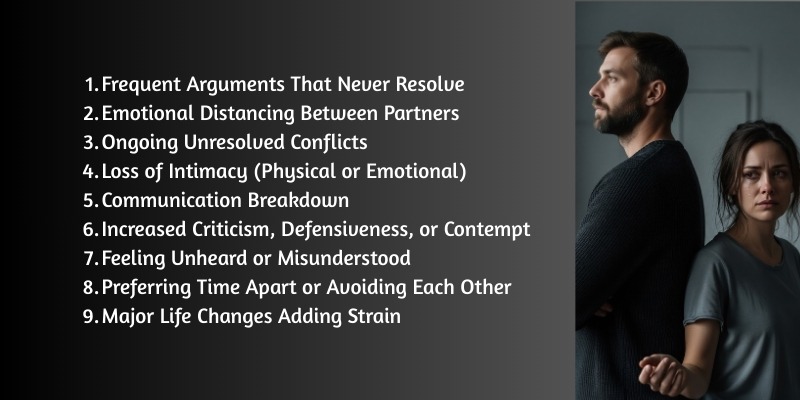
How do you know if your rough patch is actually a sign you need professional support? While every couple argues, certain patterns indicate deeper distress.
Here are the key couples therapy signs that suggest it’s time to consider seeking help.
Frequent Arguments That Never Resolve
Do you feel like you’re having the same fight over and over? Maybe it’s about money, chores, parenting, or in-laws. The topic might change, but the underlying feeling of frustration and not being heard remains the same.
These aren’t just disagreements; they are cycles where no solution is ever found, leaving both partners feeling defeated.
This pattern of frequent arguments signals a breakdown in problem-solving skills, which a therapist can directly help you improve.
Emotional Distancing Between Partners
This is one of the most common yet painful signs. You might live together and share a bed, but you feel miles apart. You stop sharing details about your day, your dreams, or your worries. This emotional distancing partners experience often leads to feeling lonely in marriage.
You might be surrounded by family but feel a deep, aching sense of isolation because the emotional bridge to your partner is down. Therapy provides a space to safely rebuild that bridge.
Ongoing Unresolved Conflicts
Linked to frequent arguments, this sign is about the specific issues that are always “on the table.” That one big fight from two years ago that you never truly got past, or the fundamental difference in values that you’ve both agreed to “ignore” but that silently fuels resentment.
These unresolved conflicts counseling can address are like open wounds that keep getting bumped. A therapist helps you finally address and heal these old injuries so you can move forward.
Loss of Intimacy (Physical or Emotional)
Intimacy is more than sex; it’s about closeness, affection, and vulnerability.
A loss of intimacy couples experience can manifest as a dead bedroom, but also as a lack of hugging, kissing, hand-holding, or deep conversations. You might feel like roommates or co-parents rather than romantic partners.
This distance often stems from unresolved hurt, stress, or emotional disconnect, all of which can be explored and addressed in therapy.
Communication Breakdown
Healthy communication involves both talking and listening. A communication breakdown in a relationship looks like constant misunderstandings, talking “at” each other instead of “with” each other, or one or both partners completely shutting down (stonewalling).
You may feel like you can’t express yourself without starting a fight, so you choose silence instead. Therapy teaches practical, new ways to communicate that foster understanding instead of conflict.
Increased Criticism, Defensiveness, or Contempt
Psychologist John Gottman’s famous “Four Horsemen” are criticism, defensiveness, contempt, and stonewalling.
When conversations are filled with blame (“You always…”), sarcasm, eye-rolling, or one partner constantly making excuses, the relationship climate becomes toxic. This pattern of increased criticism and defensiveness destroys fondness and respect.
A therapist can help you identify these destructive behaviors and replace them with softer, more respectful interactions.
Feeling Unheard or Misunderstood
At the core of many relationship issues is the basic human need to feel seen and validated. When you express a concern or a feeling and it’s dismissed, minimized, or ignored, it creates deep hurt.
This feeling of being unheard in a relationship tells you your partner doesn’t value your inner world. Over time, you stop sharing altogether. Therapy works to restore this fundamental sense of being heard and valued by your partner.
Preferring Time Apart or Avoiding Each Other
It’s healthy to have separate interests, but when you actively look forward to your partner being away, or you invent reasons to stay late at work, a serious problem exists.
This behavior of preferring time apart from a partner is a form of avoidance.
It shows that being alone feels safer or more peaceful than being together. This emotional withdrawal is a major red flag that the connection has become a source of stress, not comfort.
Major Life Changes Adding Strain
Even happy events can test a relationship. The birth of a child, a big move, a career change, financial stress, or caring for an aging parent can create immense pressure. These major life changes strain your existing patterns and resources.
If you find yourselves arguing more, connecting less, or feeling like a team during these transitions, therapy can be essential. It provides tools to deal with change together, strengthening your partnership instead of letting it fracture.
How Couples Therapy Can Help
Understanding what happens in therapy can help you explore the process.
A relationship help professional (a licensed therapist) acts as a neutral guide and coach. They don’t take sides or tell you what to do. Instead, they help you see your interaction patterns clearly and teach you new skills.
In sessions, you’ll learn to communicate without blame using “I feel” statements, listen to understand rather than to rebut, and de-escalate conflicts. You’ll work to identify the root causes of recurring fights, not just the surface topics.
A major focus is often on rebuilding trust therapy benefits, whether that trust was broken by infidelity, lies, or persistent emotional neglect.
Therapy provides a structured, safe environment to express hurt, set new boundaries, and slowly rebuild security. Ultimately, it gives you a shared toolkit to handle future challenges as a united team.
What to Do Before Scheduling a Session
Taking the step toward therapy can feel big. Here’s how to prepare:
- Self-Reflection: Before you bring it up, think about your own feelings and contributions to the relationship dynamics. What are your hopes for therapy? What specific patterns would you like to change?
- Identify Shared Goals: Try to frame the need for therapy around shared goals like, “I want us to feel close again,” or “I want us to handle disagreements without so much hurt.”
- Bring It Up Gently: Choose a calm moment. Use “we” statements and focus on the positive future. For example: “I’ve been feeling disconnected lately, and I really value us. I think working with a therapist could help us get back on track together. What do you think?”
- Address Safety Concerns: If there is ongoing abuse, untreated addiction, or serious mental health issues, individual therapy or specialized support may be needed first. Couples therapy requires a basic level of safety to be effective.
FAQs
What is the right time for therapy?
The right time is when you see persistent, painful patterns (like the signs above) that you can’t fix on your own. Don’t wait for a crisis; earlier is better.
Can therapy help if only one partner is willing?
Yes. You can start individual therapy to work on your part of the relationship dynamic, which can sometimes motivate your partner to join later.
Is therapy only for marriages in crisis?
No. Therapy is for any couple wanting to improve their connection, navigate a tough transition, or simply strengthen an already-good relationship.
How long does couples therapy take to work?
This varies. Some couples see improvement in 4-6 sessions, while others may engage in therapy for several months, depending on their goals and issues.
Conclusion
Recognizing that your relationship needs support is an act of courage and care. The signs we’ve discussed (from constant arguing to deep loneliness) are indicators that your partnership could benefit from a new perspective and new skills.
Ignoring these signs often leads to more damage and harder repair work later.
By deciding when to seek couples therapy proactively, you choose to invest in your shared happiness and future.
Taking that first step to find a qualified therapist can be the most important move you make to transform conflict into connection and loneliness back into intimacy. Your relationship is worth the effort!