Relationship Skills Every Married Couple Needs to Thrive
Relationship skills are practical tools that build emotional safety, honest communication, and conflict repair in marriage. These are not personality traits you either have or don’t. They are learnable behaviors, and the research backs that up. Eight specific principles form the foundation of resilient, healthy marriages, including safety and trust, honest communication, and conflict repair. Dr. John Delony’s framework treats these as daily practices, not one-time fixes. Couples who build these skills consistently report stronger connection, less recurring conflict, and deeper intimacy over time.
1. What are the relationship skills every married couple needs first?
Emotional safety is the first skill every married couple must build. Without it, honest conversation shuts down and vulnerability disappears. Your spouse cannot open up if they fear judgment, dismissal, or retaliation. Emotional safety in relationships is the foundation that makes every other skill possible.
Trust building strategies start with small, consistent behaviors. Making and keeping promises, showing up during hard moments, and responding with care when your spouse shares something vulnerable all build trust over time. One broken promise does not destroy a marriage, but a pattern of broken promises does. Couples who treat trust as something earned daily stay more connected than those who assume it is automatic.
Setting healthy limits is equally foundational. Limits in a relationship define what you will and will not accept, and they protect both partners from resentment. Couples who communicate their limits clearly reduce the guesswork that leads to repeated frustration.
- Make eye contact when your spouse is speaking
- Put your phone down during important conversations
- Follow through on small commitments consistently
- Respond with curiosity instead of defensiveness when your spouse raises a concern
Pro Tip: When your spouse shares something difficult, resist the urge to fix it immediately. Say “I hear you” first. Validation before problem-solving is one of the fastest ways to build emotional safety.
2. How can couples communicate honestly to strengthen their bond?
Honest, effective communication is the skill that separates thriving marriages from struggling ones. Focused attention, clarifying expectations early, and asking second questions are concrete tools that reduce misunderstandings and deepen connection. Most couples think they communicate well until a recurring argument proves otherwise.
These four communication practices make the biggest difference:
- Give full attention. Make eye contact, minimize distractions, and face your spouse when they speak. Physical presence signals that what they say matters.
- Clarify expectations early. Unspoken expectations are the source of most marital frustration. State what you need before resentment builds.
- Ask second questions. After your spouse answers, ask one more question. “What did that feel like for you?” extends understanding beyond surface-level exchange.
- Use “I” statements. “I felt hurt when…” lands differently than “You always…” One invites dialogue. The other triggers defense.
Communication patterns become defensive under stress, but couples who practice knowing their truth, expressing clearly, and listening steadily change those patterns over time. That shift does not happen by accident. It happens through deliberate practice.
Pro Tip: Agree on a “no phones” rule during dinner or any intentional couple time. Technology interruptions are one of the most common barriers to genuine connection, and removing them costs nothing.
3. What are effective conflict repair strategies for married couples?
Conflict is not the enemy of a good marriage. Unrepaired conflict is. Repairing conflict with affirmations of love and collaborative problem solving builds stronger connection than avoiding disagreement or keeping score. The goal is not to win the argument. The goal is to stay on the same team.
| Common Conflict Mistake | Effective Repair Strategy |
|---|---|
| Scorekeeping past wrongs | Focus on the current issue only |
| Attacking your spouse’s character | Address the behavior, not the person |
| Stonewalling and shutting down | Take a timed break, then return to talk |
| Competing to be right | Ask “What do we both need here?” |
| Escalating volume and intensity | Lower your voice and slow your pace |
Effective conflict repair includes establishing healthy limits, avoiding scorekeeping, and choosing service over opposition. Couples who view conflict as “us versus the problem” rather than “me versus you” resolve disagreements faster and with less damage.
Practical steps to repair after conflict:
- Affirm your love even when you are frustrated with your spouse’s behavior
- Identify the shared goal before proposing solutions
- Acknowledge your own role in the disagreement
- Agree on a specific next step before the conversation ends
Learning to diffuse conflict with your partner is a skill, not a talent. Couples who practice it regularly stop dreading hard conversations and start having them sooner.
4. Which skills support intimacy enhancement and forgiveness?
Intimacy is earned through daily connection and emotional responsiveness, not through grand gestures. Emotionally Focused Couple Therapy (EFT) applied in eight 90-minute sessions improves marital commitment, intimacy, and forgiveness significantly compared to control groups. That result points to something important: attachment-focused skills work, and they work outside clinical settings too.
Emotional responsiveness and safety are the mechanisms that support lasting repair and forgiveness, beyond just changing behavior. When your spouse feels seen and responded to, the emotional bond deepens. When that responsiveness is absent, even good behavior feels hollow.
Skills that build intimacy and forgiveness:
- Practice vulnerability. Share something real about your inner world, not just logistics. Vulnerability invites closeness.
- Respond to bids for connection. When your spouse reaches out, even in small ways, turn toward them instead of away.
- Choose forgiveness as a practice. Forgiveness is not pretending the hurt did not happen. It is choosing not to let it define the relationship.
- Create rituals of connection. A morning check-in, a nightly debrief, or a weekly date night all signal that the relationship is a priority.
- Name what you appreciate. Specific appreciation (“I loved how you handled that situation with the kids today”) lands deeper than generic praise.
Intimacy enhancement tips are most effective when they are consistent, not occasional. One romantic weekend cannot substitute for 30 days of small, responsive moments.
5. How do couples maintain essential skills over time?
Daily intentional connection and small microhabits prevent drift, which is the biggest threat to long-term marriage satisfaction. Drift is not dramatic. It is quiet. It happens when two people stop paying attention to each other and start coexisting instead of connecting.
Relationship confidence, strengthened by communication and support, significantly improves individual mental health, sleep, and reduces substance use. That finding matters because it shows that investing in your marriage is also investing in your personal well-being. The two are not separate.
Habits that sustain skill growth over time:
- Schedule regular check-ins. A weekly 20-minute conversation about how each of you is feeling in the relationship prevents small issues from becoming big ones.
- Reflect on shared wins. Recalling what you have built together reinforces shared identity and relationship confidence.
- Name the drift early. If you notice distance growing, say so. “I feel like we have been ships passing lately” is a repair bid, not an accusation.
- Revisit your communication agreements. Skills erode under stress. Revisiting your commitments to each other keeps them active.
Pro Tip: Put your weekly couple check-in on the calendar like any other appointment. Couples who schedule connection are far more likely to maintain it than those who wait for the right moment.
Relationship confidence acts as a buffer for individual well-being and grows stronger when couples reflect on shared strengths and history. That reflection is not nostalgia. It is a skill.
Key takeaways
Strong marriages are built on practiced skills, not just good intentions. Emotional safety, honest communication, and consistent conflict repair are the core skills that determine whether a marriage grows or drifts.
| Point | Details |
|---|---|
| Emotional safety comes first | Without it, honest conversation and vulnerability shut down completely. |
| Communication requires daily practice | Focused attention, “I” statements, and second questions reduce recurring misunderstandings. |
| Conflict repair beats conflict avoidance | Affirming love and solving problems together builds stronger bonds than avoiding disagreement. |
| Intimacy is earned through small moments | Daily responsiveness and vulnerability deepen connection more than occasional grand gestures. |
| Relationship confidence protects well-being | Mutual support and reflection on shared history strengthen both the marriage and individual health. |
What I have learned from working with couples on these skills
Most couples come to me believing their problem is their partner. They want me to fix the other person. What I have found, after years of working with couples at Couplesfightschool, is that the real problem is almost always a skill gap, not a character flaw.
The couples who make the most progress are not the ones who love each other the most. They are the ones willing to learn. I have watched high-conflict couples completely shift their dynamic once they understood that conflict repair is a skill, not a personality trait. That realization alone changes everything.
The sticking point I see most often is the belief that needing to learn communication skills means something is wrong with the marriage. The opposite is true. Every marriage hits a wall where good intentions stop being enough. The couples who push through that wall are the ones who treat their relationship like something worth investing in, not just something worth having.
The ripple effect of these skills extends beyond the couple. When parents communicate better and fight less destructively, their children feel it. The emotional climate of a home shifts. That is not a small thing. That is the whole point.
— Carlos
Couplesfightschool’s coaching programs for married couples
Knowing these skills and practicing them consistently are two different challenges. Couplesfightschool was built by licensed mental health professionals Carlos Todd and Natasha Pemberton-Todd specifically to close that gap for married couples.
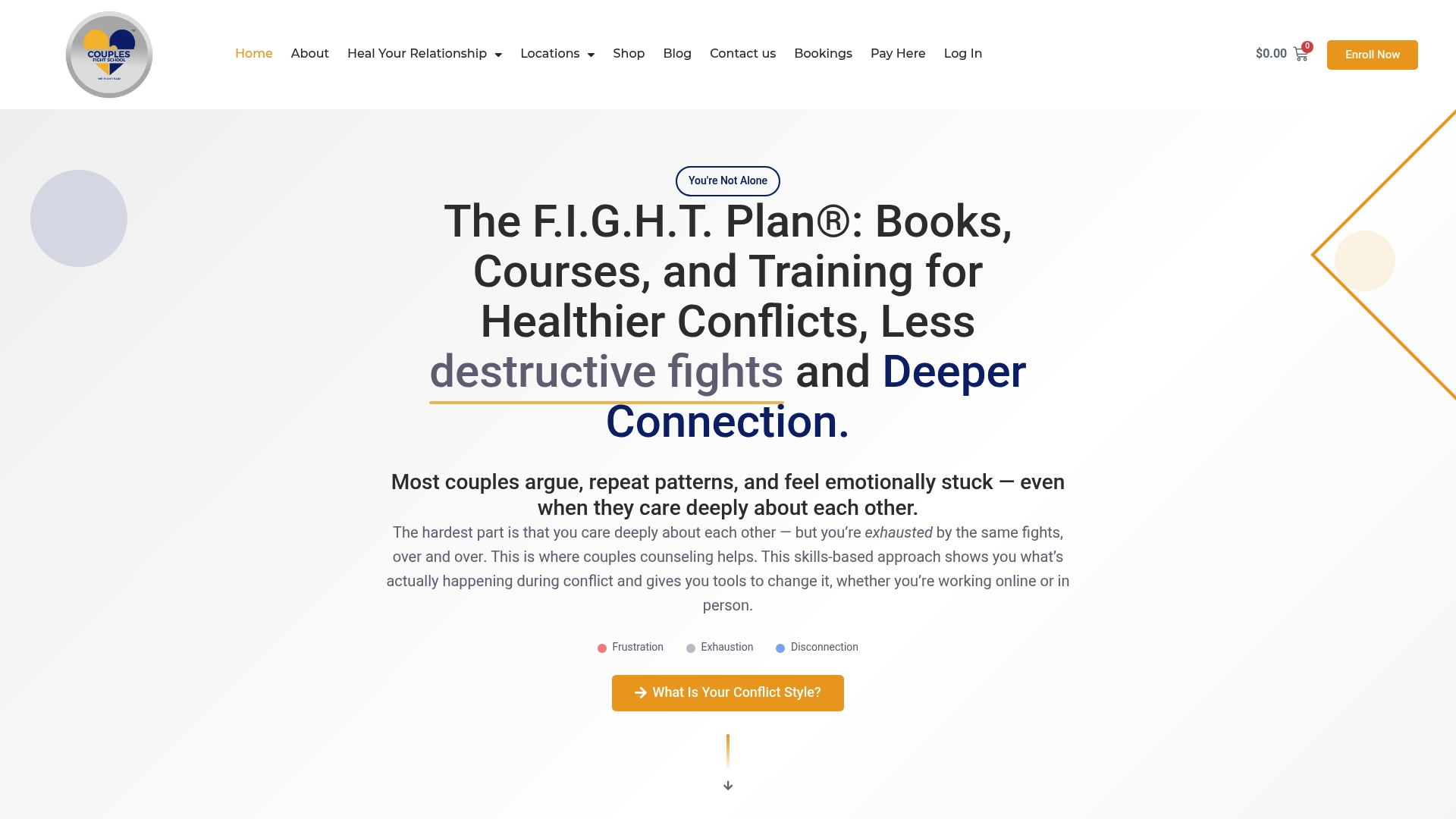
The online coaching for couples program gives you direct access to structured guidance on communication, emotional safety, and conflict repair. Whether you are dealing with recurring arguments, emotional distance, or just wanting to go deeper, the F.I.G.H.T. Plan® framework gives you a clear path forward. Couplesfightschool also offers the Fight Less, Love More course for couples who want a self-paced option. Both are built around the same principle: skills, not just love, are what make marriages last.
FAQ
What are the most important relationship skills for married couples?
The most important skills are emotional safety, honest communication, and conflict repair. These three form the foundation that supports trust, intimacy, and long-term connection.
How do communication skills for couples reduce conflict?
Focused attention, “I” statements, and asking clarifying questions reduce misunderstandings before they escalate. Couples who practice these three skills experience better openness and healthier conflict patterns over time.
Does therapy actually improve intimacy and forgiveness?
Yes. EFT delivered in eight 90-minute sessions significantly improves marital commitment, intimacy, and forgiveness compared to couples who receive no intervention.
How do couples prevent emotional drift over time?
Daily microhabits and intentional connection prevent drift. Scheduling weekly check-ins and reflecting on shared accomplishments are two of the most effective ways to stay close.
Can relationship skills improve individual mental health?
Yes. Improvements in relationship confidence have a measurable positive impact on mental health, sleep quality, and substance use, according to research from the Strong Couples Project.
Recommended