
Why Communication Styles Clash in Relationships
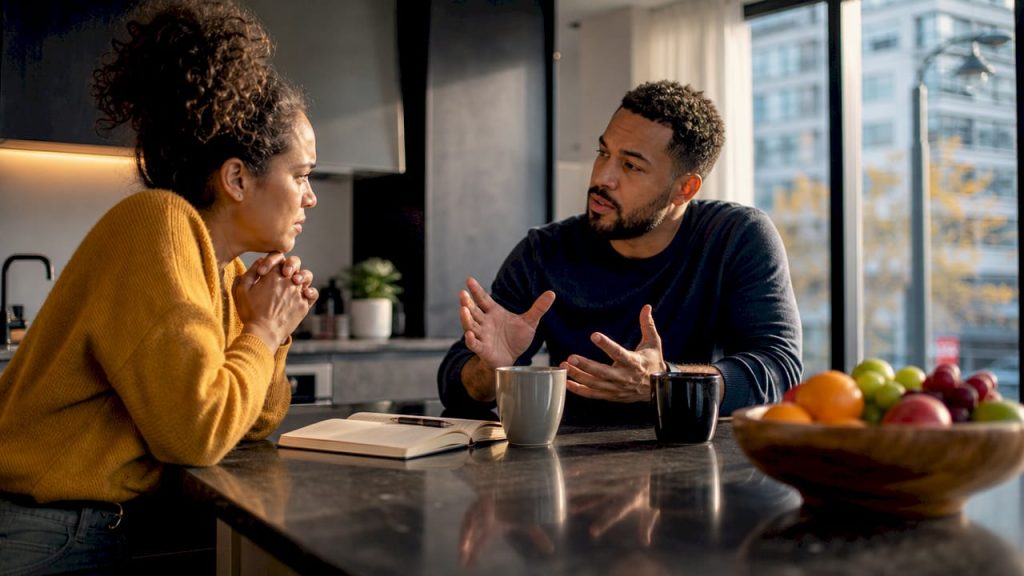
Communication style clashes in relationships are defined as the repeated breakdown in understanding that occurs when two partners process, express, and receive emotional information in fundamentally different ways. These clashes rarely stem from bad intentions. They emerge from differences in personality, upbringing, nervous system responses, and learned emotional habits. Research confirms that communication patterns directly predict relationship satisfaction and, in hostile cases, intimate partner violence. Understanding why communication styles clash in relationships is the first step toward changing the dynamic entirely.
Why communication styles clash in relationships
Communication style clashes are rooted in one core reality: no two people learned to express themselves in the same environment. One partner grew up in a home where conflict was addressed immediately and loudly. The other learned that silence was safer than speaking. Neither approach is wrong. Both feel completely natural to the person using them.
The clinical term for these recurring patterns is “communication typologies.” A 2026 APA multisite study analyzed 1,957 couples using the Rapid Marital Interaction Coding System during 10-minute conflict interactions. It identified five distinct typologies: task-oriented, warm, warm-but-reactive, hostile, and expressive. That finding matters because it proves that clashes are not random. They follow predictable patterns that can be identified and changed.
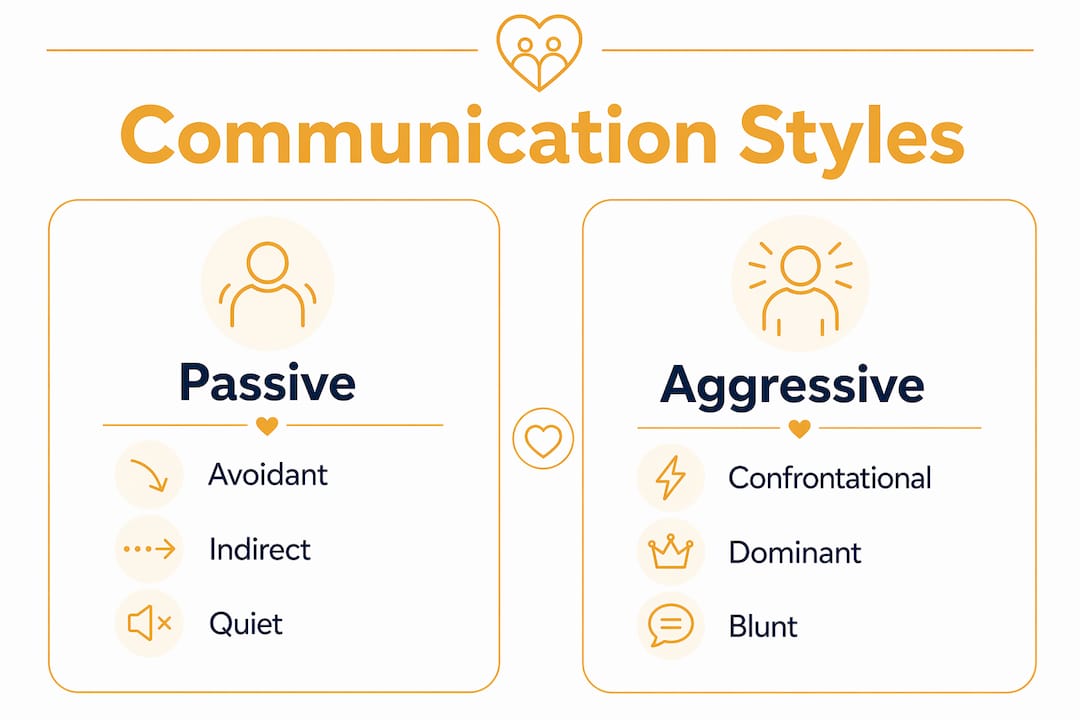
Most couples fall into one of four general communication styles: passive, aggressive, passive-aggressive, and assertive. Assertive communication is the only style that consistently supports mutual understanding. The other three create friction because they either suppress needs, attack the other person, or do both indirectly.

What behaviors predict relationship stress or success?
The most clinically significant predictors of relationship failure are the Four Horsemen: criticism, defensiveness, contempt, and stonewalling. Contempt is the strongest predictor of divorce because it communicates fundamental disrespect. Eye-rolling, sarcasm, and condescending remarks do not just hurt feelings. They signal to a partner that they are not valued.
Stonewalling is equally destructive, but for a different reason. Stonewalling often happens because of emotional overwhelm rather than intentional withdrawal. One partner shuts down not to punish, but because their nervous system has hit its limit. The other partner reads silence as rejection and escalates. That cycle feeds itself until both people feel unheard.
The 2026 APA study found that hostile and expressive communication groups showed the highest rates of intimate partner violence. Task-oriented and warm groups reported the highest satisfaction. That contrast is striking. It shows that how couples talk during conflict matters more than what they are fighting about.
| Communication typology | Satisfaction level | Risk factor |
|---|---|---|
| Warm | High | Low |
| Task-oriented | High | Low |
| Warm-but-reactive | Moderate | Moderate |
| Expressive | Low | Elevated |
| Hostile | Lowest | Highest |
Pro Tip: If you recognize contempt or stonewalling in your relationship, treat it as a signal that the nervous system is overwhelmed, not that the relationship is broken. The pattern can be interrupted.
How do processing speeds cause couples to misunderstand each other?
One of the least discussed causes of miscommunication in romantic relationships is tempo. Partners rarely process emotional information at the same speed. Fast initiators want to discuss issues immediately, while slow reactors need time to process feelings before they can respond. That gap is a tempo conflict, not a commitment issue.
The initiator feels ignored or dismissed when the reactor goes quiet. The reactor feels ambushed when the initiator pushes for an immediate conversation. Both interpretations are wrong, and both feel completely real. Most conflicts stem from incompatible processing speeds, causing one partner to feel overwhelmed and the other to feel abandoned.
Neuroscience adds another layer. The brain processes emotional tone before semantic meaning. That means your partner hears how you say something before they register what you said. A tense tone triggers a defensive response before the actual words land. Partners with different auditory processing thresholds experience this effect more intensely, which explains why the same conversation can feel fine to one person and threatening to another.
Recognizing tempo differences prevents the most common mistake couples make: treating a processing habit as a character flaw.
- Initiators often interpret silence as avoidance, stonewalling, or lack of care.
- Reactors often interpret urgency as aggression, pressure, or emotional unsafety.
- Both interpretations feel justified. Neither is accurate.
- Labeling a reactor as “emotionally unavailable” or an initiator as “controlling” escalates conflict rather than resolving it.
Pro Tip: When your partner goes quiet, try saying: “I can see you need a moment. Let’s come back to this in 20 minutes.” That one sentence stops the pursuit-withdrawal cycle before it starts.
What strategies help couples bridge communication differences?
The most effective tool for overcoming communication barriers is meta-awareness. Meta-awareness is the ability to see your partner’s responses as processing differences rather than personal attacks. It requires stepping outside the content of the argument and observing the dynamic itself.
Developing meta-awareness takes practice, but the steps are concrete. Here is a framework that works:
- Identify your own style first. Know whether you are an initiator or a reactor. Know whether you tend toward passive, assertive, or aggressive communication under stress. You cannot adjust what you cannot see.
- Name the pattern, not the person. Instead of “You always shut down,” try “I notice we get stuck when I bring things up quickly. Can we find a better time?” That shift removes blame and opens a door.
- Slow down or speed up deliberately. If your partner is a slow reactor, give them a heads-up before a difficult conversation. If you are the reactor, tell your partner you need 30 minutes before you can engage productively.
- Separate tone from intent. When your partner’s tone feels sharp, pause before responding. Ask yourself whether the tone reflects frustration with the situation rather than contempt for you. That distinction changes everything.
- Respond to stonewalling with space, not pursuit. Withdrawal often signals nervous system overload. Pushing harder increases the overwhelm. Offering space and a scheduled return to the conversation breaks the cycle.
Trauma-informed approaches add another dimension. Trauma-informed communication strategies help couples recognize how past experiences shape present reactions, which reduces the tendency to personalize a partner’s defensive responses.
Partners do not need identical communication styles to build a strong relationship. They need the skills to recognize and adjust to each other’s differences. That is a learnable skill, not a personality trait you either have or do not.
How do communication patterns affect long-term relationship satisfaction?
Communication patterns compound over time. A couple that defaults to hostile or expressive styles during conflict does not just have bad arguments. They erode trust, reduce emotional safety, and create a relationship where both partners feel chronically misunderstood.
The 2026 APA multisite study makes this concrete. Warm and task-oriented couples reported the highest satisfaction scores. Hostile couples reported the lowest, along with the highest rates of relationship violence. That is not a coincidence. It reflects the cumulative effect of how couples talk to each other during stress.
“Negative reciprocity, where one partner’s hostile behavior triggers an equally hostile response, is one of the strongest predictors of relationship deterioration. Breaking that cycle requires one partner to respond differently, even when it feels unfair.”
Attachment styles also shape how partners interpret communication differences. Anxiously attached partners tend to read neutral or slow responses as rejection. Avoidantly attached partners tend to read emotional urgency as a threat. Those interpretations fuel the same pursuit-withdrawal cycle that tempo mismatches create. Understanding attachment adds context to why certain communication patterns feel so charged.
Couples who stop communicating effectively often do not realize the pattern has shifted until the emotional distance feels permanent. Catching the pattern early, and naming it without blame, is what keeps relationships from reaching that point.
Key Takeaways
Communication style clashes in relationships are driven by processing speed differences, learned emotional habits, and nervous system responses, not by incompatibility or lack of love.
| Point | Details |
|---|---|
| Clashes follow predictable patterns | The 2026 APA study identified five typologies; hostile and expressive groups show the lowest satisfaction. |
| Tempo drives most misunderstandings | Initiator-reactor conflicts stem from processing speed differences, not commitment or care levels. |
| The brain hears tone before words | Emotional tone is processed before meaning, so delivery matters as much as content. |
| Meta-awareness stops conflict cycles | Seeing a partner’s reaction as a processing habit rather than a personal attack breaks pursuit-withdrawal loops. |
| Identical styles are not required | Couples need meta-communication skills, not matching personalities, to build lasting connection. |
What I’ve learned from watching couples fight about the wrong thing
After years of working with couples in conflict, the pattern I see most often is this: two people arguing about dishes, money, or schedules when the real issue is that one person feels unheard and the other feels ambushed. The content of the fight is almost never the actual problem.
What strikes me most is how quickly partners turn a processing difference into a character indictment. A reactor who needs 20 minutes to gather their thoughts gets labeled as emotionally unavailable. An initiator who wants to resolve things immediately gets labeled as controlling. Both labels are wrong, and both do serious damage to the relationship.
The couples who make the most progress are not the ones who suddenly agree on everything. They are the ones who get curious about each other’s wiring. They start asking “why does my partner respond this way?” instead of “what is wrong with my partner?” That shift from judgment to curiosity changes the entire atmosphere of a relationship.
I also want to say something that most articles skip: recognizing your own style is harder than recognizing your partner’s. We tend to see our own communication as reasonable and our partner’s as the problem. The truth about relationship conflict is that both partners are usually contributing to the pattern, even when one person feels entirely blameless.
Meta-communication, talking about how you talk, is the skill that changes everything. You can practice it today. The next time a conversation escalates, stop and say: “I think we’re getting stuck in our pattern again. Can we try this differently?” That one sentence is worth more than a hundred arguments about who was right.
— Carlos
How Couplesfightschool can help you communicate better
Recognizing that communication styles clash is one thing. Knowing what to do about it is another. Couplesfightschool was built specifically for couples who are tired of having the same fight and want real tools to break the cycle.
Founded by licensed mental health professionals Carlos Todd and Natasha Pemberton-Todd, Couplesfightschool offers online coaching for couples, structured courses, and the F.I.G.H.T. Plan® framework designed to help you move from recurring conflict to genuine connection. The communication conflict resolution course gives you practical, psychology-backed skills you can apply immediately. Whether you are dating, engaged, or married, the relationship skills program meets you where you are and gives you a clear path forward.
FAQ
Why do communication styles clash in relationships?
Communication styles clash because partners develop different processing speeds, emotional habits, and expression patterns based on their upbringing and nervous system responses. These differences create misattunement, where one partner’s approach feels threatening or dismissive to the other.
What are the most destructive communication behaviors in couples?
The Four Horsemen, which are criticism, defensiveness, contempt, and stonewalling, are the most destructive behaviors. Contempt is the strongest single predictor of relationship failure because it signals fundamental disrespect.
What is the initiator-reactor dynamic?
The initiator wants to address conflict immediately, while the reactor needs time to process before engaging. This tempo difference creates a pursuit-withdrawal cycle that both partners experience as abandonment or aggression, depending on their role.
Can couples with different communication styles succeed?
Yes. Compatible communication skills matter more than identical styles. Couples who develop meta-awareness and learn to adjust to each other’s processing habits build durable, satisfying connections.
How does attachment style affect communication in relationships?
Anxiously attached partners tend to read slow or neutral responses as rejection, while avoidantly attached partners read emotional urgency as a threat. Both reactions intensify communication clashes and fuel the same pursuit-withdrawal cycles created by tempo mismatches.
Recommended