
Accountability in Marriage: What It Is and How to Practice It
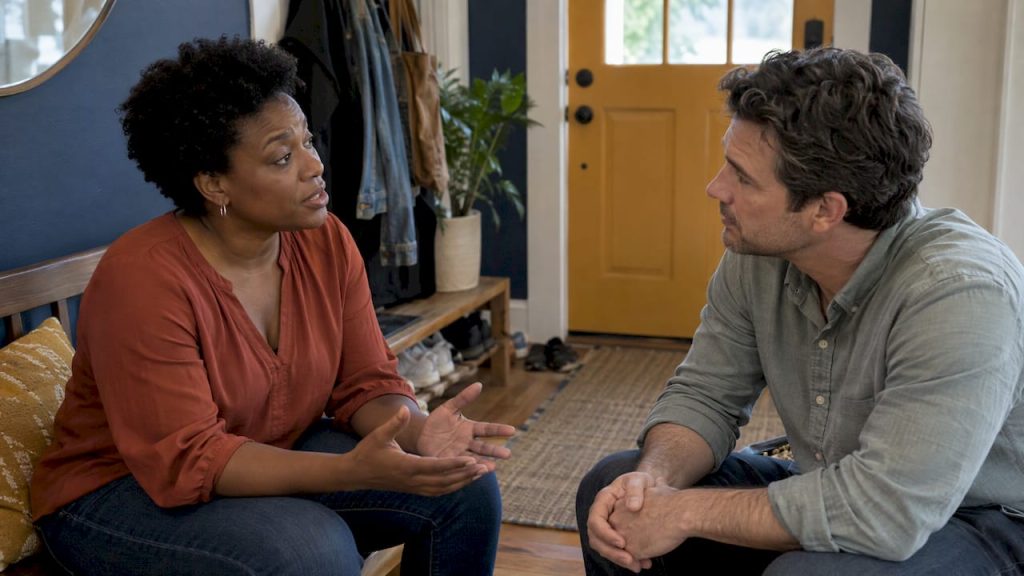
Accountability in marriage means owning your words, your actions and their impact on your spouse, and then doing something about it. It is not confession on demand, and it is not one spouse policing the other. It works when both people agree on a standard, tell the truth when they miss it, and repair the damage with actions that match their words.
TL;DR
- Accountability is owning your impact without excuses, and without taking blame for your spouse’s behavior.
- It differs from blame and control: it is mutual, specific and aimed at repair.
- A real apology names the behavior and its impact, validates feelings, offers a repair and commits to change.
- After a serious breach, trust returns through consistent, observable behavior over time, not one conversation.
- Faith-based couples can keep accountability respectful by keeping it mutual and prayerful rather than policing.
Table of Contents
- What accountability in marriage actually means
- Accountability vs. blame, criticism and control
- How to take responsibility without getting defensive
- Setting expectations you can both be held to
- Perspective: why we teach accountability as a skill
- Rebuilding trust after betrayal or repeated broken promises
- When your spouse will not follow through
- Accountability in a Christian marriage
- Build the skill together
- FAQ
- Sources
What accountability in marriage actually means
Princeton’s UMatter program describes accountability as examining how your communication may have been harmful, taking blame when it is yours (but not for others’ behavior), and avoiding excuses. Notice what is missing: self-punishment. The same page ties accountability to self-worth. People who feel worthless tend to either collapse into shame or defend themselves hard, and neither helps a marriage.
In practice, accountability has three parts:
- Honesty. You say what happened, including the parts that make you look bad.
- Ownership. You name your part without “but” attached to it.
- Repair. You do something to make it right, and you keep doing it.
Utah State University’s Stronger Marriage program lists honesty, accountability, respect, fairness and commitment as five healthy interactions. It stresses personal accountability in place of blame and accusations, and says admitting mistakes and repairing harm matter for relationship health.
Accountability vs. blame, criticism and control
Many couples hear “accountability” and brace for a lecture. That is usually because they have only experienced the counterfeit versions. Here is how to tell them apart.
| Accountability | Blame or criticism | Control | |
|---|---|---|---|
| Focus | A specific behavior and its impact | Your partner’s character | Your partner’s choices |
| Who it applies to | Both spouses | Usually one | Usually one |
| Tone | “Here is what I did and what it cost you” | “You always” or “You never” | “Report to me” |
| Goal | Repair and change | Winning or venting | Feeling safe by monitoring |
| Outcome | Safety and trust | Defensiveness | Resentment or hiding |
The University of Georgia’s family and consumer sciences extension explains that criticism attacks a partner’s personality or character, while defensiveness protects yourself and refuses responsibility. It adds that a partner is much more likely to respond well to a specific request or a non-blaming complaint than to criticism. So if you want your spouse to be accountable, start by asking for one specific thing.
If blame has become the default in your home, our guide on how to stop blaming in marriage walks through the shift.
How to take responsibility without getting defensive
Defensiveness is usually a shame response. The American Counseling Association’s Counseling Today quotes a clinician who puts the difference this way: guilt helps people own their behavior, while shame says “I am the problem” and paralyzes repair. The goal is to be able to say, “I’m a good partner who handled this poorly.”
The same article names four elements of a repair apology: name the behavior and its impact, validate the other person’s feelings, offer a repair, and commit to change. It also warns against justifying language and non-apologies like “I’m sorry you feel that way.”
A script that works
- Name it: “I interrupted you three times at dinner and brushed off what you were saying.”
- Impact: “I can see that made you feel unimportant.”
- Validate: “That makes sense. I’d feel that way too.”
- Repair: “Tonight I’d like to hear the whole thing without interrupting.”
- Commit: “I’m going to catch myself when I start cutting in.”
Explaining is not excusing
You can mention circumstances, such as a brutal week at work, as long as you do not use them as a shield. One writer on trust repair puts it as reasons that do not erase what the behavior caused. Say the consequence first, and the context second, if at all.
We go deeper on this in our piece on apology in marriage.
Setting expectations you can both be held to
Accountability fails most often because nobody agreed on the standard. One framework from a relationship-skills publisher breaks it into agreement, ownership, check-in, repair and boundary, with four check-in questions:
- What did we agree to?
- What actually happened?
- What was the impact?
- What needs to happen now?
These questions keep a check-in about facts and repair, not character. Try them weekly for ten minutes, at a calm time, never in the middle of an argument.
Agree first, then hold each other to it
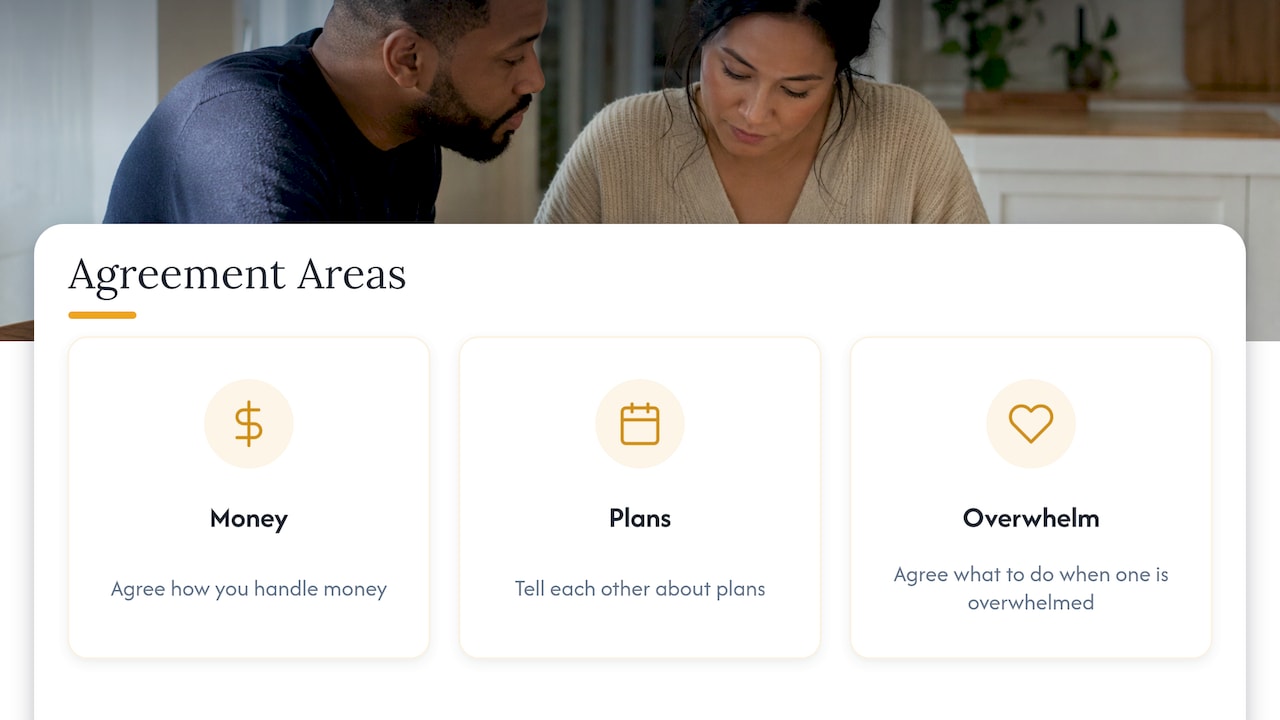
Write down a handful of agreements: how you handle money, how you tell each other about plans, what you do when one of you is overwhelmed. Our article on communication agreements that work shows how. For couples who want a shared direction, a shared vision for your marriage gives the agreements something to serve.
Accepting influence goes both ways
Accountability needs openness to each other’s input. The Georgia extension notes that accepting influence from a partner without resentment is a key conflict management skill. It also says the research on husbands who accept their wives’ influence has been misread as telling men to stop making decisions. It means weighing your spouse’s view as a real input, whichever of you is deciding.
Perspective: why we teach accountability as a skill
We have worked with thousands of couples, and the pattern is consistent: people rarely lack love. They lack a method for owning a mistake without it turning into a trial.
That is why the F.I.G.H.T. Plan® treats accountability as a learnable skill, not a personality trait. Our approach is designed to help each spouse name their part, regulate in the moment, and repair in a way the other person can feel. Done well, it makes your spouse safer to be honest with, because honesty stops being punished.
We also see the opposite mistake: one spouse appointed as the monitor and the other as the suspect. That rarely builds intimacy. Mutual standards, specific requests and consistent follow-through do. Couples who practice this tend to need fewer big talks, because small repairs happen early.
Carlos
Rebuilding trust after betrayal or repeated broken promises
When the breach is serious, such as an affair, hidden spending or repeated broken commitments, accountability carries more weight, and it takes longer.
What the research shows
- A 2023 grounded theory study of 16 couples who stayed together after infidelity found a healing process that included establishing accountability, along with assessing the damage, affirming commitment, reconnecting, communicating deeply and re-establishing trust.
- A 2012 study of 92 partners of self-identified sex addicts found that honesty and clarity around relapses and disclosures related to more positive relational outcomes. Partners who had been betrayed before also tended to watch for red flags and seek objective proof, which is an understandable self-protection.
- A 2025 study found that spontaneous guilt communication repaired trust better than strategic guilt communication when the violation was severe. Its authors recommend actively assuming consequences and compensating through tangible actions, not pre-scripted statements.
What the person who caused harm can do
Trust grows from doing what you said, being honest when it is inconvenient, and taking responsibility without being forced. The injured spouse may need time to see whether behavior has really changed. That is not punishment. It is how trust rebuilds.
Concretely:
- Answer questions honestly, even repeated ones.
- Offer information before it is demanded.
- Keep small promises, every time.
- Do not set a deadline for your spouse’s healing.
For a structured version, see our 30 to 90 day transparency plan after an affair. Related guides cover financial infidelity recovery, forgiveness after infidelity and rebuilding intimacy.
What the hurt spouse can do
Ask for specifics, not promises in general. “Text me if you’ll be more than 30 minutes late” can be kept or missed. “Be more considerate” cannot. Keep your requests few and clear, so your spouse can succeed at them.
When your spouse will not follow through
Sometimes one partner agrees, then does nothing. Cleveland Clinic describes weaponized incompetence as avoiding a task by claiming not to know how, or doing it so badly someone else takes over. It says this can create unequal responsibilities, resentment and eroded trust.
Its advice: resist taking over, because doing the job for someone will not end the pattern, and waiting it out may be uncomfortable but signals you will not pick up the slack. It suggests counseling if repeated conversations bring no change.
A workable sequence:
- Name the pattern calmly, with one recent example.
- Restate the agreement and ask what is getting in the way.
- Set a specific time frame and a check-in.
- If nothing changes, bring in a neutral third party, such as a licensed marriage and family therapist or a coach.
If you have decided what you will and will not accept, our guide to Christian marriage boundaries shows how to state limits without ultimatums. Anyone who feels unsafe in a relationship should contact a qualified professional or the National Domestic Violence Hotline rather than work through accountability at home alone.
Accountability in a Christian marriage
Faith can strengthen accountability, and it can also be used to excuse control. Crosswalk notes that accountability means each spouse openly and honestly accepting responsibility, and points to Ephesians 5’s mutual submission as a foundation. It also draws a line between policing a spouse’s spiritual walk, which it calls demeaning, and respectfully checking in, for example by praying and reading Scripture together.
Some ways to keep it mutual:
- Ask the same questions of yourself that you ask of your spouse.
- Choose a time you both agreed on, not a surprise inquiry.
- Open with prayer or gratitude, close with one specific next step.
- Keep confidences. A third party, such as a pastor or counselor, joins only by mutual consent.
Our Christian F.I.G.H.T. Plan Workbook is a faith-centered guide to conflict resolution for couples, listed at $9.99 to $20.00.
Build the skill together
If you want structure instead of improvising, we offer several options, all created by licensed mental health professionals:
- Workbooks and toolkit: the F.I.G.H.T. Plan workbook ($14.99 to $25.00) and the Couples Conflict Toolkit ($27.00), for couples who want to practice at their own pace.
- Courses: Stop the Fighting: The Couples Communication & Conflict Resolution Course ($149.00), and the Fight Less Love Again Video Course ($47.00).
- After an affair: the R.E.S.T.O.R.E Workbook ($9.99 to $20.00) and our infidelity recovery counseling.
- Coaching: VIP Private Coaching, 4 sessions ($997.00), and the 6 Hours Couples Intensive ($1995).
Browse everything in our shop or look at online coaching for couples.

FAQ
Is accountability in marriage the same as one spouse checking up on the other?
No. Healthy accountability is mutual, agreed in advance and focused on repair. One-way monitoring tends to produce resentment or hiding. After a serious breach, a temporary and clearly defined transparency plan can be appropriate, but it should have an end point and a path back to equal footing.
How do I hold my spouse accountable without nagging?
Ask for one specific behavior instead of criticizing character, and agree on a time to check in. Extension research notes that specific, non-blaming requests get better responses than criticism. Then let the check-in, not daily reminders, carry the follow-up.
What if my spouse apologizes but nothing changes?
An apology without a repair and a commitment to change is incomplete. Return to the agreement, name the gap in specific terms, and set a short time frame. If the pattern continues, a licensed couples therapist or coach can help you both break it.
How long does it take to rebuild trust?
There is no fixed timeline. The injured spouse often needs time to see consistent behavior. In one study of couples who stayed together after infidelity, the average time since the affair was about 50 months, which shows healing is usually measured in months and years, not weeks.
Sources
- Accountability | UMatter, Princeton University
- Five Science-Based Keys to Healthy Relationships, Utah State University Extension
- Manage, University of Georgia Family and Consumer Sciences
- Relationship Repair, Counseling Today, American Counseling Association
- The Psychology of Repairing Trust, Mindful Awareness
- How to Build Accountability in a Relationship, Groundwork Daily
- Couple healing from infidelity: A grounded theory study
- Partner Reactions to Disclosure of Relapse
- Spontaneous vs. Strategic Guilt, Behaviors (MDPI)
- What Is Weaponized Incompetence?, Cleveland Clinic
- Why Godly Marriages Need Openness and Accountability, Crosswalk
Recommended
- 7 Steps to Christian Marriage Boundaries: Therapist Backed, Biblical
- Argument Boundaries in Marriage: 6 Steps to Practice Before a Fight
- Weekly Marriage Meeting: A Simple Agenda That Works
- Stop Gaslighting in Marriage: What to Do and Say