
Apply Biblical Principles to Marriage Conflict Effectively
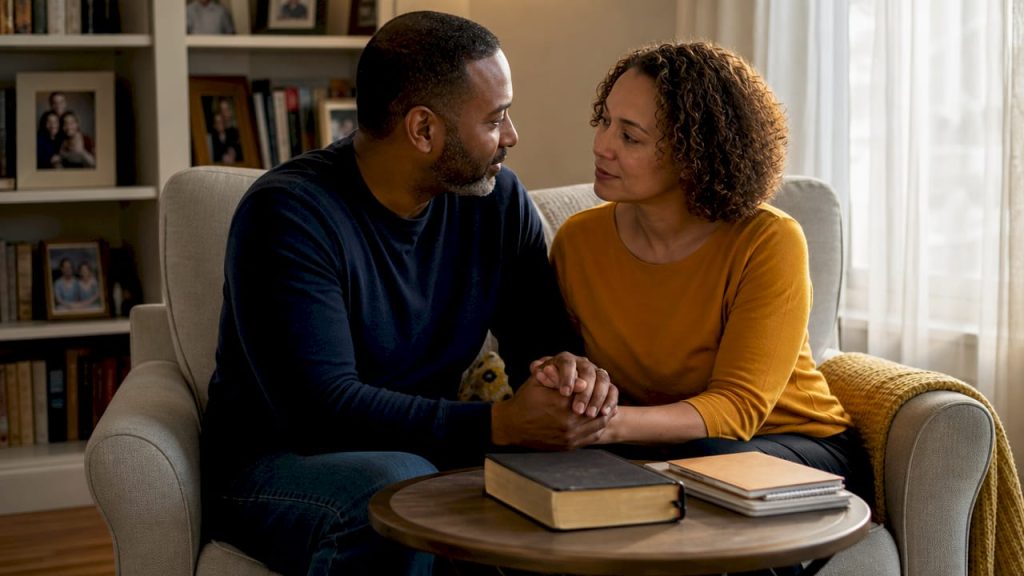
Applying biblical principles to marriage conflict gives couples a grace-based framework that transforms disagreements into opportunities for deeper connection and spiritual growth. Scripture does not promise a conflict-free marriage. What it offers is something better: a consistent, God-centered system for working through tension with humility, love, and forgiveness. Passages like James 1:19 and Ephesians 4:26 are not abstract theology. They are practical instructions that, when followed, change how couples fight and how they heal. Authors like Gary Thomas and ministries like Focus on the Family have long affirmed that marriage is designed as an other-centered union where spouses serve each other through God’s grace.
What are the key biblical principles for marriage conflict resolution?
Biblical marriage conflict resolution is built on five foundational principles drawn directly from Scripture. These are not suggestions. They are commands that shape how Christian couples are called to treat each other, especially when emotions run high.
-
Listen first, speak second. James 1:19 instructs believers to be “quick to hear, slow to speak”, slow to anger. This single verse dismantles the instinct to win an argument by prioritizing understanding over rebuttal. Most marital fights escalate because both spouses are preparing their next point instead of absorbing what their partner is actually saying.
-
Resolve anger the same day. Ephesians 4:26 commands couples to resolve anger promptly, ideally within the same day, to prevent resentment from taking root. Unresolved anger does not disappear. It calcifies into bitterness that poisons future conversations.
-
Forgive as God forgave you. Colossians 3:13 frames forgiveness not as a feeling but as a command. Forgiveness in marriage is a reflection of the forgiveness God has already extended to each spouse. Withholding it is spiritually inconsistent and relationally destructive.
-
Love sacrificially. Ephesians 5:25 calls husbands to love their wives as Christ loved the church, which means prioritizing her wellbeing over personal comfort. This principle applies to both spouses and reframes conflict from “what do I need” to “what does my partner need.”
-
Make peace, don’t just keep it. Matthew 5:9 blesses the peacemakers, not the peacekeepers. Peacekeeping avoids conflict; peacemaking moves toward it with humility and love to achieve true resolution. Couples who only avoid hard conversations are not at peace. They are at a standoff.
Pro Tip: Before your next difficult conversation, read James 1:19 aloud together. It takes thirty seconds and physically shifts the posture of the conversation from combat to collaboration.
How do you practically apply biblical principles during marital conflicts?
Knowing the principles is step one. Applying them under emotional pressure is where most couples struggle. Here is a step-by-step approach grounded in scriptural guidance for relationships.
-
Stop and pray before you respond. Man in the Mirror ministry teaches that pausing to pray during conflict changes the atmosphere of the room. This is not a delay tactic. It is an intentional reset that invites God into the conversation before words cause damage that takes weeks to repair.
-
Listen to understand, not to reply. Give your spouse uninterrupted time to speak. Resist the urge to correct, defend, or explain while they are talking. Ask one clarifying question before you respond. This practice alone reduces the intensity of most arguments within minutes.
-
Speak words that build up. Proverbs 15:1 states that a gentle answer turns away wrath. Ephesians 4:29 adds that words should build up rather than tear down. Tone carries as much weight as content. You can say the right thing in the wrong way and still cause harm.
-
Own your sin specifically. A biblical apology owns specific sinful behavior without critiquing the spouse in the same breath. “I was wrong to raise my voice” is an apology. “I was wrong to raise my voice, but you provoked me” is not. The second version transfers responsibility and blocks genuine reconciliation.
-
Forgive before reconciliation is complete. Forgiveness is a unilateral command. Forgiving before reconciliation models Christ and opens the door for unity, even when the other spouse has not yet responded with repentance. You can forgive without excusing the behavior or pretending the hurt did not happen.
-
Resolve before the day ends. Return to Ephesians 4:26 as a practical deadline. Agree together that you will not go to sleep with unresolved anger between you. This does not mean every issue is fully solved by bedtime. It means you commit to staying in the conversation until the emotional temperature is down and both spouses feel heard.
Pro Tip: Use the Couplesfightschool couples therapy workbook to practice these steps between conflicts, not just during them. Couples who rehearse healthy patterns in calm moments apply them far more naturally when tension rises.
What obstacles get in the way of applying scripture to conflict?
Even couples who genuinely want to apply biblical principles to marriage conflict run into predictable roadblocks. Recognizing them is half the battle.
-
Believing marriage should be conflict-free. This is one of the most damaging myths in Christian marriage culture. Conflict is inevitable and is actually a God-designed tool for refinement. Couples who expect harmony at all times interpret every disagreement as a sign that something is fundamentally broken, when in reality they are simply growing.
-
Fighting to win instead of to resolve. The competitive instinct turns a marital disagreement into a courtroom. When winning becomes the goal, the spouse becomes the opponent. Scripture consistently reframes the goal as unity, not victory.
-
Rushing to spiritual language too soon. Spiritual leaders warn against rushing to “spiritual talk” during volatile emotions. Quoting Scripture at an angry spouse rarely produces repentance. It more often produces defensiveness. Give the emotional temperature time to drop before bringing in prayer or biblical language.
-
Holding onto hurt instead of extending grace. Forgiveness feels costly when the wound is fresh. But holding onto hurt keeps both spouses locked in the past. Grace is not the absence of pain. It is the choice to release the debt regardless of the pain.
-
Avoiding honest vulnerability. Many couples mistake silence for peace. True biblical conflict resolution requires both spouses to diffuse conflict by creating space for honest, safe expression. That kind of safety is built over time through consistent, gentle responses to hard truths.
Couples who depend on Scripture have a distinct advantage because it offers a consistent framework emphasizing self-discipline, giving, and obedience. That framework does not change based on mood or circumstance, which makes it reliable even when emotions are not.
How does biblical conflict resolution build deeper intimacy?

Resolving conflict the biblical way does more than stop arguments. It builds the kind of trust and emotional safety that makes genuine intimacy possible. This is the connection most couples are actually searching for when they seek faith-based marriage advice.
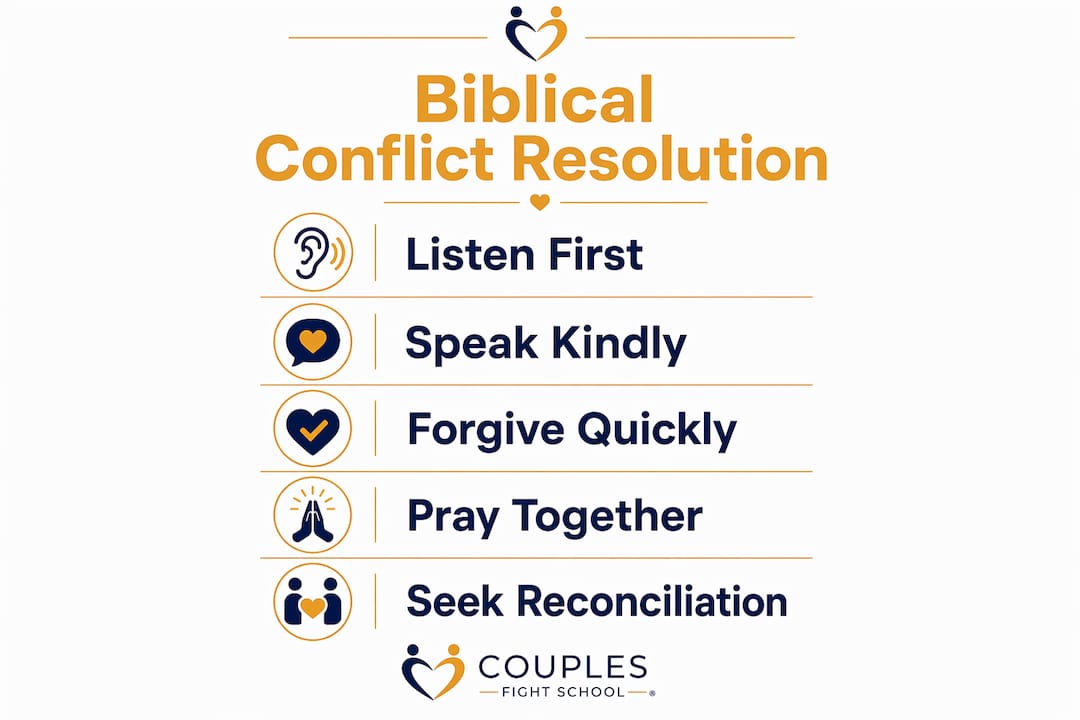
Forgiveness, practiced consistently, models God’s mercy in a tangible way. When your spouse sees you choose grace over retaliation, it communicates something words cannot: “You are safe with me.” That safety is the soil in which emotional intimacy grows. Couples with a Christ-centered home experience genuine love and the fulfillment of their marriage’s full potential through that spiritual connection.
Sacrificial love, as described in Ephesians 5, creates a cycle of security. When both spouses consistently prioritize each other’s wellbeing, neither partner has to guard themselves against the other. That openness deepens conversation, physical connection, and spiritual partnership simultaneously.
“Conflict is not the enemy of intimacy. Handled with grace, it is the path to it.”
Praying together after a conflict is one of the most underused tools in Christian marriage. It is difficult to stay angry at someone you are praying alongside. Scripture study as a couple creates a shared language and a shared reference point for navigating future tension. Couples who pursue God together do not just fight less. They understand each other more. The truth about relationship conflict is that every disagreement, resolved well, becomes a deposit into the emotional bank account of the marriage.
Key takeaways
Applying biblical principles to marriage conflict works because Scripture provides a consistent, grace-based framework that addresses the root causes of marital tension, not just the symptoms.
| Point | Details |
|---|---|
| Listen before speaking | James 1:19 is the single most practical conflict instruction in Scripture. Apply it first. |
| Resolve anger the same day | Ephesians 4:26 sets a daily deadline that prevents resentment from calcifying into bitterness. |
| Own your sin without conditions | A genuine biblical apology names specific behavior without redirecting blame to your spouse. |
| Forgive unilaterally | Forgiveness is a command, not a feeling. You can extend it before reconciliation is complete. |
| Use conflict as a growth tool | Every resolved disagreement builds trust, emotional safety, and deeper spiritual intimacy. |
What I’ve learned from years of walking couples through this
I have sat across from hundreds of couples who came in convinced that their marriage was uniquely broken. What I found, almost without exception, is that they were not broken. They were untrained. They had never been shown what it actually looks like to apply biblical principles to marriage conflict in real time, under real pressure, with real emotions on the table.
The couples who made the most progress were not the ones who had the fewest problems. They were the ones willing to be humble enough to try something different. Humility is the hinge on which every biblical conflict principle turns. Without it, James 1:19 is just a verse. With it, it becomes a posture that changes everything.
I also want to be honest about something most faith-based marriage content skips: this is hard. Choosing grace when you feel wronged is one of the most demanding things a person can do. I have seen couples fall forward through conflict and come out closer than they ever imagined. I have also seen couples give up just before the breakthrough. The difference was almost always perseverance, not perfection.
Do not wait until your marriage is in crisis to start practicing these principles. Start now, in the small disagreements, so that when the big ones come, the patterns are already in place.
— Carlos
Ready to go deeper with expert support?
If this article gave you a framework, Couplesfightschool gives you the practice. Founded by licensed mental health professionals Carlos Todd and Natasha Pemberton-Todd, Couplesfightschool combines psychology-backed tools with faith-informed communication strategies designed specifically for couples who want to fight less and connect more.
Whether you are navigating recurring arguments, emotional distance, or a specific crisis, the online coaching for couples program at Couplesfightschool gives you direct access to expert guidance tailored to your relationship. For couples who prefer a self-paced option, the Fight Less Love More course walks you through a structured, faith-compatible system for rebuilding communication and deepening intimacy. Your marriage is worth the investment.
FAQ
What does it mean to apply biblical principles to marriage conflict?
Applying biblical principles to marriage conflict means using Scripture-based values like humility, forgiveness, sacrificial love, and prompt resolution to guide how spouses communicate and reconcile during disagreements. It treats conflict as a spiritual growth opportunity rather than a problem to suppress.
Which Bible verses are most relevant to resolving marital disputes?
James 1:19, Ephesians 4:26, Colossians 3:13, Proverbs 15:1, and Ephesians 5:25 are the most directly applicable verses for how to resolve marital disputes biblically. Each addresses a specific dimension of conflict: listening, timing, forgiveness, tone, and love.
Is it wrong for Christian couples to have conflict?
No. Conflict is inevitable in every marriage and is described by Focus on the Family as a God-designed tool for refinement. The goal is not a conflict-free marriage but a couple skilled at resolving disagreements with grace and growing closer through the process.
How is forgiveness different from reconciliation in marriage?
Forgiveness is a unilateral act you choose regardless of your spouse’s response. Reconciliation is mutual and requires both partners to engage. You can and should forgive before reconciliation is complete, because doing so models Christ and keeps the door open for restoration.
How can Couplesfightschool help Christian couples apply these principles?
Couplesfightschool offers conflict resolution techniques and coaching programs that align with biblical communication values, giving Christian couples practical tools to implement scriptural guidance in everyday conflict situations.
Recommended