
Christian Marriage Communication Best Practices That Work
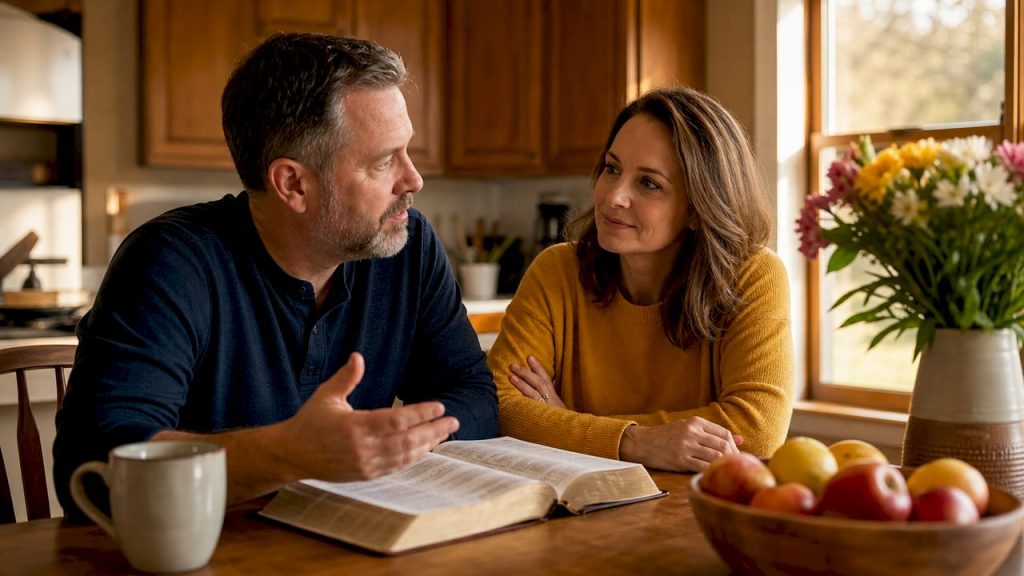
Christian marriage communication best practices are scripture-grounded habits of speaking, listening, and relating that build up your spouse, reduce conflict, and deepen the intimacy God designed for marriage. These are not soft suggestions. They are the practical application of biblical truth to one of the most demanding relationships you will ever have. Ephesians 4:29 sets the standard clearly: every word you speak should build the other person up. When Christian couples treat communication as a covenant discipline rather than a personality trait, marriages transform. This article gives you the specific practices, the scripture behind each one, and the tools to put them to work today.
1. Christian marriage communication best practices start with Ephesians 4:29
The single most cited verse in Christian marriage counseling is Ephesians 4:29, and for good reason. It defines the filter every word must pass through: is this building up the person hearing it? Not just “is it true?” but “is it helpful for this moment?” That distinction changes everything about how you speak to your spouse.
Most couples default to truth as their communication standard. Truth matters, but impact matters equally. A true statement delivered with contempt tears down rather than builds. Ephesians 4:29 calls you to consider both what you say and what your spouse actually receives. That is a higher standard, and it requires intentional practice.

Pro Tip: Before you respond in a tense conversation, pause and ask yourself: “Will this word build my spouse up right now, or am I just releasing pressure?” That one question can redirect an entire argument.
2. Tone matters more than content during conflict
Proverbs 15:1 states that a gentle answer turns away wrath, while a harsh word stirs up anger. This is not poetic advice. It is a relational principle with direct neurological backing. When your tone escalates, your spouse’s nervous system responds before their rational mind can process your words.
Couples often spend enormous energy crafting the “right” words during conflict, while completely ignoring tone. Scripture prioritizes changing your relational tone first. A gentle answer functions as a priority switch during escalation. It signals safety before content is even processed. This is why two people can say the exact same sentence and get completely different results depending on how they say it.
Softening your tone is not weakness. It is the most direct path to being heard. When your spouse feels safe, they can actually receive what you are saying.
3. Active listening reflects God’s own attentiveness
James 1:19 gives one of the clearest communication instructions in scripture: be quick to listen, slow to speak, and slow to anger. Most couples reverse this order entirely. They listen just long enough to formulate their rebuttal, then speak quickly and get angry fast.
Active listening in Christian marriage means listening to understand, not to respond. It means letting your spouse finish a complete thought before you form your reply. It means asking clarifying questions instead of assuming intent. This posture reflects humility, and humility is the foundation of every healthy communication habit in scripture.
When you listen the way God listens to you, with full attention and without interruption, you communicate that your spouse’s experience matters. That alone can de-escalate more conflicts than any argument strategy ever will.
4. Speaking truth in love requires timing and prayer
Ephesians 4:15 calls couples to speak truth in love. That phrase contains two equally weighted requirements. Truth without love becomes a weapon. Love without truth becomes avoidance. The combination requires both courage and care, and it requires choosing the right moment to speak.
Pray before difficult conversations. This is not a ritual. It is a practical reset that shifts your posture from “winning” to “connecting.” Asking God to guide your words before a hard talk changes what you say and how you say it. Couples who pray together before conflict conversations report entering those discussions with more patience and less defensiveness.
Timing also matters. Raising a serious issue when your spouse is exhausted, hungry, or distracted sets the conversation up to fail. Choosing the right moment is an act of love, not avoidance.
Pro Tip: Before a difficult conversation, pray this simple sentence together: “God, help us hear each other the way You hear us.” It takes ten seconds and changes the entire atmosphere of the discussion.
5. Colossians 3:12 virtues form your communication character
Colossians 3:12 instructs believers to clothe themselves with compassion, kindness, humility, gentleness, and patience. The clothing metaphor is intentional. You put on clothes deliberately every morning. These virtues are not automatic. They are chosen, especially under stress.
Each virtue in that list directly governs a specific communication behavior. Compassion shapes how you interpret your spouse’s motives. Kindness determines your default tone. Humility keeps you from needing to win every disagreement. Gentleness controls your volume and edge. Patience gives your spouse the space to express themselves fully without interruption or shutdown.
When you practice these virtues consistently, you create emotional safety in your marriage. Emotional safety is the condition under which honest, vulnerable communication becomes possible. Without it, couples either fight or go silent. Neither builds intimacy.
Pro Tip: Pick one virtue from Colossians 3:12 each week and focus on applying it specifically in conversations with your spouse. Targeted practice builds lasting habits faster than trying to change everything at once.
6. Grace and forgiveness keep communication channels open
Forgiveness is not just a spiritual transaction. It is a communication strategy. When resentment builds up between spouses, every conversation becomes loaded with unresolved history. Words that should be neutral get filtered through past wounds and come out as accusations.
Colossians 3:13 follows directly from the virtue list: forgive as the Lord forgave you. This means forgiveness is not contingent on your spouse earning it. It is a decision you make to protect the relationship from accumulating debt. Couples who practice regular, explicit forgiveness, not just “I’m over it” but “I forgive you for what happened,” report significantly more openness and trust in their daily communication.
Grace in communication also means giving your spouse the benefit of the doubt. When a message is ambiguous, assume the best interpretation first. That single habit eliminates dozens of unnecessary conflicts every year.
7. Reconciliation takes priority over being right
Matthew 5:23-24 makes a striking claim: leave your gift at the altar and go reconcile with your brother first. Jesus places relational repair above religious ritual. In marriage terms, this means reconciliation with your spouse takes priority over proving your point, finishing your argument, or waiting for an apology.
The couple that initiates repair first is not the weaker party. They are the one operating from covenant commitment rather than ego. Making the first move toward peace, even when you believe you were right, is one of the most powerful communication practices in Christian marriage.
Waiting for your spouse to apologize first is a form of emotional withholding. It keeps both of you stuck. The Matthew 5 principle calls you to move toward your spouse, not away, even when it costs you something.
8. The 5:1 ratio gives conflict a measurable standard
Research on stable relationships identifies a positive-to-negative interaction ratio of approximately 5:1 as the threshold for relational health during conflict. For every critical or negative exchange, five positive ones are needed to maintain emotional balance. This finding aligns directly with the biblical call to build up rather than tear down.
Micro-positives matter here. A gentle tone, a moment of appreciation, a touch on the arm, a genuine “thank you” during a hard conversation. These small deposits maintain the emotional account that conflict withdraws from. Couples who neglect these micro-positives find that even minor disagreements feel catastrophic because the emotional reserve is empty.
This is not about being artificially positive. It is about making sure your communication diet is weighted toward building up, so that when conflict comes, there is something to draw from.
9. Daily habits that sustain healthy communication
Effective communication in marriage is not reserved for conflict. It is built in the ordinary moments of every day. The following habits, practiced consistently, create the relational soil in which deeper conversations can grow.
- Speak specific appreciation to your spouse daily. Not “you’re great” but “I noticed you handled that situation with patience and it meant a lot to me.”
- Pray together, even briefly. Couples who pray together regularly report higher levels of emotional intimacy and communication satisfaction.
- Do a daily emotional check-in. Ask your spouse one question: “How are you doing today, really?” Then listen without fixing.
- Practice patience in small moments. How you respond when your spouse is running late or forgets something trains your default communication response for bigger issues.
- Treat communication as a covenant investment, not just a problem-solving tool. You are not just exchanging information. You are building a shared life.
These habits do not require a perfect marriage or a conflict-free week. They require only the decision to show up consistently with the virtues Colossians 3:12 describes.
Key takeaways
Christian marriage communication is a daily covenant practice grounded in scripture, requiring gentleness, active listening, forgiveness, and the consistent choice to build up rather than tear down.
| Point | Details |
|---|---|
| Filter words through Ephesians 4:29 | Ask whether your words build your spouse up before speaking, not just whether they are true. |
| Tone precedes content | A gentle tone, per Proverbs 15:1, de-escalates conflict faster than choosing better words alone. |
| Reconciliation over being right | Matthew 5:23-24 calls you to initiate repair first, regardless of who caused the conflict. |
| Clothe yourself in Colossians 3:12 virtues | Compassion, kindness, humility, gentleness, and patience are chosen daily, not inherited automatically. |
| Maintain a 5:1 positive ratio | Research links five positive interactions for every negative one to stable, healthy relationships. |
What I have learned from practicing this in my own marriage
I have worked with hundreds of couples as a licensed mental health professional, and I will tell you the honest truth: the hardest part of biblical communication is not knowing the principles. It is applying them at 9 p.m. when you are tired, your spouse says something that lands wrong, and every instinct you have wants to fire back.
What changed my own communication with Natasha was not a new technique. It was taking Ephesians 4:29 seriously as a filter, not a suggestion. When I started asking “Is this building her up right now?” before I spoke, I caught myself mid-sentence more times than I care to admit. That pause, that half-second of checking my intent against the standard, changed the entire texture of our conversations.
The 5:1 ratio research also reframed how I thought about daily interaction. I realized I was making plenty of withdrawals through criticism and correction, but not enough deposits through appreciation and gentleness. Shifting that balance did not require grand gestures. It required noticing the small moments and choosing to speak into them with kindness.
Growth in this area is not linear. You will have weeks where you communicate beautifully and weeks where you revert to old patterns. Grace covers both. What matters is that you keep returning to the standard scripture sets, not because you have to, but because you believe your marriage is worth the daily investment.
— Carlos
Take your communication further with Couplesfightschool
If these principles resonate with you and you are ready to move from knowing them to living them consistently, Couplesfightschool has built the tools to help you do exactly that.
Carlos Todd and Natasha Pemberton-Todd, both licensed mental health professionals, have designed resources specifically for Christian couples who want to fight less and connect more. Whether you are dealing with recurring conflict patterns or simply want to deepen your emotional intimacy, the online coaching for couples program gives you personalized, faith-informed guidance. You can also explore the Fight Less Love More course for a structured, step-by-step path to better communication grounded in both scripture and proven relationship psychology.
FAQ
What does Ephesians 4:29 mean for marriage communication?
Ephesians 4:29 calls spouses to speak only words that build the other person up, filtering speech through helpfulness rather than just truth. The standard is impact on the listener, not just the intent of the speaker.
How does active listening improve Christian marriage communication?
Active listening, modeled on James 1:19, means listening to understand your spouse fully before forming a response. This posture reduces reactive anger and communicates that your spouse’s experience is valued.
What is the 5:1 communication ratio in marriage?
Research links a positive-to-negative interaction ratio of approximately 5:1 to stable, healthy relationships. For every critical exchange, five positive interactions, such as appreciation, gentle tone, or affirmation, are needed to maintain emotional balance.
How should Christian couples handle conflict biblically?
Matthew 5:23-24 instructs believers to initiate reconciliation before anything else, making the first move toward peace rather than waiting for the other person to apologize. Praying before difficult conversations and choosing the right timing also reduce escalation significantly.
Which virtues most directly shape healthy communication habits?
Colossians 3:12 identifies compassion, kindness, humility, gentleness, and patience as the core virtues that govern how couples speak and listen under stress. Practicing these deliberately, especially in low-stakes moments, builds the habits that hold during conflict.
Recommended