
6 Neuroscience Backed Steps to Stop Jealousy After Infidelity

Jealousy after infidelity is a normal trauma response, not evidence of a broken character or a doomed relationship. It fades fastest when you combine nervous-system regulation, consistent and verifiable partner behavior, and, when intrusive memories persist, trauma-focused therapy. The short-term goal is calming your body and limiting checking behaviors. The long-term goal is rebuilding trust through proof, not promises.
TL;DR:
- Trust is rebuilt through consistent, voluntary partner actions like transparency and punctuality, with even small promises needing regular reinforcement.
- Intrusive thoughts stem from neural encoding failures during betrayal discovery, requiring targeted, trauma-informed therapy to reduce their emotional charge.
- Jealousy and hypervigilance often last six to eighteen months, as the amygdala needs prolonged evidence before threat signals diminish.
- Self-regulation techniques such as grounding, labeling, and scheduled processing reduce the intensity of distressing memories and help break loops.
- Professional trauma therapy, including EMDR and trauma-focused CBT, is recommended when intrusive symptoms interfere with daily functioning or persist beyond several months.
Table of Contents
- Why Does Infidelity Cause Such Intense Jealousy?
- What Do Jealousy and Intrusive Thoughts Look Like After an Affair?
- How Can You Interrupt Intrusive Thoughts and Jealous Spirals?
- What Does Trustworthy Behavior Actually Look Like After Cheating?
- When Should You Get Professional Help for Betrayal Trauma?
- What Does the Evidence Say About Recovery Timelines?
- How Does Jealousy Reshape Decisions Inside the Relationship?
- A Clinician’s Take on What Actually Helps
- Rebuilding Trust With Structured, Therapist-Backed Tools
- Sources
- FAQ
Why Does Infidelity Cause Such Intense Jealousy?
Betrayal gets stored differently than ordinary bad news. When cortisol floods the brain during a discovery moment, memory encoding often skips the usual “time-stamping” process, so the brain files the affair as sensory fragments rather than a dated event. That’s why a memory from eight months ago can suddenly feel like it’s happening right now. The MindLAB Neuroscience research on intrusive thoughts describes this as an encoding failure, not a character flaw or an inability to “move on.”
The amygdala compounds the problem. Once it flags your partner as a potential threat, it needs a heavy volume of contradictory evidence to update that assessment, because negative information gets weighted more heavily than positive information by default. That imbalance explains a pattern almost every betrayed partner recognizes:
- One suspicious text can undo weeks of reassuring behavior.
- A single reminder (a song, a restaurant, a date on the calendar) can trigger full-body alarm.
- Logical reassurance (“I would never do that again”) rarely calms the nervous system, because the amygdala isn’t persuaded by words.
Recovery from betrayal often takes six to eighteen months of consistent partner behavior before threat signals reliably downshift. That’s not a failure of willpower on the betrayed partner’s part. It’s the amygdala doing exactly what it evolved to do: treat one confirmed danger as a reason to distrust the whole environment until proven otherwise.
What Do Jealousy and Intrusive Thoughts Look Like After an Affair?
Retroactive jealousy and betrayal-focused jealousy are related but distinct. Retroactive jealousy usually involves obsessing over details of the affair itself, replaying imagined scenes, reconstructing timelines, and searching for information that won’t change anything about the present. Betrayal-focused jealousy is more forward-looking. It’s the hypervigilance that scans current behavior for signs of a repeat.
Both tend to produce the same cluster of symptoms:
- Unwanted, vivid mental images of the affair playing out
- Compulsive timeline reconstruction (“where were they really on that Tuesday?”)
- Checking behaviors: phones, location apps, credit card statements, social media
- A physical jolt of anxiety triggered by ordinary things, like a name or a smell
These aren’t signs of an unstable person. Research on affair recovery describes intrusive thoughts as neurological outputs of an unfinished processing loop, not moral weakness or excessive rumination. That’s also why reassurance-seeking rarely works. Asking your partner the same question five different ways doesn’t close the loop, because the amygdala isn’t asking for information. It’s asking for a pattern of behavior over time.
How Can You Interrupt Intrusive Thoughts and Jealous Spirals?
You can’t out-argue a nervous system stuck in threat mode, but you can retrain it. Suppressing intrusive thoughts tends to backfire. Studies on affair recovery consistently find that pushing thoughts away increases their frequency and intensity, while labeling and processing them on a schedule reduces their grip.
Try this sequence when a jealous spiral starts:
- Ground your body first. Name five things you can see, then feel your feet on the floor. This signals to your nervous system that the current moment is safe, even if the memory feels present.
- Slow your exhale. A longer exhale than inhale (try four seconds in, seven seconds out) activates the body’s calming response faster than trying to think your way out of panic.
- Label the thought out loud or on paper. Say “this is an intrusive memory, not a current event.” Naming it separates then from now.
- Apply a reality-check rule, not a story-check rule. Ask “what do I actually know right now?” instead of chasing every possible scenario your imagination can generate.
- Write instead of ruminate. Set a 10-minute timer once a day to write about the affair. Structured, scheduled writing processes the memory. Unscheduled looping rehearses it.
- Draft a short written agreement with your partner about transparency limits and how often check-ins happen, so checking becomes a plan instead of a compulsion.
Pro Tip: If a jealous thought hits at 2 a.m., don’t debate it. Ground your body first, then decide in the morning whether it’s worth discussing. Decisions made from a panicked nervous system rarely hold up in daylight.
What Does Trustworthy Behavior Actually Look Like After Cheating?
The betrayed partner’s brain needs data, and vague promises don’t count as data. Voluntary transparency provides better evidence than anything extracted through pressure or confrontation, since the amygdala treats coerced information as less reliable than information freely given. That distinction matters more than most couples realize during recovery.
Behaviors that genuinely rebuild trust tend to be small, frequent, and voluntary rather than occasional and dramatic:
- Proactively mentioning a run-in with the affair partner before being asked
- Sharing location or calendar access when both people have agreed to it, not as a punishment
- Arriving when they said they would, consistently, without needing to be tracked
- Showing up to therapy sessions and follow-through tasks without reminders
The amygdala’s negativity bias means one broken promise can outweigh weeks of good behavior, so unfaithful partners should expect that a single lapse in openness resets a meaningful chunk of progress. Evasiveness, defensiveness when questioned, and secrecy about ordinary logistics all read as threat signals, even when nothing is actually happening. Consistency, not grand gestures, is what moves the needle. A structured boundary plan built together in the first 30 to 90 days gives both partners a shared standard instead of shifting expectations.
When Should You Get Professional Help for Betrayal Trauma?
Some symptoms respond to self-guided regulation. Others need a trained clinician, especially when jealousy has calcified into something closer to trauma than temporary distress.
Watch for these signals that professional support is needed:
- Intrusive thoughts or checking behaviors interfering with work, sleep, or parenting
- Persistent hypervigilance that doesn’t ease even during calm, uneventful stretches
- Any thoughts of self-harm or suicidal ideation
- A sense of being emotionally “stuck” months after the discovery, with no forward movement
Betrayal trauma commonly produces a PTSD-like symptom cluster, including intrusions, avoidance, and negative shifts in how someone sees themselves and others. EMDR works by deliberately reactivating the memory trace inside a narrow window and pairing it with new, contradictory information, which can reduce the intensity of intrusive recall. Trauma-focused CBT targets the same goal through structured cognitive reframing rather than eye movements. Couples-focused, skills-based work adds the missing piece: pairing individual trauma processing with structured, guided sessions that hold both partners accountable to the behavior changes trust actually requires.
What Does the Evidence Say About Recovery Timelines?
Casual conversations about the affair rarely produce lasting change, because reconsolidation requires deliberate retrieval of the memory alongside new information, not just talking around it. That’s a key reason why couples who “talk it out” repeatedly without a structured approach often feel stuck in the same conversation for months.
| Approach | What it targets | Typical evidence basis |
|---|---|---|
| EMDR | Memory reconsolidation, emotional charge of intrusive images | Reduces intensity of traumatic recall in trauma populations |
| Trauma-focused CBT | Cognitive distortions, avoidance patterns | Established treatment for PTSD-like symptom clusters |
| RE/CBT (relationship-focused) | Maladaptive jealousy beliefs, self-worth damage | Used specifically for infidelity-related jealousy and pathology |
| Partner behavior change | External threat-model data | Necessary complement; therapy alone rarely resolves hypervigilance |
The clinical implication is straightforward: therapy changes how the memory feels, and consistent partner behavior changes what the brain believes about the present. Neither one substitutes for the other.
How Does Jealousy Reshape Decisions Inside the Relationship?
Jealousy after infidelity doesn’t stay contained to private anxious moments. It bleeds into everyday decision-making in ways that can quietly reshape the whole relationship if left unaddressed.
Couples often find that ordinary choices, where to eat, who to invite to a gathering, whether to accept a work trip, get filtered through a threat lens. A partner might decline a promotion involving travel, avoid old friend groups entirely, or agree to constant location sharing just to reduce anxiety in the short term. These accommodations can feel like progress, but they sometimes function more as avoidance than healing, narrowing both partners’ lives instead of rebuilding trust.
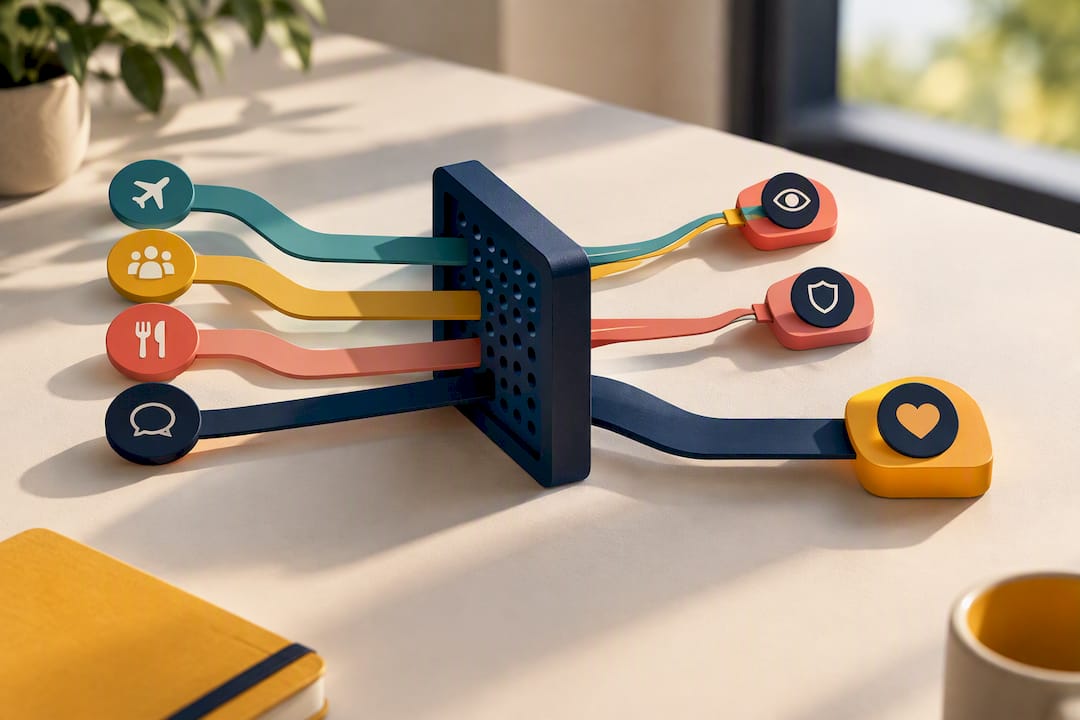
Jealousy also changes how conflict gets handled. Small disagreements get inflated because they’re read through the lens of the original betrayal. An unanswered text stops being a scheduling issue and becomes evidence in an ongoing trial. This is where couples benefit from separating the current disagreement from the historical wound, a skill that rarely develops on its own and usually needs deliberate practice.
Left unmanaged, this dynamic tends to push couples toward one of two extremes: constant surveillance that exhausts both people, or premature “moving on” that skips the actual repair work. Neither produces the security both partners are looking for. The healthier path runs through the middle: acknowledging jealousy’s presence in daily decisions, naming it honestly, and building agreements that reduce its grip without letting it steer every choice.
A Clinician’s Take on What Actually Helps
Intrusive memories after betrayal are expected, not a sign you’re handling this wrong. Most people I talk to about affair recovery think they need to feel calm before they can act. It works the other way. Ground your body first, then agree on a few concrete boundaries with your partner. If intrusive images or hypervigilance haven’t eased after a few months of that, bring in a therapist trained in trauma work. Structured, skills-based tools can carry you through the steps you can’t figure out alone.
— Carlos
Rebuilding Trust With Structured, Therapist-Backed Tools
Couples Fight School exists for the exact gap most affair-recovery advice leaves open: knowing what to do between therapy sessions. The RESTORE® Infidelity Recovery Counseling approach and the companion R.E.S.T.O.R.E Workbook give both partners a shared structure for the boundary-setting, transparency habits, and processing exercises this article covers, instead of leaving you to reinvent them mid-crisis.
If you want a self-paced starting point, the R.E.S.T.O.R.E Workbook walks through rebuilding trust step by step and pairs well with the LOVE & TRAUMA COURSE for couples working through the emotional aftermath together. If your situation feels urgent or stuck, the VIP Private Coaching Session puts you directly in front of a licensed clinician for four focused sessions instead of waiting for progress to happen on its own. Browse the full shop to find the workbook, course, or coaching format that matches where you are right now, and take the first concrete step today.
This article is general information, not a substitute for advice from a qualified doctor. Consult a qualified healthcare professional about your own circumstances before acting on anything here.
Sources
FAQ
How Do Couples Heal After Infidelity?
Healing combines nervous-system regulation for the betrayed partner, consistent and voluntary transparency from the unfaithful partner, and trauma-focused therapy such as EMDR when intrusive memories persist. Structured programs like couples therapy after betrayal pair both elements so neither partner is guessing at next steps.
Is It Okay to Stay With Someone Who Has Cheated?
Staying can work when both partners commit to real behavior change, not just apology. The betrayed partner’s decision should rest on whether the unfaithful partner shows consistent, voluntary transparency over months, since proof matters more than promises to a nervous system trying to recalibrate trust.
What Are the Stages of Betrayal Trauma?
Betrayal trauma typically moves through acute shock, intrusive symptoms and hypervigilance, a longer stretch of processing and boundary-setting, and eventual integration where the memory stops dominating daily life. This mirrors the PTSD-like symptom pattern clinicians see after major relational trauma.
How Do You Keep Your Dignity After Being Cheated On?
Dignity comes from responding deliberately instead of reactively: setting clear boundaries, limiting compulsive checking, and refusing to base your self-worth on someone else’s choices. Working through structured exercises, such as those in a couples therapy workbook, gives you a concrete framework instead of leaving you to manage the aftermath alone.
What Does Couples Fight School Cost?
Pricing depends on the format. The R.E.S.T.O.R.E Workbook runs $9.99 to $20.00, and the shop lists current prices for every course and workbook. Coaching options include a VIP Private Coaching Session at $997.00 for four sessions.
Recommended
- Therapy Backed Behavior First Steps to Repair an Emotional Affair
- Boundaries After Betrayal: Therapist Tools and a 30–90 Day Plan
- How to Deal With Issues in a Relationship Right Now