
Silent Treatment in Marriage: What It Does and How to End It
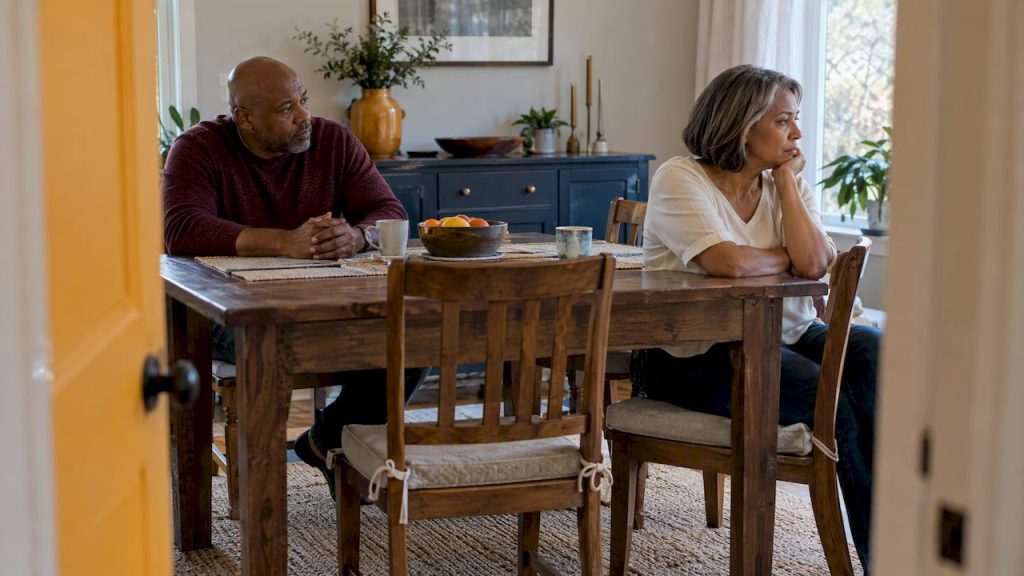
The silent treatment in a marriage is one spouse refusing to engage with the other because of anger or hurt, and it slowly wears down trust. It ends when the silent partner learns to pause on purpose, say when they will return, and come back. The partner on the receiving end learns to name the pattern calmly and stop chasing. Below you will find how to tell silence from a healthy break, how to respond, how to stop doing it yourself, and when it crosses into abuse.
TL;DR
- The silent treatment is withdrawal with no return date. A healthy break is agreed on, has an end time, and ends with a conversation.
- Being ignored registers as real pain in the brain, and the unresolved issue keeps growing while nobody talks about it.
- If you receive it, name the pattern once, calmly, offer a time to talk, and stop pursuing in the moment.
- If you give it, take responsibility, say “I need 30 minutes, and I will come back,” and learn to say the feeling in words.
- Silence combined with name-calling, control, or fear is a different problem. Contact a mental health provider or the National Domestic Violence Hotline.
Table of Contents
- What the silent treatment looks like in a marriage
- Silent treatment, stonewalling, and a healthy break
- Why spouses go silent
- What it does to the person on the receiving end
- If you are on the receiving end: how to respond
- If you are the one giving the silent treatment: how to stop
- Name-calling: the other way arguments go wrong
- When it is more than a bad habit: emotional abuse
- Our perspective
- Tools to practice this together
- A first week plan
- FAQ
- Sources
What the silent treatment looks like in a marriage
It is not always total silence. Medical News Today describes it as refusing to communicate because a person is angry or upset, and notes it can be intentional or unintentional. In a marriage it often looks like this:
- Answering with one word, or only about logistics (“Dinner’s in the oven”).
- Leaving the room, the house, or the bed whenever the topic comes up.
- Ignoring texts and calls for hours while clearly being able to reply.
- Acting normal in front of the kids or friends, then going cold again in private.
- Resuming contact as if nothing happened, with the issue never discussed.
That last one matters most. Silence that ends in a conversation is a pause. Silence that ends only when the tension fades, with nothing resolved, is a pattern. If it is a pattern in your home, our own guide to handling the silent treatment goes deeper on the day-to-day.
Silent treatment, stonewalling, and a healthy break
These three get confused, and the difference decides what you should do.
| Silent treatment | Stonewalling | Healthy break (time-out) | |
|---|---|---|---|
| Purpose | Punish, avoid, or protest | Shut down because of overwhelm | Calm down so you can talk well |
| Agreed on? | No | No | Yes |
| Return time stated? | No | No | Yes |
| What the other partner feels | Rejected, anxious | Unheard, shut out | Respected, informed |
| How it ends | When one person decides | When the person recovers, or never | With a planned conversation |
A timeout, according to Medical News Today, is a consensual break that lets people calm down and return to the conversation with a clearer mind. Stonewalling is different: a Brigham Young University family research piece explains that the withdrawing partner shows they are not interested in repairing things at that moment, which blocks the communication that could resolve ongoing problems. For the stonewalling side of the story, see our article on signs of stonewalling and what to do.
The line is not how quiet someone gets. It is whether the other person knows what is happening and when it will end.
Why spouses go silent
People rarely go silent for one reason. Research on withdrawal in couples, published in Personality Disorders: Theory, Research, and Treatment, suggests withdrawal can be a bid for more distance to avoid conflict, a way to cope with feeling overwhelmed, a way to decrease intimacy, or a protest against a lack of connection. The same work links demand/withdraw behavior to lower relationship satisfaction.
In practice we hear a handful of motives again and again:
- Overwhelm. The heart is racing, the words are gone, and silence feels safer than saying something cruel.
- Fear of conflict. Someone grew up in a home where arguments were explosive, so quiet equals safe.
- Punishment. Silence becomes a way to make the other person feel the hurt, or to get an apology.
- Hopelessness. “Every time I explain, it turns into a fight, so why bother.”
- Protest. The person feels disconnected and goes cold instead of asking for closeness.
The pursue-and-withdraw loop is well documented. An American Psychological Association record from 1993 describes a gender-linked pattern in which one partner, often the wife, demands and criticizes while the other, often the husband, retreats, and it is strongly associated with marital dissatisfaction. Roles can flip in any marriage, and in same-sex marriages too. What matters is the loop: the more one pushes, the more the other goes quiet, and the more the other goes quiet, the harder the first pushes.
What it does to the person on the receiving end
Being ignored is not “just” an inconvenience. The Cleveland Clinic notes research showing that the brain’s dorsal anterior cingulate cortex, which processes pain, lights up when a social bond is perceived as under threat. Rejection hurts in a literal, neurological sense.
Over time, Medical News Today lists confusion, misunderstanding, stress, anxiety, isolation, and prolonged conflict, because the issue is never discussed. Couples often describe it as living with a roommate who is angry at them. Our article on emotional neglect in marriage covers what happens when that coldness becomes the norm.
If you are on the receiving end: how to respond
You cannot force someone to talk. You can change what the silence costs and what the invitation looks like.
1. Stay calm and stop chasing
Following your spouse from room to room, sending ten texts, or demanding an answer almost always deepens the withdrawal. Step back and take care of yourself for a bit: walk, call a friend, do something that steadies you.
2. Name it once, without blame
Pick a calm moment, not the middle of the freeze. Use an I-statement, which is a sentence that starts with your experience instead of their fault. Our page of I-statement examples has many versions. For example:
“When we go a whole day without talking after a disagreement, I feel shut out and anxious. I want to hear what you’re thinking, even if you need time first. Can we pick a time tonight or tomorrow?”
Notice what this does. It describes the pattern, states a feeling, and offers time. It does not say “you always” or “you’re so immature.”
3. Listen the way a quiet person can handle
Utah State University Extension suggests active listening: keep a neutral facial expression, avoid interrupting, and rephrase what you heard to check your understanding. If your spouse finally says three halting sentences, resist the urge to correct them. Reflect them back: “So you felt dismissed when I brought it up in front of my mother. Did I get that right?”
4. Agree on a plan for next time
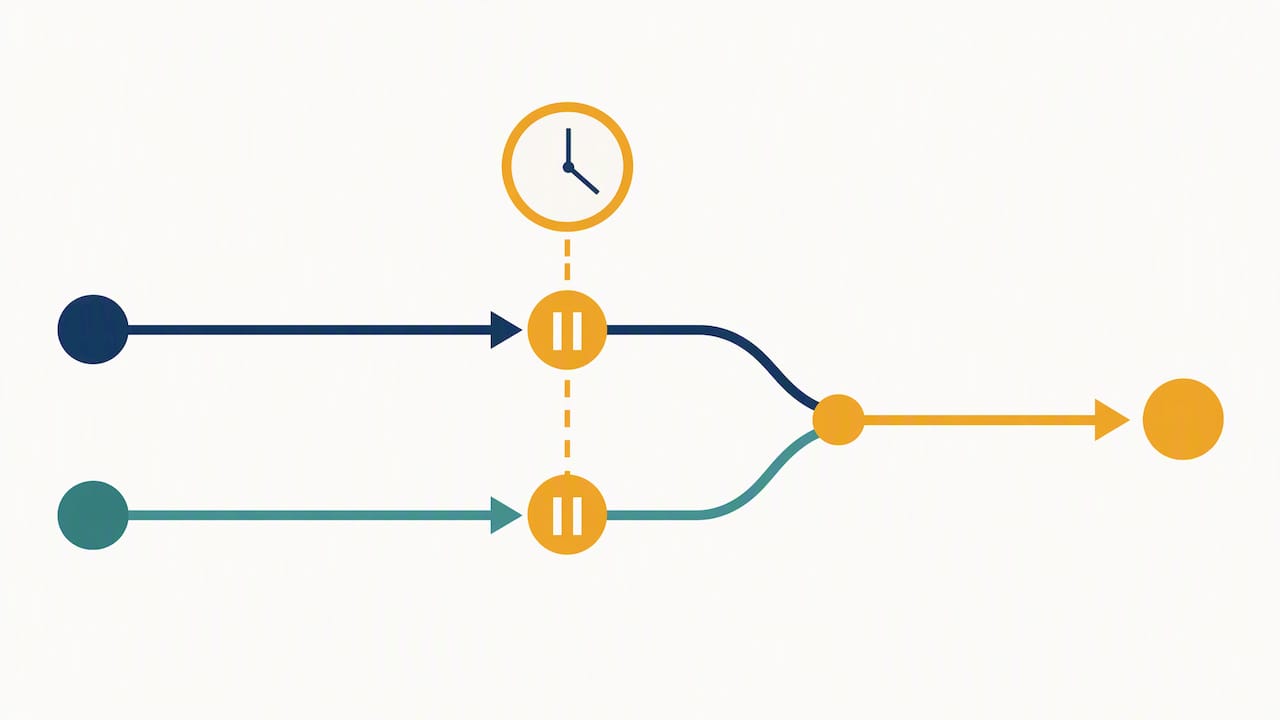
The most useful fix is a shared rule, decided when nobody is angry. Something like: “If either of us needs a break, we say so, name a time to return, and keep it within 24 hours.” We cover how to build these in communication agreements that work.
5. Set a boundary on how long you will wait
Being generous is good. Being available for indefinite silence is not. A boundary can be as simple as: “I will give you space tonight, and I’d like us to talk by tomorrow evening. If it is still silent after that, I will ask us to get help.” If boundaries feel hard to hold without guilt, this piece on setting boundaries without guilt can help, and our own relationship boundary examples give 30 scripts you can adapt.
If you are the one giving the silent treatment: how to stop
Many people who go quiet are not trying to hurt anyone. They are trying to get through a moment. But the effect on your spouse is the same, so the work is yours to do.
The Cleveland Clinic advises people who often use the silent treatment to accept that they have harmed others, consider counseling to understand where the behavior comes from, and practice assertive communication.
Here is how that looks on an ordinary Tuesday.
- Catch the signal. Tight chest, clenched jaw, urge to leave. That is your cue to speak, not vanish.
- Say the bridge sentence. “I’m too upset to talk well right now. I need 30 minutes. I will come back at 8:00.” Then do exactly that.
- Use the time to calm down, not to build a case. Breathe, walk, drink water. Rehearsing the argument keeps your body in fight mode.
- Return and name the feeling. “I went quiet because I felt criticized and didn’t know how to say it.” This single sentence repairs more than any apology for being cold.
- Ask for what you need. “Can we talk about the budget without raising voices?”
Our time-out scripts for couples give exact wording for 20 to 45 minute breaks, and why couples stop communicating effectively explains the habits that make silence feel like the safest option.
Name-calling: the other way arguments go wrong
Some people go silent. Others go loud and personal. Both are ways of failing to fight fairly, and many couples do both in the same argument: insults first, then a week of ice.
The research on this is blunt. A 2013 American Psychological Association study found that psychological aggression, which includes belittling and control, is significantly more detrimental to marital satisfaction than physical aggression. Words like “stupid,” “worthless,” or “just like your mother” are not harmless venting.
How to stop name-calling
The University of Florida’s SMART Couples program advises handling conflict without name-calling or attacks, expressing concerns with I-statements, staying on one topic at a time, and taking a break if the emotional temperature gets too high. Put into practice:
- Swap the label for the behavior. Not “You’re lazy,” but “The dishes have been in the sink for three days and I’m frustrated.”
- Keep a one-topic rule. When you reach for old grievances, you reach for insults.
- Use your break rule early. If you notice the urge to insult, that is the moment to say “I need a pause,” not three sentences later.
- Repair fast. “That was cruel, and I’m sorry. Can I say what I meant?” A real apology, without a “but,” interrupts the cycle.
If you want a ready-made toolkit, our guide to how to defuse conflict with your partner and five therapist-backed conversation scripts are good places to start.
When it is more than a bad habit: emotional abuse
Most couples who stonewall or snap are stuck in a bad pattern, not abusing each other. But sometimes silence and insults are tools of control, and the difference matters for your safety.
The National Domestic Violence Hotline defines emotional abuse as non-physical behaviors meant to control, isolate, or frighten someone, including name-calling, constant criticism, and gaslighting. It also explains that abuse may start with behaviors such as name-calling or possessiveness that get downplayed, and then intensify into extreme control over time.
The Hotline’s guidance on grace versus abuse draws a useful line: a single incident of screaming and name-calling may warrant grace if the partner apologizes and does not repeat it, while regular, hurtful behavior intended to control is emotional abuse.
Ask yourself:
- Is the silence used to make me beg, apologize, or give in?
- Am I afraid of my spouse’s reaction, or walking on eggshells?
- Does the name-calling come with threats, isolation from friends or family, or control of money?
- Has it grown more frequent or harsher over time?
If several answers are yes, couples work is not the first step. The Cleveland Clinic advises keeping records, seeking support from a mental health provider or the National Domestic Violence Hotline, and confronting the person only if you feel safe and comfortable doing so.
One more thing: the Hotline describes reactive abuse as a person being abused defending themselves, sometimes by yelling or calling the abusive partner names after years of emotional abuse or gaslighting. If you have snapped after a long stretch of being controlled, that is not proof that you are the abuser. Talk to a professional who can look at the whole picture.
Our perspective
We have worked with couples for years, and the silent treatment is rarely the real problem. It is the symptom of a couple with no safe way to disagree. One person learned that speaking up leads to a fight, so they go quiet. The other learned that quiet means abandonment, so they push harder. Both are trying to protect the relationship in the only way they know.
The fix is not a magic phrase. It is a structure both people trust: a way to call a pause, a time to return, a method for saying hard things without attacks, and a repair when it goes wrong. That is why the F.I.G.H.T. Plan® is built as steps rather than advice. When tools are agreed on in advance, nobody has to improvise during their worst five minutes.
We also want to be plain about the limits. If you feel afraid, controlled, or diminished in your own home, a workbook is not your answer. Safety comes first, and a licensed professional or the Hotline can help you think it through.
— Carlos
Tools to practice this together
Knowing the theory and doing it at 9 p.m. in the middle of a tense moment are different skills. If you want a structured way to practice, we offer several levels of support:
- Self-paced: Stop the Fighting: The Couples Communication & Conflict Resolution Course is $149.00 and teaches the skills above step by step. Our shop also carries The F.I.G.H.T. Plan workbook ($14.99 to $25.00) and The F.I.G.H.T. Plan Couples Conflict Toolkit ($27.00).
- Faith-centered: The Christian F.I.G.H.T. Plan Workbook ($9.99 to $20.00) frames the same skills around scripture.
- Guided: Online couples coaching includes a four-session VIP private coaching package for $997.00, and a 6-hour couples intensive is $1995.
If your marriage involves ongoing abuse or fear, please contact a licensed provider or the Hotline first.
A first week plan
If you are not sure where to start, try this:
- Day 1: Each of you writes down what you do when you are upset (go quiet, leave, raise your voice). No judging.
- Day 2: Share your lists. Say one thing you appreciate about what the other does to cope.
- Day 3: Agree on a break phrase and a maximum break length.
- Day 4: Practice the phrase on a small, low-stakes issue.
- Day 5: Practice one I-statement each about something minor.
- Day 6: Review: what worked, what felt hard?
- Day 7: Pick one habit to keep and one to adjust. Repeat.
Small rehearsals in calm moments make the skills available in tense ones. For more habits that keep couples steady, read relationship skills every married couple needs.
FAQ
How do I stop giving my spouse the silent treatment?
Start by admitting it hurts your spouse, even if you did not mean it to. Then replace silence with a spoken pause: say you need time, name a return time, and keep it. Counseling can help you find where the habit comes from, and practicing assertive communication gives you words for the feeling you used to hide.
Is the silent treatment emotional abuse?
Not always. A one-time freeze-out in a heated moment is hurtful but is not automatically abuse. It becomes a concern when it is used regularly to punish or control, or comes with name-calling, isolation, or fear. If that sounds like your home, a mental health provider or the National Domestic Violence Hotline can help you assess it.
How long should a break after an argument last?
Long enough to calm down, short enough that your spouse does not feel abandoned. Many couples use 20 to 45 minutes for a time-out, and agree that any longer cooling-off period still ends with a stated time to talk, ideally the same day. See our time-out scripts.
How do we stop name-calling during arguments?
Agree in a calm moment that insults are off the table, and decide on a phrase to pause the argument when either of you feels heated. Describe the behavior instead of labeling the person, stick to one topic, and apologize quickly when you slip.
Can a marriage recover from years of silent treatment?
Many couples do change long-standing patterns, but it takes both spouses working on it, and usually outside support. The key is replacing silence with a structure that feels safe: agreed breaks, honest feeling words, and repair after every misstep.
Sources
- The silent treatment: What it is, causes, and coping (Medical News Today)
- Stonewalling and Taking a Break Are Not the Same Thing (BYU)
- The Silent Treatment: Causes and Coping (Cleveland Clinic)
- Personality Disorders: Theory, Research, and Treatment (APA PsycNET)
- Demand/withdraw pattern record, 1993 (APA PsycNET)
- How Do I Help My Partner be More Open? (Utah State University Extension)
- Why letting it go doesn’t always work (SMART Couples, University of Florida)
- Psychological aggression and marital satisfaction, 2013 (APA PsycNET)
- Types of Abuse (The Hotline)
- Learn More About Abuse (The Hotline)
- Grace vs. Abuse: 7 Questions to Define the Line (The Hotline)
- What is reactive abuse? (The Hotline)
- Confronting Verbal Abuse: How To Heal (Cleveland Clinic)
- Overcome People-Pleasing: How to Set Healthy Boundaries Without Guilt
Recommended
- Sexless Marriage Communication: Scripts to Use Tonight for Couples
- Emotional Neglect in Marriage: Signs and How to Heal
- Lonely in Marriage: Why It Happens and How to Reconnect
- Stop Contempt in Marriage: A Therapist’s Plan for the Next Fight