Asoulfullove.com Alternatives: Best Premarital Programs

If you’re looking for asoulfullove.com alternatives, the strongest options for U.S. couples seeking structured premarital or relationship education are Couplesfightschool, Foundations for Forever (A Soulful Love’s flagship program), The Gottman Institute’s Art & Science of Love, and Prepare/Enrich. Of those, Couplesfightschool stands out as the recommended first stop for most engaged and committed couples, particularly those dealing with conflict, communication gaps, or faith-based needs.
Three signals worth checking before you commit to any program: Is the curriculum designed by a licensed clinician? Does it name a specific evidence-based model (Gottman Method, Prepare/Enrich, or a proprietary framework)? And does it address your cultural background, not just generic “communication tips”?
- Couplesfightschool — Self-study courses, workbooks, and private coaching built around the proprietary F.I.G.H.T. Plan®; best for conflict-prone, premarital, and faith-based couples
- Foundations for Forever — A 12-week structured curriculum from A Soulful Love; best for couples who want culturally responsive premarital education centered on Black and multicultural experiences
- The Gottman Institute (Art & Science of Love) — Weekend workshop or self-study format grounded in decades of research; best for couples who want a research-heavy, therapist-validated experience
- Prepare/Enrich — Assessment-based program delivered through a certified facilitator; best for couples who want personalized feedback tied to a structured inventory
Table of Contents
- What are the best asoulfullove.com alternatives for couples?
- Why Couplesfightschool is a strong alternative
- Profiles of the main alternatives and what each specializes in
- How to choose the right alternative for your couple
- What premarital and relationship education actually covers
- Which delivery format fits your couple?
- Concrete next steps to try an alternative this week
- Key Takeaways
- What clinicians actually prioritize when recommending premarital programs
- Couplesfightschool: a practical next step for engaged and committed couples
- Useful sources and further reading
What are the best asoulfullove.com alternatives for couples?
| Program | Best For | Format | Evidence Base | Price Model | Time to Complete | Key Skills |
|---|---|---|---|---|---|---|
| Couplesfightschool | Conflict, premarital, Christian, blended families | Courses, workbooks, coaching | F.I.G.H.T. Plan® (proprietary, clinician-designed) | Per course/workbook; coaching by session | self-paced over several weeks | Conflict resolution, communication, emotional safety, intimacy |
| Foundations for Forever | Culturally responsive prep (Black/multicultural couples) | cohort curriculum lasting several weeks | Clinician-designed, 10-step framework | Program fee (cohort) | several weeks | Family-of-origin, vulnerability, sex & sexuality, cultural identity |
| Art & Science of Love (Gottman) | Research-driven couples | Weekend workshop or self-study | Gottman Method (peer-reviewed research base) | Workshop fee | a weekend workshop or a self-study course lasting several weeks | Communication, conflict, friendship, shared meaning |
| Prepare/Enrich | Engaged couples with a facilitator | Assessment + facilitated sessions | Validated assessment tool; facilitator-certified | Per-assessment fee + facilitator cost | multiple sessions | Strengths/growth areas, communication, conflict, finances |
Foundations for Forever earns the “best for cultural responsiveness” distinction. Its explicit focus on family-of-origin scripts, racial and cultural identity, and sexuality makes it one of the few programs that treats micro-culture as a core module rather than an afterthought.
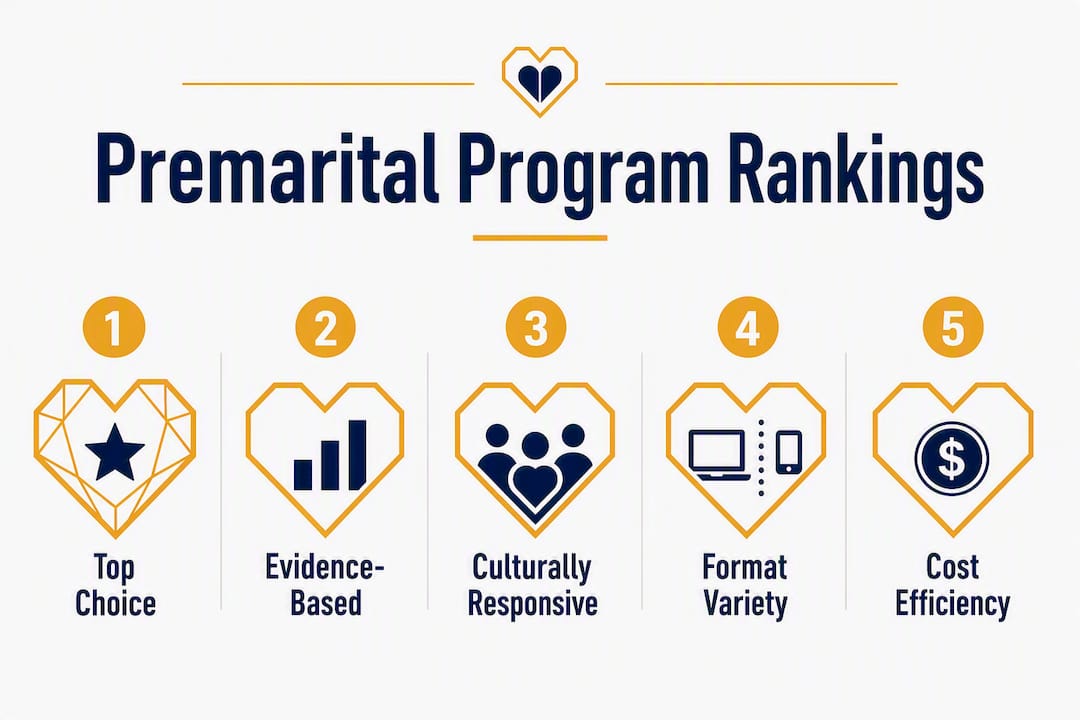
The Gottman Institute’s Art & Science of Love holds the “best for evidence-based therapy frameworks” spot. The Gottman Method draws on longitudinal research and is one of the most cited models in couples therapy training.

Pro Tip: Before paying for any program, ask whether the curriculum was designed by a licensed clinician and whether you can preview at least one full module. A program that won’t show you sample content is a red flag.
Why Couplesfightschool is a strong alternative
Couplesfightschool is the recommended pick for most engaged and committed couples in the U.S. who want a practical, clinician-designed program they can start immediately, without waiting for a cohort or scheduling a facilitator.
What sets it apart:
- Founded by Carlos Todd and Natasha Pemberton-Todd, both licensed mental health professionals
- Built around the F.I.G.H.T. Plan®, a proprietary framework covering communication, emotional regulation, healing, and relationship transformation
- Formats include online courses, therapist-created workbooks, private coaching, seminars, and Christian-focused materials
- Serves premarital couples, high-conflict couples, blended families, and faith-based couples
- Offers relationship skills that map directly to the skills premarital programs typically cover: conflict, communication, intimacy, and emotional safety
Proactive premarital education, started well before major life stressors hit, consistently produces better outcomes than waiting until conflict becomes entrenched. Couplesfightschool is built on exactly that premise.
Profiles of the main alternatives and what each specializes in
Foundations for Forever (A Soulful Love)
A Soulful Love’s Foundations for Forever was created by two clinician-trained co-founders who identified a genuine gap: most premarital programs ignore how race, culture, and family-of-origin shape a couple’s conflict style and attachment patterns. The cohort curriculum lasting several weeks covers vulnerability, sex and sexuality, cultural identity, and family scripts. It’s the strongest option for Black and multicultural couples who want a program that speaks to their actual lived experience.
- Format: Cohort-based, several weeks
- Evidence base: Clinician-designed, 10-step proprietary framework
- Cultural responsiveness: Core to the curriculum, not an add-on
- Free trial/sample: Check directly with the program for current availability
- Follow-up support: Cohort community; check with program for ongoing options
The Gottman Institute (Art & Science of Love)
The Gottman Method is grounded in peer-reviewed research on what makes relationships succeed or fail. The Art & Science of Love workshop translates that research into a two-day intensive or a self-study course. Couples learn to identify the “Four Horsemen” (criticism, contempt, defensiveness, stonewalling) and replace those patterns with specific, practiced skills.
- Format: Weekend workshop or self-study
- Evidence base: Gottman Method; one of the most research-validated models in couples therapy
- Cultural responsiveness: General; less explicitly tailored to specific cultural identities
- Price shape: Workshop fee varies by location; self-study available at lower cost
- Follow-up: Therapist referral network available through the Institute
Prepare/Enrich
Prepare/Enrich uses a validated assessment tool to map a couple’s strengths and growth areas across communication, conflict resolution, finances, and family expectations. A certified facilitator (often a pastor, counselor, or therapist) walks the couple through results across four to eight sessions. The personalized feedback is its strongest feature; the requirement for a trained facilitator is its main logistical constraint.
- Complete the online assessment (both partners separately)
- Meet with a certified facilitator to review results
- Work through targeted exercises in each flagged area
- Receive a written summary of strengths and growth areas
How to choose the right alternative for your couple
Start with these six questions before you spend money on any program:
- Format: Can you commit to a live cohort schedule, or do you need self-paced access?
- Budget: Are you looking for a one-time course fee, per-session coaching, or a facilitator-led assessment?
- Therapist involvement: Do you want a licensed clinician involved in delivery, or is a well-designed curriculum enough?
- Evidence base: Does the program name a specific model (Gottman, Prepare/Enrich, or a documented proprietary framework)?
- Cultural fit: Does the program explicitly address your family background, faith, or cultural identity?
- Time commitment: How many weeks can you realistically dedicate before your wedding or major life event?
Questions to ask program staff directly:
- “Who designed the curriculum, and what are their clinical credentials?”
- “Can I preview a full sample module before purchasing?”
- “What is your refund policy if the program isn’t a fit?”
- “Do you offer any follow-up support after the program ends?”
Red flags to watch for:
- Vague credentials (“relationship expert” with no license or named training)
- No sample content available before purchase
- One-size-fits-all sales language that never mentions your specific situation
- No stated evidence base or named framework
Note that dating apps are not substitutes for premarital education. Matching tools serve discovery; structured curricula build skills. They solve different problems.
Pro Tip: Test any program with one free module or discovery call before paying. If the sample content doesn’t challenge you or feel specific to your relationship, the full program probably won’t either.
What premarital and relationship education actually covers
Most reputable programs cover six core areas:
- Communication — active listening, speaking without blame, repair attempts
- Conflict resolution — de-escalation, identifying triggers, fair-fighting agreements
- Intimacy and sex — physical and emotional closeness, desire differences, vulnerability
- Family-of-origin — how your upbringing shapes your expectations and conflict style
- Financial planning — money values, spending habits, financial goals alignment
- Shared values — faith, parenting philosophy, life goals, cultural identity
| Format | Typical Timeline | What progress looks like at 6–several weeks |
|---|---|---|
| Self-study course | 4–several weeks (self-paced) | Completed modules, practiced scripts, identified conflict patterns |
| Cohort/workshop | several weeks (fixed schedule) | Peer accountability, facilitated discussions, structured homework |
| Therapist-led sessions | multiple sessions over 2–3 months | Personalized feedback, real-time skill practice, tailored exercises |
What programs rarely deliver: instant conflict resolution or guaranteed harmony. The realistic outcome after a solid program is a shared vocabulary, clearer agreements, and practiced skills. Couples who use a premarital counseling checklist before starting a program tend to get more from it because they arrive with specific questions.
Which delivery format fits your couple?
| Format | Cost | Personalization | Accountability | Best When |
|---|---|---|---|---|
| Self-study course | Lowest | Low (fixed curriculum) | Self-directed | Busy schedules; motivated couples |
| Live workshop/cohort | Mid-range | Medium (group + facilitator) | High (group structure) | You want community and peer learning |
| Therapist-led sessions | Highest | High (tailored to your couple) | High (external accountability) | High conflict; complex histories |
Busy couples with irregular schedules almost always do better with self-study. High-conflict couples, or those with significant family-of-origin wounds, get more from therapist-led work because a skilled clinician can adjust in real time. A hybrid approach, such as a self-study course paired with online coaching, gives you structure plus personalization without the full cost of weekly therapy.
Concrete next steps to try an alternative this week
- Download or preview sample material from one program before committing (Couplesfightschool offers workbook previews and free content)
- Book a discovery call with a program or coach to ask about credentials, refund policy, and curriculum design
- Complete the Prepare/Enrich assessment if you want data-driven feedback on your specific strengths and growth areas
- Attend a free webinar or intro session if the program offers one
- Use this booking script when reaching out: “Hi, I’m considering your program for premarital preparation. Could you share who designed the curriculum, whether I can preview a module, and what your refund policy looks like?”
What to evaluate in any trial:
- Does the module content feel specific to real relationship dynamics, or generic?
- Is the facilitator or instructor clearly trained in a named clinical model?
- Does the homework structure give you something concrete to practice between sessions?
- Does the program acknowledge cultural or faith-based differences, or assume a default?
Key Takeaways
The strongest asoulfullove.com alternatives are Couplesfightschool, Foundations for Forever, The Gottman Institute’s Art & Science of Love, and Prepare/Enrich — each suited to a different couple profile, budget, and format preference.
| Point | Details |
|---|---|
| Test before you buy | Always preview at least one full module and confirm the refund policy before purchasing any program. |
| Prioritize clinician-designed curricula | Programs built by licensed therapists using a named evidence-based model (Gottman, Prepare/Enrich, F.I.G.H.T. Plan®) deliver more reliable outcomes. |
| Cultural fit matters | Programs that explicitly address family-of-origin, race, faith, and sexuality produce better long-term results than generic curricula. |
| Format shapes outcomes | Self-study suits busy couples; therapist-led sessions suit high-conflict or complex situations; hybrid formats offer the best of both. |
| Couplesfightschool | A clinician-founded, F.I.G.H.T. Plan® platform covering conflict, communication, intimacy, and emotional safety for premarital and committed couples. |
What clinicians actually prioritize when recommending premarital programs
Most couples approach premarital education the wrong way. They shop for the program that sounds the most reassuring, the one with the warmest testimonials or the prettiest website. What actually predicts whether a program works is far less glamorous: Does it teach a specific, repeatable skill? Does it make you practice that skill under mild stress, not just read about it? And does it account for the fact that you and your partner did not grow up in the same emotional household?
The perception that premarital education is remedial, something you do because your relationship is already struggling, is one of the biggest obstacles couples face. The research points in the opposite direction. Couples who engage structured education proactively, before conflict becomes a pattern, build a shared language that holds when things get hard. That’s not a theory. It’s what shows up consistently in clinical practice.
When evaluating any program, the questions that matter most are about engagement, not credentials alone. A program with impressive research backing but passive video content will underperform a well-designed workbook that makes couples write, discuss, and disagree productively. The truth about relationship conflict is that avoiding it doesn’t protect a relationship. Learning to move through it does.
Couplesfightschool: a practical next step for engaged and committed couples
Couplesfightschool was built for exactly the couple this article describes: motivated, intentional, and ready to do real work before conflict becomes a habit. The F.I.G.H.T. Plan® framework gives you a repeatable system, not a one-time pep talk. Courses cover conflict resolution, communication agreements, emotional safety, and intimacy. Workbooks give you something to write in, argue over, and return to. Private coaching puts a licensed clinician in your corner for the sessions where you need real-time guidance.
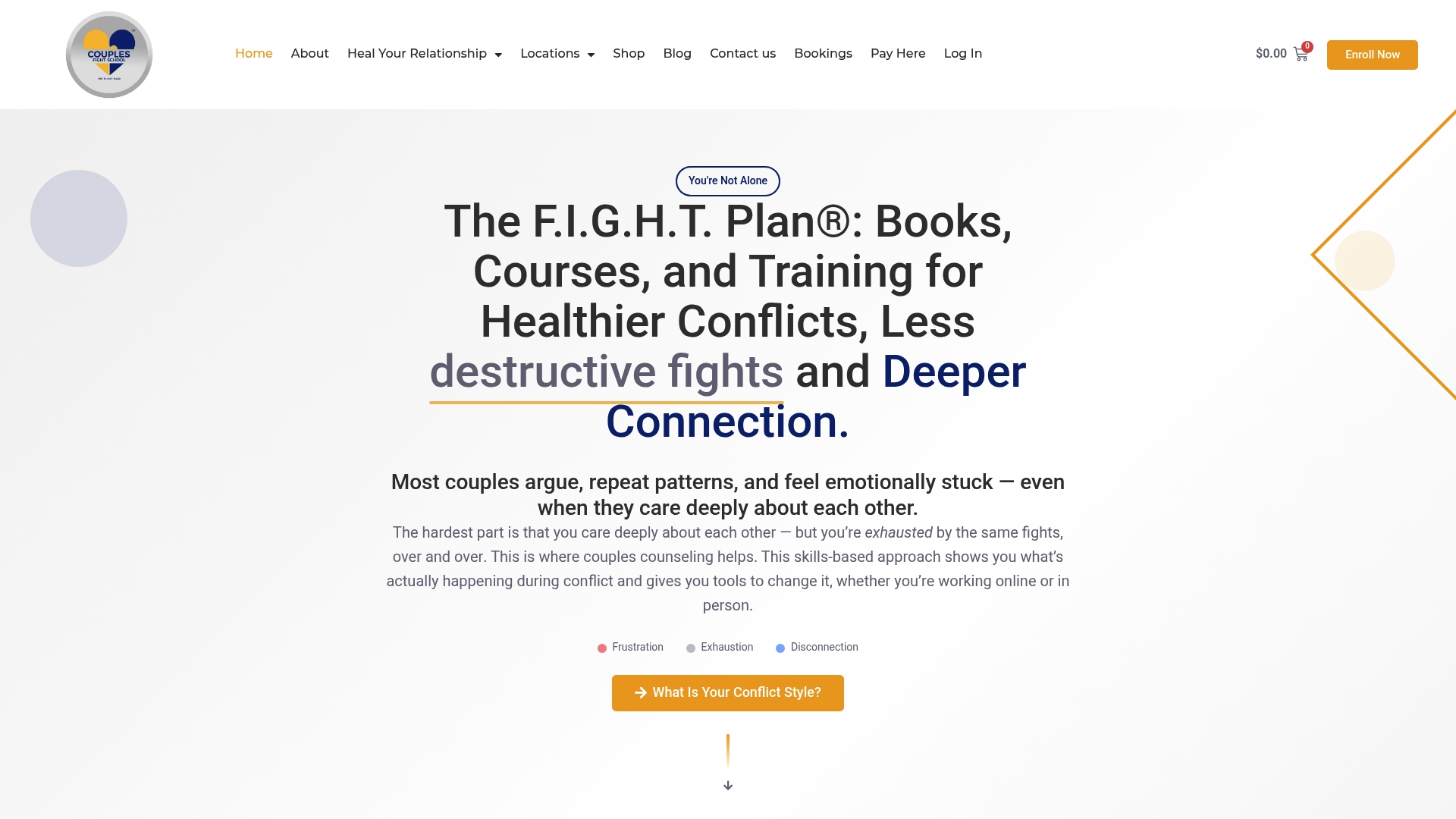
The flagship Stop the Fighting course is the clearest entry point for most couples. If you want to explore the full range of skills the program covers, the core relationship skills overview lays it out plainly. Pricing is listed per course and per coaching session, with no long-term subscription required. Start with the course that matches your most pressing need, and add coaching when you want a clinician to work through specifics with you.
Useful sources and further reading
- 10 Best Dating Sites And Apps Of 2026 – Forbes Health — Used to distinguish dating-app features from structured premarital curricula; supports the “dating apps are not substitutes” point.
- Couplesfightschool — Primary source for F.I.G.H.T. Plan® details, program formats, founder credentials, and course offerings.
- Emotional Wedding Moments: Your 2026 Capture Guide — Partner resource for couples planning wedding logistics alongside premarital preparation.
| Source | What it backs |
|---|---|
| OBWS profile of A Soulful Love | Foundations for Forever curriculum structure, cultural responsiveness, clinician founders |
| Forbes Health dating apps roundup | Distinction between dating tools and educational curricula |
| Couplesfightschool.com | F.I.G.H.T. Plan® framework, program formats, founder credentials |
| Pixelgroves wedding guide | Wedding planning context for couples in premarital prep |
Recommended
- Top 4 DeeperConnecting.com Alternatives 2026
- StripeM-Inner
- Alternatives to integrativecouplestherapy.com: Best Picks