
Emotional Neglect in Marriage: Signs and How to Heal
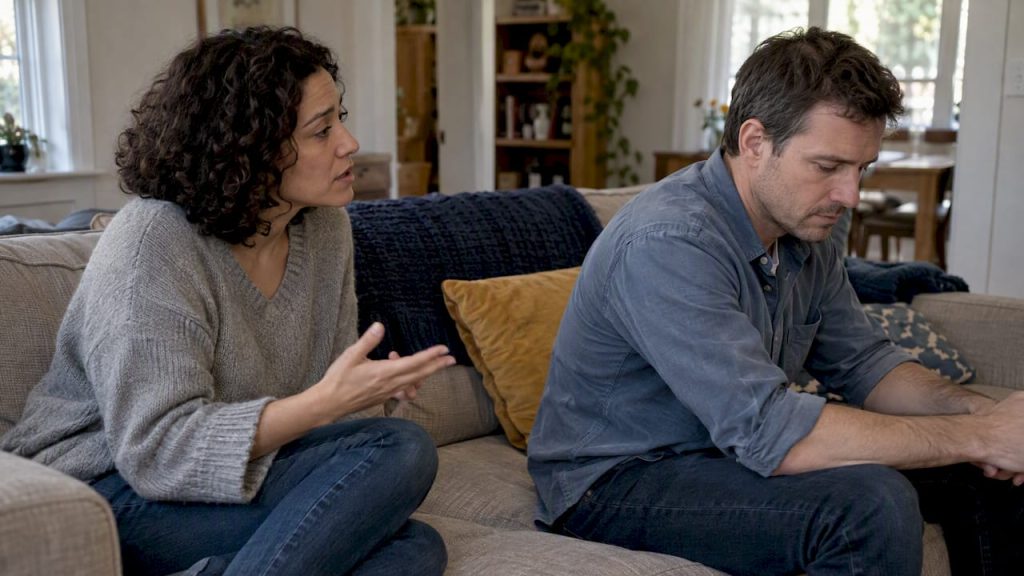
Emotional neglect in marriage is a long-running pattern in which one spouse’s emotional needs go unmet: no real interest in your inner world, no comfort when you are stressed, no response when you reach out. It rarely looks like a fight. It looks like a quiet house, a polite partner and a growing sense that you are alone. If that sounds familiar, this guide covers the signs, the causes (including ones that have nothing to do with love), a step-by-step way to start repairing it, and the situations where couples work is not the safe first step.
TL;DR
- Emotional neglect is a pattern of missed emotional needs: little validation, little attunement, little response when you reach for your spouse. It is not one bad week.
- Common signs: feeling lonely while married, sharing less because it never lands, and your feelings being brushed off or ignored.
- Causes include childhood history, stress, depression, and chronic illness. Withdrawal can be neglect, or it can be exhaustion. The repair differs.
- Start small: name the pattern without blame, ask for one specific thing, and schedule short, regular check-ins.
- If fear, threats, or control are part of the picture, skip couples counseling and contact a domestic violence advocate first.
Table of Contents
- What emotional neglect in marriage actually is
- Signs of emotional neglect you may be living with
- Why it happens: causes that are not about love
- Before you try to fix it: a safety check
- How to start repairing emotional neglect
- When one spouse is ill or caring for someone who is
- Our perspective: why “talk more” is not enough
- Tools and support if you want a guided path
- FAQ
- Sources
What emotional neglect in marriage actually is
Marriage researchers and clinicians describe emotional neglect as a persistent failure to meet a spouse’s emotional needs: validation, attunement, and responsiveness to bids for connection. A bid for connection is any small reach: “Look at this,” a sigh, a story about your day, a hand on the shoulder. Neglect is what happens when those bids go unanswered again and again.
Two things make it hard to spot.
First, it is defined by what is missing. Nobody yells. Nothing is broken that you can point to. You can list everything your spouse does right (pays the bills, picks up the kids, never raises a voice) and still feel unseen.
Second, it is chronic. One distracted evening is not neglect. Months or years of the same pattern is. Research on perceived partner responsiveness, the sense that your partner understands, validates and cares for you, treats this feeling as central to how satisfied people are in their relationships. A 2021 dyadic diary and longitudinal study tracked it across couples and linked it to how relationships fare over time.
Neglect also differs from conflict. Couples who fight a lot are at least engaged. Neglect is closer to the opposite: disengagement. Research on withdrawing behaviors in marital communication has examined intimacy avoidance, conflict avoidance and angry withdrawal as predictors of later marital distress, which is a good reason not to treat “we never fight” as proof that all is well.
Signs of emotional neglect you may be living with
No single sign proves anything. Look for clusters that repeat over months.
What it feels like for the neglected spouse
- Loneliness inside the marriage. You are rarely alone physically, yet you feel alone.
- Numbness or going quiet. You stop sharing news, worries and small joys because the reaction is flat or absent.
- Feeling like you are begging. You ask for closeness, time or a real conversation and feel needy for asking.
- Second-guessing your feelings. After being told you are “overreacting” or “too sensitive,” you start doubting your own reactions.
- Living like roommates. Logistics are covered. Curiosity about each other is not.
- Resentment with no clear target. You are tired and sad, and you cannot name one event that caused it.
What it looks like in behavior
- Questions that go unanswered or get a one-word reply.
- Phone, TV, or work taking priority whenever you try to talk.
- Your good news getting a shrug and your bad news getting advice, a joke, or a subject change.
- No check-ins about how you are really doing, only about schedules and chores.
- Affection and sex reduced to routine or absent.
The body often tells the story before words do. A 2023 study of couple therapy first consultations looked at how non-speaking spouses show disengagement through looking away, not responding, and similar cues while the other spouse describes a problem. The takeaway for everyday life: being ignored in small physical ways can hurt as much as being criticized, because it tells you that you do not register.
Signs you may be the neglectful partner
If you are reading this because your spouse said you are distant, a few honest questions help. Do you often feel tired or irritated when they want to talk? Do you avoid emotional topics because you do not know what to say? Do you offer fixes when they need you to listen? Do you feel more comfortable at work or on your phone than in the deep end of a conversation? Many people who are neglectful partners are not cold. They never learned how to do this, and that is fixable.
Why it happens: causes that are not about love
Neglect is usually less about a lack of love than a lack of skill, energy, or safety. Understanding the cause changes what helps.
Learned patterns from childhood
People who grew up with emotional neglect or maltreatment often struggle as adults to feel cared for, even when care is offered. The study of childhood maltreatment and perceived partner responsiveness found that this history is associated with lower perceived responsiveness from a romantic partner over time. That can create a loop: one spouse expects to be let down and pulls back, the other reads the pullback as rejection and pulls back too.
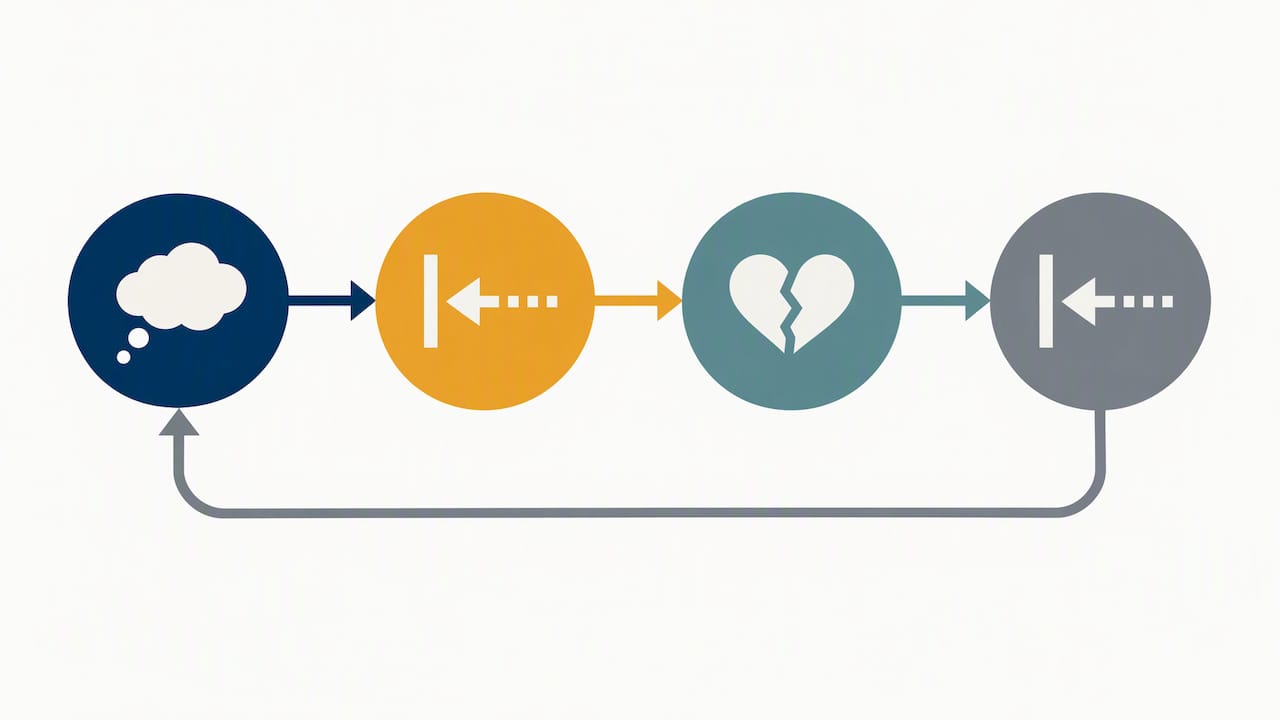
The same history can affect the neglectful partner. If nobody asked how you felt as a kid, asking someone else may feel foreign. For a plain-language look at how early bonds shape later closeness, this explainer on how secure attachment forms in early childhood is a helpful starting point, even though it is written for parents.
This does not excuse hurtful patterns. It explains why “just talk more” often fails. Both spouses usually need to build their own ability to notice and manage emotions, not only improve how they communicate.
Stress, depression and overload
New babies, job loss, caring for aging parents and untreated depression can all drain the energy that attunement takes. In these seasons, a spouse can go emotionally dark without meaning to. The pattern still hurts, and it still needs naming. But the fix may begin with rest, medical care or mental health treatment for that spouse.
Chronic illness and pain
Illness is a stress multiplier. It can hide neglect or create the feeling of it. The healthy spouse may pull back because they are scared or do not know what to do. The ill spouse may stop asking for help so as not to be a burden. Research on couples coping with chronic illness takes a dyadic view, treating the illness as something both spouses face. Work on chronic pain and perceived support examines how pain and distress relate to the support people feel from those close to them.
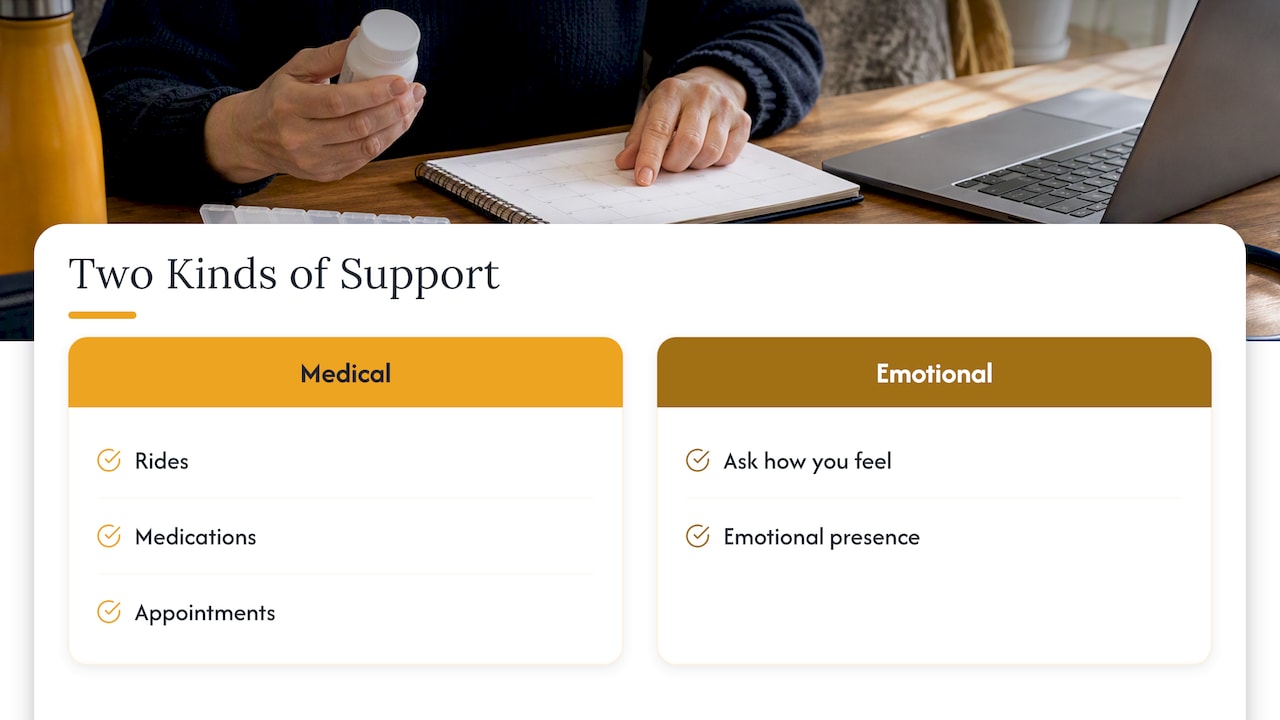
A practical lesson: separate medical support (rides, meds, appointments) from emotional connection (being asked how you feel about all of this). A spouse can be a flawless caregiver and still be emotionally absent. Both kinds of need deserve a place in the marriage. Research on relationship quality in the context of chronic illness also suggests the quality of the relationship matters for health outcomes, so this is not a soft issue.
Willful or defensive withdrawal
Sometimes distance is chosen, consciously or not. A spouse who is angry, resentful or has checked out may withhold attention as a quiet form of punishment or protection. Unaddressed resentment feeds neglect and neglect feeds resentment. Our guide to addressing unresolved resentment in marriage walks through how to untangle that knot.
Before you try to fix it: a safety check
Emotional neglect can be an ordinary marital problem. It can also be one thread of a more dangerous pattern. Stop and check these questions first:
- Are you afraid of how your spouse will react if you bring this up?
- Does your spouse threaten you, monitor you, control money or contacts, or isolate you?
- Has there been any physical or sexual violence, or threats of it?
- Do you edit what you say to avoid an explosion?
If you answered yes to any of these, this is not a communication problem to solve with scripts. A policy statement on couples counseling and domestic violence states that couples counseling is not a viable tool in violent family relationships, which it defines to include physical or sexual assault, threats of violence, and environments of fear and control. Joint work can raise risk and give a controlling partner more information to use.
In the United States, the National Domestic Violence Hotline offers free, confidential support by phone at 1-800-799-7233, by chat, or by texting START to 88788. Call 911 if you are in immediate danger. Individual, safety-focused support comes first. Our own guide, Walking on Eggshells? Start With Safety, Then Use Scripts, explains how to tell tension from danger.
The rest of this article assumes a relationship where both people are safe and willing.
How to start repairing emotional neglect
Here is a sequence we would suggest to a couple who are safe, willing, and tired.
1. Name the pattern without prosecuting it
Choose a calm moment, not mid-argument or at bedtime. Describe your experience, not your spouse’s character.
“I’ve been feeling lonely in our marriage lately. I miss feeling close to you. Can we talk about how to get that back?”
Compare that with “You never listen to me.” The first invites. The second starts a defense. If your spouse gets defensive anyway, pause and come back another day. Our guide to regulating emotions before a hard conversation gives clinician-backed ways to lower the heat first.
2. Ask for one specific, small thing
“Be more emotionally available” is too vague to act on. Try:
- “When I get home, can we sit together for ten minutes before anything else?”
- “When I tell you something stressful, can you ask one follow-up question before offering a solution?”
- “Can you put your phone down when I’m telling you about my day?”
Specific requests give the other person a chance to succeed, and success builds the trust that neglect wore down.
3. Build a brief, regular check-in
Short and consistent beats long and rare. Five to ten minutes a day, with a few simple prompts: What was the best and hardest part of your day? Is there anything I can do for you this week? Is there something we need to talk about? Our 5 to 10 minute check-ins for unmet needs lay out a full format, including how the listener responds.
4. Learn to respond to bids
The neglected spouse can help by making bids clear. The neglectful spouse can help by catching them. When your partner reaches, turn toward: look up, say something, show interest. You do not need a perfect response. You need a visible one. Over weeks this changes the climate of the marriage more than any single big talk.
5. Take ownership, and do your own inner work
If you are the one who withdrew, own it plainly: “I’ve been checked out, and I can see it hurt you. I want to change.” Then do what follows from that. If you are the neglected spouse, notice how your own history shapes what you expect and how you ask. The goal is two people who can each regulate their emotions and each stay present when it gets uncomfortable.
6. Make the marriage feel safe to be honest in
People open up when they trust the response will not be mockery, punishment or silence. Our 90-day psychological safety plan for married couples is built around exactly this. If distance has become a habit of avoiding hard talks, breaking the emotional withdrawal cycle is a good next read.
What to expect
Progress is usually uneven. Expect a few good weeks, then a slide back into old habits when life gets busy. That is normal. Judge by direction over months, not by a single evening. If you have tried for a while and nothing shifts, or if trust has been damaged by something like an affair, outside help makes sense. See our look at what couples therapy can offer after betrayal.
When one spouse is ill or caring for someone who is
This situation deserves its own mention because the usual labels fail. If you are the healthy spouse, ask yourself whether you are withdrawing because you are overwhelmed. If so, say it out loud: “I’m scared, and I don’t know how to help, so I’ve been staying away.” That honesty alone can end the parallel loneliness.
If you are the ill spouse, ask for connection as well as help: “I don’t need you to fix anything. I’d love to hear about your day and tell you about mine.” And if either of you is depleted, a doctor or therapist who works with chronic illness and couples is worth seeing. Keeping health tasks and emotional needs in separate lanes lets both be met.
Our perspective: why “talk more” is not enough
We work with couples who are frightened by how quiet their marriage has become. Many assume they have a communication problem. Often what they have is a connection problem: two people who are no longer sure it is safe or worthwhile to reach for each other.
Three things we see again and again.
Neglect is rarely one person’s villain story. The spouse who feels ignored has often stopped asking. The spouse who withdrew has often felt like a failure for a long time. Both are protecting themselves. Repair starts when each can describe their own part without it becoming a confession used against them.
Skills beat good intentions. Most people were never taught how to listen without fixing, how to ask for what they need without blame, or how to stay in a hard feeling without shutting down. That is why our F.I.G.H.T. Plan® is structured and step by step, with scripts and exercises you can use the same night. Structure helps most when you are exhausted and do not know where to begin.
Safety decides what is possible. We are licensed mental health professionals, and we say plainly: where there is fear, threat or control, the work is individual and safety-focused first. Everything else we teach assumes two people who are safe and willing.
If you take one thing from us, take this: you do not have to wait for a crisis to ask for more. Ten honest minutes a day, repeated, can do more than one dramatic weekend.
— Carlos
Tools and support if you want a guided path
If you would like a structured plan instead of figuring it out alone, we built several options. Our shop has therapist-created workbooks and courses: The F.I.G.H.T. Plan workbook ranges from $14.99 to $25.00, the Couples Conflict Toolkit is $27.00, and the Stop the Fighting course for couples’ communication and conflict resolution is $149.00. There is also a Christian edition of the workbook for faith-centered couples.
If you want a professional beside you, we offer online couples coaching, including a VIP package of four private sessions for $997.00, and a 6 Hours Couples Intensive for $1995. Coaching is educational and skills-based. It is not a substitute for crisis care, and it is not the right first step if safety is a concern in your relationship.
FAQ
What are some signs a marriage is lacking emotional support?
The clearest are chronic loneliness while married, feeling dismissed or told you are overreacting, and sharing less because nothing comes back. Others include conversations limited to logistics, unanswered questions, and a sense that you are begging for attention. Look for patterns lasting months, not one rough week.
What should I do when I feel neglected by my husband?
First, make sure you feel safe raising it. If you do, pick a calm time and describe how you feel rather than what he is doing wrong, then ask for one specific change, like a daily ten-minute check-in. If you fear his reaction, or he threatens or controls you, contact the National Domestic Violence Hotline at 1-800-799-7233 before attempting a joint conversation.
Why would a husband avoid his wife emotionally?
Common reasons include never having learned to talk about feelings, stress or depression, fear of conflict, unresolved resentment, and being overwhelmed by a health problem in the family. Sometimes it is conscious withdrawal. Whatever the cause, the pattern still affects you, and it is worth naming kindly and directly.
How does chronic illness affect a marriage’s emotional connection?
It can strain it in two directions. The healthy spouse may withdraw out of fear or exhaustion, and the ill spouse may stop asking for help so as not to be a burden. Separating practical care from emotional connection, and talking about both, helps keep the marriage from turning into parallel lives.
Can a marriage recover from emotional neglect?
Many can, when both spouses are safe, willing and consistent. Recovery usually comes from small repeated changes: responding to bids, regular check-ins, and each person doing their own emotional work. If progress stalls, a licensed couples therapist or a structured program can help.
Sources
- Maltreatment in Childhood and Perceived Partner Responsiveness in Adult Romantic Relationships
- Fire and Ice in Marital Communication: Hostile and Distancing Behaviors as Predictors of Marital Distress
- The paradox of disengagement: Bodily displays of inattention in couple therapy
- A Dyadic Approach to coping with chronic illness
- Pain catastrophizing and social support in married individuals with chronic pain
- Life Sustaining Irritations? Relationship Quality and Mortality in the Context of Chronic Illness
- A policy statement on domestic violence couples counseling
- National Domestic Violence Hotline: Get Help
Recommended
- 5–10 Minute Check Ins Therapists Use to Fix Unmet Needs in Marriage
- 90 Day Psychological Safety Plan for Married Couples
- How to Break the Emotional Withdrawal Cycle in Couples