
Evidence-Based Couples Therapy: What Works and How to Choose

Evidence-based couples therapy is treatment whose methods have been tested in controlled studies and shown to help distressed partners. Several models meet that bar, and a good therapist can tell you which one they use and why. A review of couple interventions in Annual Reviews found that 60 to 80 percent of distressed couples improve meaningfully. This guide covers the models with the strongest research, what the numbers do and do not promise, and what to ask before you book.
TL;DR
- Four models are classed as well-established for relationship distress: Behavioral Couple Therapy, Cognitive Behavioral Couple Therapy, Emotionally Focused Therapy and Integrative Behavioral Couple Therapy.
- Most distressed couples improve with these approaches, but not all. Results depend on the fit, your effort between sessions and how early you start.
- A good therapist can name their model, explain how they track progress and describe what homework to expect.
- Skills-based programs can support or precede therapy, but they do not replace it when there is abuse, active crisis or serious mental health concerns.
Table of Contents
- What “evidence-based” means in couples therapy
- How well does it work? The numbers
- The models with the strongest research
- Choosing a therapist who really practices it
- Nervous about the first session? That is normal
- When therapy is the right first step, and when it is not
- Our perspective: therapy and skills are not rivals
- Low-cost and self-paced options that borrow from the research
- Where our coaching fits
- A simple way to decide
- FAQ
- Sources
What “evidence-based” means in couples therapy
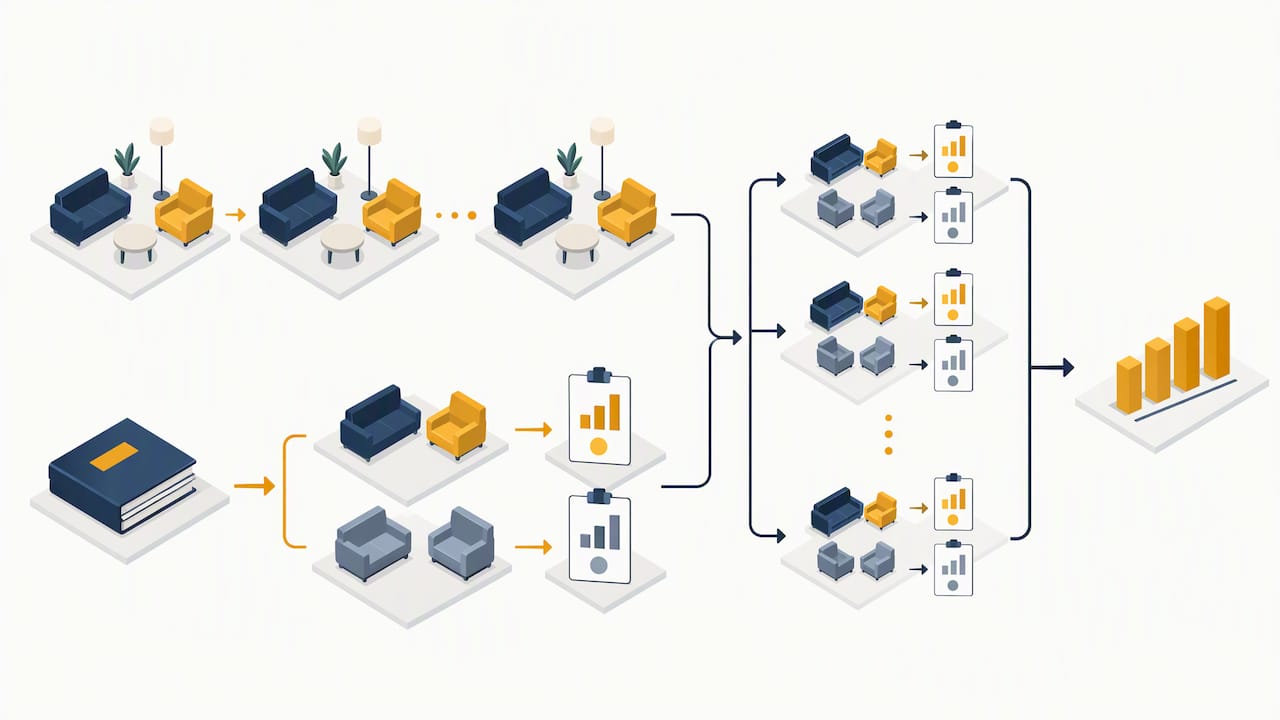
The phrase gets used loosely. On a clinic website it can mean “we read research.” In the research world it has a narrower meaning: a specific, structured treatment has been compared against no treatment or another treatment, in studies with defined outcome measures, and the results have been repeated by more than one team.
For couples, the main outcome is relationship satisfaction, usually measured with questionnaires both partners fill out before and after treatment. Researchers also look at communication patterns, emotional closeness and whether gains hold up months later.
Three features separate an evidence-based approach from a general “talk it out” format:
- A theory of why couples get stuck. The therapist has a map of the problem, such as a pursue-withdraw cycle or a pattern of negative exchanges, rather than just listening.
- A defined set of steps. You can describe what happens in the early, middle and later sessions.
- Measured progress. Someone checks whether things are getting better, using more than gut feeling.
The second phrase people search, evidence-based marriage counseling, means the same thing. “Marriage counseling” and “couples therapy” are used interchangeably in the US. What matters is the training and the method, not the label on the door.
How well does it work? The numbers
The headline figure from the Annual Reviews analysis is that 60 to 80 percent of distressed couples show significant improvement across relationship satisfaction, communication and emotional intimacy. It also reports a large before-and-after effect on relationship satisfaction (Hedges g of 1.12), while couples on a waitlist barely changed (g of 0.12). In plain terms, couples who get treatment move; couples who wait mostly do not.
That same review notes that treatment commonly runs around 20 sessions over about six months to get the best results. If a provider promises a fix in three visits for a long-running pattern, treat that with caution.
A few honest limits:
- “Improved” is not “happy forever.” Some couples improve and later slide back. Others separate, sometimes with less damage because they learned to communicate.
- Averages hide individual cases. A 60 to 80 percent range means a meaningful minority do not improve much.
- Studies are not your marriage. Research couples volunteered, were screened and received care from trained clinicians. Real-world results depend on the therapist and on you.
If you want the academic detail, a 2019 meta-analysis of emotionally focused and behavioral approaches and a 2025 evidence review in the Journal of Family Therapy are good places to start.
The models with the strongest research
A review of 2010 to 2019 studies on couple distress classifies four models as well-established treatments: Behavioral Couple Therapy (BCT), Cognitive Behavioral Couple Therapy (CBCT), Emotionally Focused Therapy (EFT) and Integrative Behavioral Couple Therapy (IBCT). The same review points to lighter-touch programs, such as the Marriage Check-up, OurRelationship and Hold Me Tight, that also show substantial benefit.
| Model | Core idea | Often a good fit when |
|---|---|---|
| Behavioral Couple Therapy | Increase positive exchanges, build communication and problem-solving skills | Couples want concrete skills and clear homework |
| Cognitive Behavioral Couple Therapy | Adds work on unhelpful beliefs and interpretations about the partner | One or both partners hold rigid assumptions, such as “you never care” |
| Emotionally Focused Therapy | Uses attachment theory to unwind cycles of pursuit and withdrawal and build secure bonding | The core problem is emotional distance or feeling unsafe to be vulnerable |
| Integrative Behavioral Couple Therapy | Combines change efforts with acceptance of differences that will not go away | Couples cycle through the same fights about enduring differences |
Emotionally Focused Therapy
EFT is built on attachment: the idea that partners need to feel they can count on each other, and that many fights are protest or panic about disconnection. A comprehensive meta-analysis of EFT covering 20 studies and 332 couples found a medium-to-large pre-to-post effect (d of .93). It also found EFT outperformed other couple interventions to a moderate degree, though with a wide margin of uncertainty.
Behavioral and cognitive behavioral approaches
These are the oldest of the group and the most skills-oriented. You learn to notice patterns, trade more positive behaviors, speak and listen differently, and solve problems without escalating. If you like worksheets and practice, this style will feel familiar.
Integrative Behavioral Couple Therapy
IBCT adds a realistic idea: some differences, like how you handle money or how much time you need alone, never fully resolve. The work shifts toward understanding them and softening the blame, while still changing what can be changed.
What about “research-based” methods that are not on that list?
Some popular methods draw on decades of observational research about how couples interact and are widely used in private practice. That is valuable. But “based on research” and “tested as a treatment” are not the same claim. When a provider uses either phrase, ask what studies they mean and whether the treatment itself was tested.
Choosing a therapist who really practices it
A label on a website is not proof of training. Before you book, ask:
- Which model do you use, and what training do you have in it? Look for a specific answer, not “I’m eclectic.”
- Are you licensed to practice in my state? In the US, couples therapy is typically delivered by licensed marriage and family therapists, counselors, psychologists or clinical social workers. Check your state licensing board’s lookup tool.
- How will we know if it’s working? Good clinicians check in on goals and satisfaction at set intervals.
- How do you handle individual sessions? Many therapists assess each partner alone early on, partly to screen for safety.
- What is your approach to an affair, addiction or abuse? These require specialized handling.
- What does it cost, and does insurance cover it? Many plans cover therapy for a diagnosed condition but not relationship distress alone, so ask your insurer and the clinician directly.
Trust your read of the room, too. Research on therapy consistently finds that the working relationship matters. If one of you feels judged or ignored after two or three sessions, say so. A good therapist will adjust or refer you.
Nervous about the first session? That is normal
Almost everyone is. Therapists interviewed by Psychology Today describe the anticipation as usually worse than the session. You are about to talk openly about things you may have avoided for years, so some dread is a reasonable reaction.
The same article suggests preparing by reflecting, not rehearsing. Intake paperwork often works as a guided self-check that helps you name your main concerns, goals and expectations. Practical ways to get ready:
- Each write down your top two or three concerns and what “better” would look like in six months. Compare notes before you go.
- Agree on the goal, not the verdict. “We want to fight less and feel closer” works better than “We want the therapist to tell you that you’re wrong.”
- Plan something ordinary afterward, such as a walk or a meal, so the session does not hang over the rest of the day.
If the nerves are more than ordinary jitters, such as racing heart, dread that disrupts sleep or avoidance that keeps you from showing up, bring it up with your doctor or a licensed mental health professional. Local clinics list anxiety treatment options in Dallas if you live in that area; elsewhere, your primary care provider can point you to something nearby.
When therapy is the right first step, and when it is not
Couples therapy suits partners who both want to change the relationship, even if they disagree about how. It is a strong choice if you are stuck in repeating fights, feel like roommates, are recovering from broken trust, or are facing a big decision such as marriage, a move or blending families. We cover the timing question in more depth in our guide on when to seek couples therapy.
It is not the right first step in some situations:
- If there is physical violence, threats or coercive control, couples therapy can put the less powerful partner at risk. Contact a domestic violence advocate or the National Domestic Violence Hotline first, and speak with a licensed professional who can assess safety individually.
- If one partner is in an acute mental health crisis or active addiction, individual treatment usually has to come first or alongside.
- If one partner has already decided to leave and is attending only to say they tried, the work is closer to a guided separation than repair. Some therapists offer this specifically.
Our perspective: therapy and skills are not rivals
We are licensed mental health professionals, and we see this question from both sides. The research is clear that structured approaches work. What it also shows, and what we see with the thousands of couples we have worked with, is that insight in a therapist’s office rarely changes a marriage by itself. Change happens at 9 p.m. on a Tuesday, when one of you is tired, the other says something sharp, and you have about three seconds to choose a different response.
That is why we built the F.I.G.H.T. Plan® as a structured, step-by-step skills system. It covers communication, emotional regulation, healing and rebuilding connection. It is education, not psychotherapy, and we say so plainly. For many couples it is a way to start: they learn a shared language, calm the worst escalations and then decide whether they also want a therapist. For others, it is the practice between sessions that makes therapy stick.
Three things we would tell any couple:
- Start earlier than feels necessary. Couples often wait years in distress before seeking help. The skills are the same at year one or year ten, but the resentment is much heavier at year ten.
- Pick structure over vibes. A plan you can name and repeat beats a vague hope to “communicate better.”
- Protect safety first. No technique is worth more than your physical and emotional safety.
— Carlos
Low-cost and self-paced options that borrow from the research
The review in Annual Reviews covers both treatment for distressed couples and prevention for vulnerable ones, and the well-established models above share a skills core: more positive exchanges, clearer requests, calmer repair after conflict. You can practice those skills without a weekly appointment.
Here is how that looks in practice, with our own options and their published prices:
| Need | Option | Price |
|---|---|---|
| A first, inexpensive step | The F.I.G.H.T. Plan: Couples Conflict Toolkit | $27.00 |
| Guided work you can do together | The F.I.G.H.T. Plan workbook | $14.99 to $25.00 |
| A full course on conflict and communication | Stop the Fighting: The Couples Communication & Conflict Resolution Course | $149.00 |
| Healing after an affair | R.E.S.T.O.R.E Workbook | $9.99 to $20.00 |
| Engaged couples | F.O.R.E.V.E.R. Workbook, a premarital guide | $9.99 to $20.00 |
| Faith-centered conflict work | The Christian F.I.G.H.T. Plan Workbook | $9.99 to $20.00 |
All of these are on our shop page. If you want a closer look at the workbook format first, start with our couples therapy workbook page.
Where our coaching fits
Some couples want more than a book but are not ready, or not able, to commit to months of weekly therapy. For them we offer online couples coaching. The VIP Private Coaching package is four sessions for $997.00. If you want a concentrated block, the 6 Hours Couples Intensive is $1995.
Coaching is not therapy and does not diagnose or treat mental health conditions. It is practical, skills-focused work on how you fight, repair and reconnect. If we see signs that you need clinical care, we will tell you.
Prefer to compare costs across formats first? Our breakdown of what US couples workshops cost explains what different price points typically buy.
A simple way to decide
Use this quick decision path:
- Is anyone unsafe? Seek a domestic violence advocate or licensed professional first.
- Is there a crisis, such as an affair just discovered, a threat of leaving or a serious mental health issue? Look for a licensed couples therapist trained in one of the well-established models, and ask about their experience with your situation.
- Are you stuck in repetitive arguments, but both willing? Either therapy or a structured skills program can work. Many couples combine them.
- Are you engaged? Use a premarital approach now, before patterns harden. Our premarital counseling topics checklist is a free place to begin.
- Is cost the barrier? Start with a workbook or toolkit, and revisit therapy if you stall.
Whichever you choose, set a review date. Six to eight weeks in, ask each other: are fights shorter, are repairs faster, do we feel any safer? If the answer is no across the board, change something: the format, the provider or the plan.
FAQ
Is evidence-based couples therapy better than regular counseling?
It is better when it means a structured model that has been tested in studies, such as EFT or IBCT, delivered by a trained clinician. Generic counseling can still help, but it is harder to know what to expect or how progress is judged. Ask any provider which model they use and how they measure progress.
How long does couples therapy take to work?
Research reviews describe around 20 sessions over about six months as typical for the best results in distressed couples, according to Annual Reviews. Some couples notice small shifts within weeks, especially in how arguments feel. Deep patterns and broken trust usually take longer.
What if my partner will not go?
You can still start. A therapist can see you individually, and skills you practice alone often change how conflict plays out. Invite your partner without ultimatums, and offer a low-pressure format such as a workbook you do together. If you feel unsafe, speak with a licensed professional or a domestic violence advocate.
Is it normal to be nervous before the first session?
Yes. Therapists quoted by Psychology Today say the anticipation is usually harder than the session itself. Write down your goals beforehand and agree on what you both want from the process.
Sources
- Interventions for Couples, Annual Reviews
- A review of the research during 2010-2019 on evidence-based treatments for couple relationship distress, PubMed
- A Comprehensive Meta-Analysis on the Efficacy of Emotionally Focused Couple Therapy, ResearchGate
- The Efficacy of Emotionally Focused Couples Therapy and Behavioral Couples Therapy: A Meta-Analysis, Journal of Marital and Family Therapy
- Couple therapy and systemic interventions for adult-focused problems: The evidence base, Journal of Family Therapy
- How to Prepare for Couples Counseling, Psychology Today
Recommended
- When to Seek Couples Therapy
- Benefits of Faith-Based Marriage Counseling Explained
- Benefits of Therapy Before Marriage: Engaged Couples’ Guide