
How to Use Scripture for Conflict Resolution in Couples
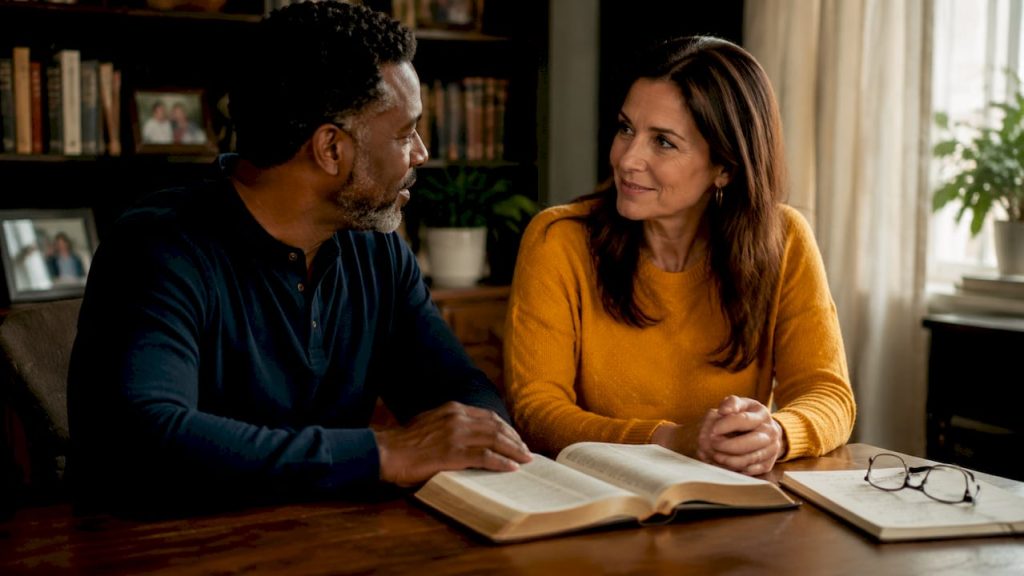
Scripture-based conflict resolution is defined as the practice of applying biblical principles, such as forgiveness, gentleness, and active listening, to resolve disagreements within a marriage. Christian couples who use scripture for conflict resolution find that the Bible does not just offer comfort. It offers a working framework for real disputes. Organizations like Focus on the Family and biblical counseling authorities such as Paul Chappell have long affirmed that verses like Ephesians 4:32, Proverbs 15:1, and James 1:19 are not decorative. They are operational tools. When you treat Scripture as a compass rather than a magic formula, it shifts your focus from fixing your spouse to aligning your marriage with God’s purpose.
What biblical principles guide conflict resolution between couples?
The Bible gives couples a clear, three-part framework for handling disagreements. That framework is: listen first, respond gently, and forgive completely. Each step is grounded in specific Scripture, not general advice.
Listen before you speak. James 1:19 instructs believers to be “quick to listen, slow to speak, and slow to become angry.” This is not a personality suggestion. It is a command that directly interrupts the most common conflict pattern: reacting before understanding. Couples who practice this report fewer escalations and faster resolution.
Respond with gentleness. Proverbs 15:1 states that a gentle answer turns away wrath, but a harsh word stirs up anger. The how of communication matters more than the what. You can say the right thing in the wrong tone and still lose the conversation entirely.
Forgive without delay. Ephesians 4:32 calls couples to be kind, tenderhearted, and forgiving, just as God forgave them. Colossians 3:13 echoes this directly. Forgiveness prevents bitterness from calcifying into emotional distance, which is one of the most damaging long-term effects of unresolved conflict.
Prioritize unity over winning. Genesis 2:24 describes marriage as two becoming one. First Corinthians 13 defines love as patient, not self-seeking, and not easily angered. Together, these passages make the same point: winning an argument is not the goal. Protecting the “one flesh” relationship is.
Pro Tip: Before your next disagreement escalates, agree with your spouse in advance on a single phrase, such as “Let’s pray first,” that signals both of you to pause and invite God into the moment.
How can couples practically apply scripture in the heat of conflict?
Knowing a verse and using it under pressure are two different skills. The gap between them is where most couples struggle. Practical application requires preparation before conflict happens, not improvisation during it.
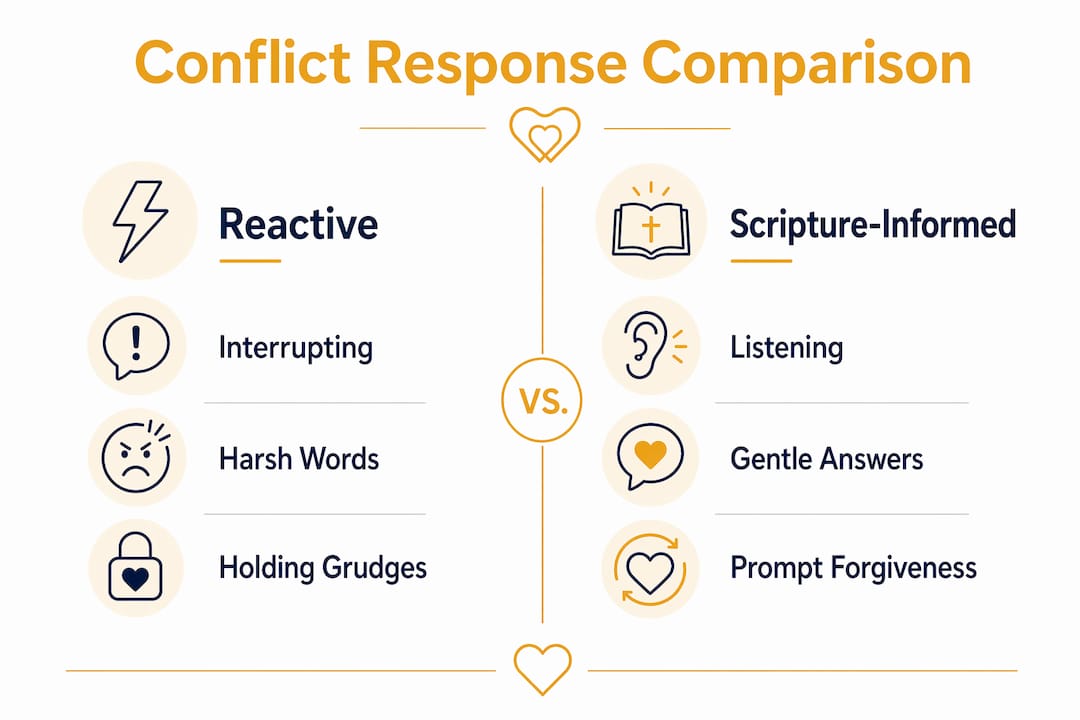
The table below contrasts common reactive responses with scripture-informed alternatives.
| Common reactive response | Scripture-informed alternative |
|---|---|
| Interrupting to make your point | Staying silent until your spouse finishes (James 1:19) |
| Raising your voice to be heard | Lowering your tone to de-escalate (Proverbs 15:1) |
| Bringing up past offenses | Choosing to forgive and release (Ephesians 4:32) |
| Focusing on being right | Focusing on restoring unity (Genesis 2:24) |
| Attacking your spouse’s character | Speaking truth in love (Ephesians 4:15) |
The shift from reactive to scripture-informed is not automatic. It requires a deliberate pause. When tension rises, stop before responding. Take three slow breaths. Ask yourself: “What does God’s Word say about this moment?” That pause is where Scripture becomes practical rather than theoretical.
Praying together before a difficult conversation is one of the most underused tools in Christian marriages. Prayer does not resolve the issue, but it repositions both spouses. You are no longer two opponents. You are two people standing before the same God, asking for the same wisdom. That shift in posture changes everything about how the conversation unfolds.
Addressing issues privately is also a biblical instruction. Matthew 18:15 directs believers to handle conflict privately first, before involving others. Venting to friends or family before speaking to your spouse directly violates this principle and often makes resolution harder.
Pro Tip: Write out three to five key verses on index cards and keep them somewhere visible in your home. When conflict starts, either spouse can pick up a card and read it aloud. The act of reading Scripture together interrupts the emotional spiral.
What Bible verses are most powerful for couples during conflict?
The most effective verses for conflict resolution are ones that address mindset, tone, and action simultaneously. Memorizing them gives couples a ready resource when emotions are running high.
- James 1:19 “Be quick to listen, slow to speak, and slow to become angry.” This verse reorders the natural human impulse to react and replaces it with a discipline of restraint.
- Proverbs 15:1 “A gentle answer turns away wrath, but a harsh word stirs up anger.” Tone is the delivery system for truth. The wrong delivery makes even correct words harmful.
- Ephesians 4:32 “Be kind and compassionate to one another, forgiving each other, just as in Christ God forgave you.” Forgiveness here is not conditional on the offense being small. It mirrors God’s unconditional grace.
- Colossians 3:13 “Bear with each other and forgive one another if any of you has a grievance against someone.” The word “bear” implies active patience, not passive tolerance.
- Matthew 5:9 “Blessed are the peacemakers, for they will be called children of God.” Peacemaking is an identity, not just a tactic. It reflects whose you are.
- Romans 12:18 Pursue peace as far as it depends on you. This verse places personal responsibility at the center of conflict resolution. You cannot control your spouse’s response, but you are fully responsible for your own.
- Ephesians 4:15 “Speaking the truth in love.” This verse guards against two extremes: harsh honesty that wounds, and soft avoidance that deceives.
- 1 Corinthians 13:4-5 “Love is patient, love is kind. It does not envy, it does not boast, it is not proud. It does not dishonor others, it is not self-seeking.” This passage is the standard against which every conflict response can be measured.
Pro Tip: Choose one verse per month as a couple’s “conflict verse.” Read it together each morning. By the time conflict arises, the verse is already in your memory and your muscle.
How to establish a habit of using scripture to prevent future conflicts
Prevention is more powerful than repair. Couples who build regular scripture practices into their daily routine report fewer recurring disputes and stronger emotional connection. The key is starting small and staying consistent.
-
Start with short, rotating readings. Focus on the Family recommends that couples begin with brief passages read aloud, taking turns. Rotating scripture readings reduces the pressure on either spouse to lead and opens space for natural spiritual conversation. Even five minutes a day builds a shared spiritual vocabulary.
-
Pray together before difficult conversations. Prayer is not a ritual. It is a repositioning. When both spouses pray before addressing a sensitive topic, they invite God to set the agenda rather than personal preferences or past wounds.
-
Use Bible reading as neutral ground. Shared scripture study shifts the conversation from “my opinion vs. your opinion” to “what does God say?” That shift removes defensiveness because neither spouse is the authority. The Word is.
-
Build a conflict response plan in advance. Agree together on what you will do when conflict starts. Will you pause and pray? Will one of you read a verse aloud? Having a plan before the moment removes the need to negotiate process during the argument itself.
-
Review and reflect weekly. Set aside ten minutes each week to check in on how you handled any disagreements. Ask each other: “Did we respond the way Scripture calls us to?” This practice builds accountability without blame and reinforces growth over time.
The most common pitfall is inconsistency. Couples start strong and then drop the habit when life gets busy. Treat scripture reading the same way you treat brushing your teeth. It is not optional, and it does not require inspiration. It requires commitment.
Key takeaways
Couples who use scripture for conflict resolution consistently move from reactive arguing toward God-centered communication, forgiveness, and lasting unity.
| Point | Details |
|---|---|
| Scripture as a working framework | Verses like James 1:19 and Proverbs 15:1 give couples specific, repeatable steps for conflict. |
| Tone matters as much as truth | Delivering the right message harshly still damages the relationship; gentleness is non-negotiable. |
| Forgiveness is the reset button | Ephesians 4:32 and Colossians 3:13 call couples to forgive actively, not just emotionally. |
| Unity over winning | Genesis 2:24 and 1 Corinthians 13 reframe the goal of conflict from victory to restored oneness. |
| Consistent habits prevent future conflict | Daily scripture reading and pre-conflict prayer plans reduce recurring disputes over time. |
What I’ve learned from watching couples fight with and without Scripture
I have worked with hundreds of couples in conflict, and the single clearest dividing line I see is not communication style or personality type. It is whether a couple has a shared reference point outside themselves. When both spouses are the authority in the room, every disagreement becomes a power struggle. When Scripture is the authority, the dynamic changes completely.
The couples who struggle most are often the ones who know the verses but have never practiced using them under pressure. They can quote Ephesians 4:32 on a Sunday morning and still weaponize silence or sarcasm by Tuesday night. Knowledge without practice is not transformation. That is why I always tell couples: the verse has to be in your body before it can be in your conflict.
I also want to be honest about something most faith-based articles skip. Scripture does not eliminate conflict. It changes what you do with it. You will still get angry. You will still feel unheard. The difference is that you now have a framework that pulls you back toward your spouse instead of pushing you further away. That framework is not a shortcut. It is a daily discipline. The couples I have seen thrive are the ones who treat biblical principles the same way athletes treat training. They practice when it is easy so the skill is available when it is hard.
If you are struggling with recurring conflict despite your faith, that does not mean your faith is weak. It means you may need more than good intentions. You need structure, practice, and sometimes a guide.
— Carlos
Faith-based tools that go beyond the verse
Couplesfightschool was built for exactly this gap: the space between knowing what Scripture says and actually living it out in your marriage.
The Fight Less, Love More course at Couplesfightschool combines biblical principles with psychology-backed communication tools developed by licensed mental health professionals Carlos Todd and Natasha Pemberton-Todd. For couples who want personalized support, online coaching for couples provides direct guidance tailored to your specific conflict patterns. Whether you are newly married or years into recurring arguments, Couplesfightschool gives you the structure to turn scriptural knowledge into daily practice.
FAQ
What does the Bible say about resolving conflict in marriage?
The Bible instructs couples to listen carefully (James 1:19), respond gently (Proverbs 15:1), forgive fully (Ephesians 4:32), and pursue peace as a personal responsibility (Romans 12:18). These verses form a complete, repeatable process for resolving marital disputes.
How do couples use scripture during an active argument?
Couples can pause the conversation, read a relevant verse aloud together, and pray briefly before continuing. This interrupts the emotional escalation and repositions both spouses toward God’s standard rather than personal reactions.
Which Bible verse is most helpful for couples in conflict?
Proverbs 15:1 is one of the most immediately practical verses because it addresses tone directly. A gentle answer de-escalates tension faster than any argument tactic, making it the first line of defense in heated moments.
Is faith-based conflict resolution effective without professional help?
Scripture provides a strong foundation, but structured guidance significantly improves outcomes for couples with deep-rooted or recurring conflict patterns. Biblical principles and professional support work best together.
How often should couples read scripture together to prevent conflict?
Daily reading, even five minutes of short rotating passages, builds the shared spiritual language couples need to handle disagreements constructively. Focus on the Family recommends starting with brief passages read aloud to reduce pressure and build consistency.
Recommended