
Benefits of Therapy Before Marriage: Engaged Couples’ Guide

Premarital counseling is the clinical term for therapy before marriage, and its benefits extend well beyond conflict resolution. Couples who invest in this process gain stronger communication skills, deeper emotional connection, and a shared framework for handling life’s hardest moments together. Research published in the Journal of Family Psychology shows couples who complete premarital counseling have a divorce rate about 30% lower than those who skip it. That single statistic reframes therapy from a last resort into a smart investment every engaged couple deserves to consider.
1. What are the main benefits of therapy before marriage?
The benefits of therapy before marriage fall into five core areas: communication, conflict resolution, emotional connection, shared values, and preparation for hard conversations. Each one builds on the others. A couple that learns to communicate honestly will also fight more fairly. A couple that fights more fairly will trust each other more deeply.
- Better communication. Premarital counseling creates a safe space to practice honest, vulnerable expression without fear of judgment. That practice transfers directly into daily life.
- Conflict resolution skills. Therapy teaches couples to de-escalate arguments and repair ruptures without blame, which stops small disagreements from becoming recurring wounds.
- Emotional connection. Couples learn to recognize each other’s emotional needs and respond with empathy rather than defensiveness.
- Clarified values and goals. Therapy supports collaborative discussions on finances, family plans, and roles, creating a stronger team identity before the wedding day.
- Preparation for difficult topics. Money, in-laws, intimacy, and parenting styles rarely surface naturally before marriage. Therapy gives you a structured space to address them before they become pressure points.
Pro Tip: Use a premarital counseling topics checklist before your first session. Walking in with a clear list of discussion areas helps your therapist tailor the work to your actual relationship, not a generic template.
2. How does premarital therapy reduce divorce risk and enhance marital satisfaction?

Premarital therapy works because it addresses problems before they become patterns. Couples who seek therapy proactively rather than waiting for a crisis have measurably better outcomes. Early intervention prevents the kind of entrenched resentment that makes later therapy far harder.
The systemic approach used in couples therapy is a key reason it works. Viewing the relationship as the client allows therapists to focus on interaction cycles rather than assigning blame to one partner. That shift changes everything. Instead of defending yourself, you start analyzing the pattern together.
“Premarital counseling not only prevents future conflicts but also strengthens trust and emotional safety, key foundations for a successful marriage.” — Psychology Today
The long-term gains are real. Couples who complete premarital counseling report higher marital satisfaction, stronger resilience during stressful periods, and a greater sense of being on the same team. Those outcomes compound over years, not just months.
3. What specific communication and conflict skills do couples gain?
Therapy before marriage teaches concrete, repeatable skills. These are not abstract concepts. They are techniques you practice in session and then apply at home.
- Active listening. You learn to hear your partner’s meaning, not just their words. This means reflecting back what you heard before responding.
- “I” statements. Replacing “You always do this” with “I feel hurt when this happens” removes accusation from the conversation. It keeps the other person from shutting down.
- De-escalation techniques. Therapists teach you to recognize when a conversation is escalating and how to call a productive pause before it turns destructive.
- Recognizing harmful patterns. The Gottman Method identifies four patterns that predict relationship breakdown: criticism, contempt, defensiveness, and stonewalling. Naming them is the first step to stopping them.
- Repair and forgiveness strategies. Therapy teaches specific repair moves, such as humor, acknowledgment, or a direct apology, that interrupt a negative cycle mid-argument.
Between-session practice accelerates progress by forming new behavioral habits essential for lasting change. Therapists assign daily check-ins and conversation prompts that create real change faster than in-session talk alone. Habit formation requires repetition, and that repetition happens at home.
Pro Tip: After each therapy session, pick one skill to practice deliberately that week. Couples who diffuse conflict with specific techniques rather than relying on instinct see faster, more durable results.
4. How can engaged couples know if premarital therapy is right for them?
Premarital therapy is right for every engaged couple. That is not a sales pitch. It is the clinical consensus. The question is not whether you need it. The question is whether you are ready to use it well.
Common indicators that therapy will be especially valuable include:
- Recurring arguments that never fully resolve
- Difficulty discussing money, family, or intimacy without tension
- One or both partners coming from homes with high conflict or divorce
- Anxiety about the transition from dating to marriage
- Feeling like you talk past each other more than you connect
Even couples with strong relationships benefit. Premarital counseling is an investment in prevention, saving time, money, and emotional pain compared to addressing entrenched problems after the wedding. Think of it the way you think about physical health. You do not wait until you are sick to start exercising.
Therapy is not a pass/fail test. No therapist is grading your relationship. The process is designed to give you tools, not verdicts. Choosing a therapist who specializes in couples or premarital work matters. Look for credentials in the Gottman Method, Emotionally Focused Therapy (EFT), or Cognitive Behavioral Therapy (CBT) for couples. These are the three most researched approaches in the field.
5. Comparison of therapy options and approaches before marriage
Different formats and modalities serve different couples. The table below outlines the most common options so you can match the format to your actual needs.
| Approach | Best for | Format | Key focus |
|---|---|---|---|
| Gottman Method | Couples with recurring conflict | In-person or online | Communication patterns, conflict repair |
| Emotionally Focused Therapy (EFT) | Couples with emotional distance | In-person preferred | Attachment, emotional safety |
| Cognitive Behavioral Therapy (CBT) | Couples with anxiety or negative thought loops | In-person or online | Thought patterns, behavioral habits |
| Online premarital counseling | Couples with scheduling constraints | Virtual | Flexibility, accessibility |
| Individual sessions alongside joint therapy | One partner with personal history affecting the relationship | In-person | Personal growth feeding into the couple |
The Gottman Method uses a detailed assessment called the Gottman Assessment to map a couple’s stress points. That data lets the therapist design tailored interventions focused on communication and conflict patterns specific to your relationship. EFT, developed by Dr. Sue Johnson, focuses on attachment bonds and is especially effective when one or both partners struggle with emotional vulnerability. CBT works well when anxiety or negative assumptions are driving conflict.
Cost and duration vary widely. Most premarital counseling programs run 8–12 sessions. Online options tend to cost less per session than in-person therapy and remove the barrier of geography or scheduling.
Key takeaways
Premarital counseling reduces divorce risk, builds communication skills, and creates the emotional safety that sustains a marriage through every season of life.
| Point | Details |
|---|---|
| Divorce risk drops significantly | Couples who complete premarital counseling have a divorce rate about 30% lower than those who do not. |
| Communication improves with practice | Therapy teaches active listening, “I” statements, and de-escalation that couples apply daily at home. |
| Early intervention outperforms crisis therapy | Proactive therapy prevents entrenched patterns that become far harder to change after marriage. |
| Every couple benefits, not just struggling ones | Even strong relationships gain clarity on values, finances, and shared goals through the process. |
| Approach matters | The Gottman Method, EFT, and CBT each target different relationship needs, so choosing the right fit accelerates results. |
Why I think most couples wait too long
Couples come to therapy when the pain gets loud enough. I have seen this pattern hundreds of times. By the time a couple sits down in a therapist’s office after years of marriage, they are not just solving a communication problem. They are undoing years of accumulated hurt, mistrust, and distance. That work is possible, but it is far harder than it needed to be.
The couples I have seen get the most from premarital counseling are not the ones in crisis. They are the ones who come in curious. They want to understand each other better. They want to build something intentional, not just survive the wedding planning and hope for the best.
One of the biggest misconceptions I hear is that seeking therapy before marriage signals something is wrong. The opposite is true. It signals that you take the relationship seriously enough to invest in it before the stakes get higher. The truth about relationship conflict is that every couple has it. The difference between couples who thrive and couples who fall apart is not the absence of conflict. It is the skill set they bring to it.
My advice is simple: do not wait for a reason to go. The absence of a crisis is the best possible time to build the skills you will need when one arrives.
— Carlos
Start building your relationship skills now with Couplesfightschool
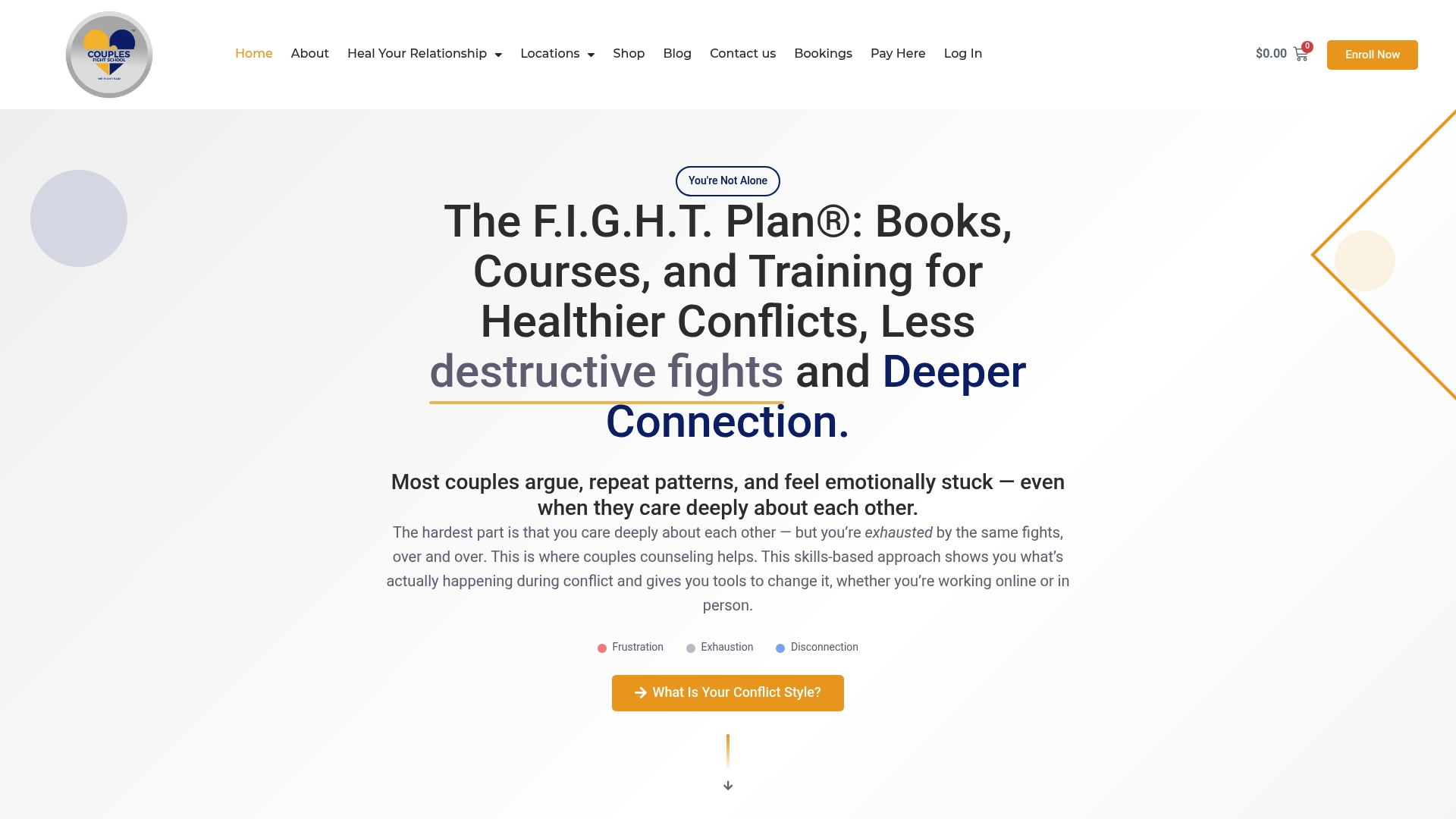
Couplesfightschool was built by licensed mental health professionals Carlos Todd and Natasha Pemberton-Todd specifically for couples who want to do the work before problems take root. The platform’s online coaching for couples gives you direct access to expert guidance on communication, conflict resolution, and emotional connection, without waiting months for a therapy appointment. The Fight Less, Love More course delivers the same psychology-backed tools used in premarital counseling, structured for real life. If you are engaged and serious about starting your marriage on solid ground, Couplesfightschool gives you the framework to do exactly that.
FAQ
What are the main benefits of therapy before marriage?
The main benefits include improved communication, stronger conflict resolution skills, deeper emotional connection, and clarity on shared values and goals. Couples who complete premarital counseling also show a divorce rate about 30% lower than those who do not.
How many sessions does premarital counseling typically take?
Most premarital counseling programs run 8–12 sessions, though the number varies by therapist and the couple’s specific needs. Online formats offer more scheduling flexibility and are often more affordable than in-person therapy.
Is premarital therapy only for couples with problems?
No. Premarital therapy benefits all engaged couples, including those with strong relationships. It builds the skills and shared frameworks couples need before challenges arise, making it prevention rather than crisis intervention.
What is the Gottman Method and how does it help engaged couples?
The Gottman Method uses a detailed assessment to identify a couple’s specific stress points and conflict patterns. It then delivers targeted interventions focused on communication repair and emotional connection.
Can online premarital counseling be as effective as in-person therapy?
Online premarital counseling delivers comparable results for most couples, particularly when both partners are engaged and complete between-session practice. The key factor is the therapist’s training and the couple’s commitment, not the format.
Recommended