
Partner Refuses Date Night? Try a One Week Pilot Backed by Therapists

If your partner refuses date night, stop trying to force them. Start by inviting a low-pressure micro-date and asking what feels doable for them right now. This is the opening move, not a fix for every issue underneath it, so treat it as the first test, not the whole plan.
TL;DR:
- Partners often refuse date night due to fatigue, financial stress, or calendar overload, not disinterest, and identifying the root cause is essential.
- Approaching the topic with a soft startup, specific invites, and an exit plan reduces defensiveness and encourages cooperation from reluctant partners.
- Low-pressure activities like at-home rituals or quick outings are more likely to succeed and foster ongoing connection than larger, planned dates.
- When social anxiety causes avoidance, tiny exposures with clear signals and validation can help build comfort without increasing resistance.
- Recognizing red flags such as contempt, coercion, or safety concerns indicates when professional help is necessary rather than self-guided efforts.
Table of Contents
- Why partners refuse or avoid date night
- How to talk about date night without triggering withdrawal
- Low-pressure alternatives that lower resistance
- Clinical perspective: safety behaviors and a gentle exposure plan
- Red flags and when to seek professional help
- A one-week pilot to try before escalating
- Where to get help: resources for reluctant partners
- FAQ
- Sources
Why partners refuse or avoid date night
Refusal rarely means disinterest. It usually points to one of a few distinct problems, and the right response depends on which one you’re dealing with.
- Tiredness or caregiving overload: parents share less exclusive spousal time than nonparents, and that gap shows up as low energy for anything extra at the end of the day, according to time-use research.
- Financial strain: a night out can feel like one more expense you can’t justify, especially when money is already a source of tension.
- Calendar burnout: back-to-back obligations leave no mental room to plan something, even something they’d enjoy.
- Emotional withdrawal or stonewalling: short answers, topic changes, or silence point to flooding rather than logistics.
- Social anxiety and safety behaviors: avoiding or minimizing dates is a documented pattern. People with and without social anxiety use these behaviors during dating interactions, and the pattern is stronger in those with social anxiety disorder, linked to more negative emotion and less authentic connection, per research on dating and social anxiety.
The quickest way to tell these apart is to listen for specifics. “I’m exhausted, can we do something short?” is logistics. One-word replies and a changed subject is withdrawal. A vague excuse followed by relief when you drop it often signals anxiety. Shared leisure and protected couple time tend to predict higher relationship satisfaction, though the effect shifts with financial stress and household income, according to a longitudinal study of married couples. That means the payoff for figuring out the real cause is worth the effort.
How to talk about date night without triggering withdrawal
The way you raise the subject often matters more than the subject itself. A blunt “we never go out anymore” reads as criticism, and criticism invites defensiveness or retreat. A soft startup changes the odds: describe the moment without blame, name your own feeling, and make one small, specific request. “I noticed we haven’t had time alone in a couple weeks. I miss talking without the TV on. Could we sit outside for twenty minutes tonight?” is concrete, low-stakes, and easy to say yes to.
A short mini-protocol helps turn this into a habit instead of a one-time negotiation.
- Offer a low-stakes invite: name a specific, brief activity instead of a vague “we should go out sometime.”
- Build in an exit plan: agree on a time limit or a signal either of you can use to wrap up early, no explanation required.
- Check in afterward: ask one honest question like “was that okay?” and let the answer guide the next invite.
Curiosity works better than accusation. “What would feel easy for you this week?” opens a conversation. “Why don’t you ever want to go anywhere?” closes one. Avoid framing refusals as a character flaw, since that shifts the exchange from planning to defending.
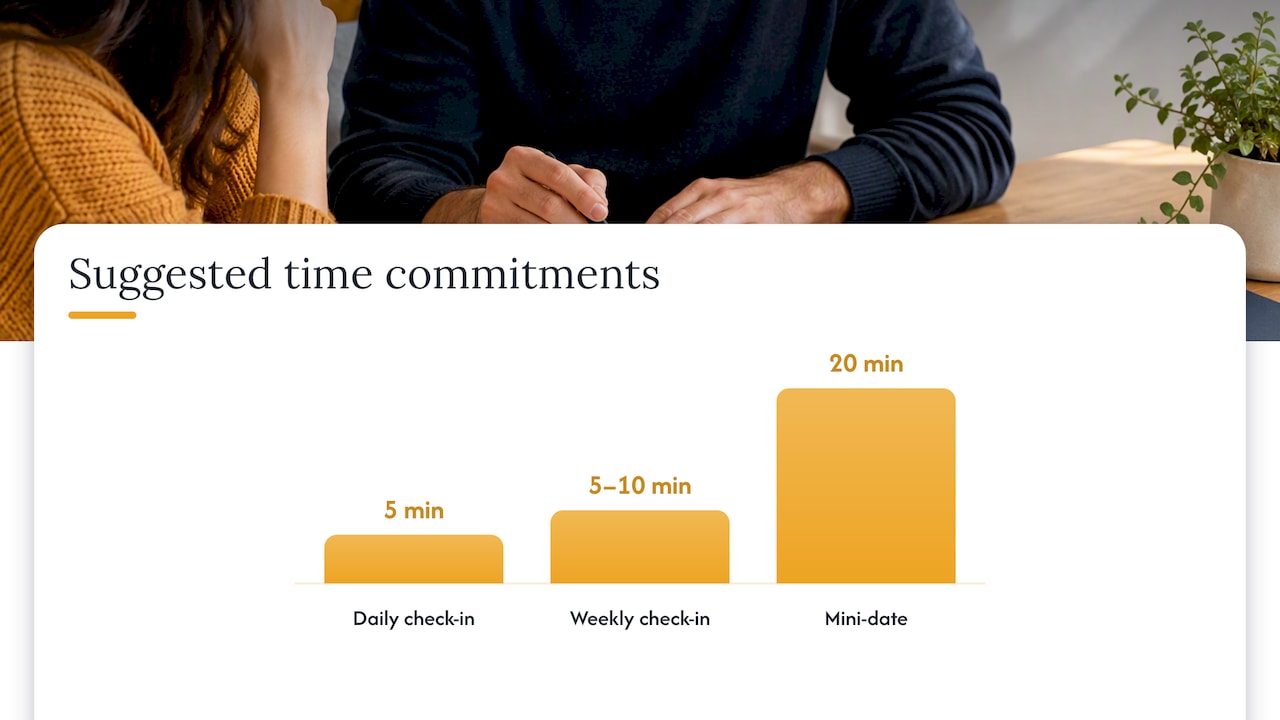
Scheduling also benefits from structure. A shared “social budget,” a cap on how many invitations or outings you’ll propose in a week, keeps things from feeling relentless. Pairing that with brief daily or weekly check-ins, even five minutes, keeps the door open without turning every conversation into a negotiation about going out. Our guide on 5 to 10 minute check-ins breaks down scripts clinicians use for exactly this.
Pro Tip: Ask for the activity first and the commitment second: “Want to grab coffee Thursday?” lands softer than “Can we finally plan a date night?”
Low-pressure alternatives that lower resistance
A reluctant partner is more likely to say yes when the ask is small, specific, and easy to back out of. The goal isn’t a perfect evening. It’s a repeatable one.
- At-home rituals: cook something together, split dessert on the porch, or spend twenty phone-free minutes talking after the kids are asleep.
- Short, low-activation outings: an after-work coffee, a thirty-minute walk, or a drive with music and no destination.
- Logistical fixes that free up time: a childcare swap with another couple, or a meal-delivery service on a night you’d otherwise spend cooking. Time-saving purchases like these predict higher relationship satisfaction when the saved time actually gets converted into connection, especially for couples managing stress and dual incomes, according to research on time-saving purchases.
- A social budget and exit plan: cap invitations to a manageable number per week, and agree in advance on a simple signal that means “I’m done,” no justification needed.
The exit plan is doing more work than it looks like. Knowing there’s a built-in way out removes the pressure that makes avoidant partners dig in, and it’s often the difference between a flat “no” and a tentative “okay, but not for long.”
Clinical perspective: safety behaviors and a gentle exposure plan
When refusal is rooted in social anxiety, pushing harder tends to backfire. Safety behaviors, things like canceling, shortening plans, or avoiding certain settings, reduce anxiety in the moment but reinforce avoidance over time, and forcing a partner past them usually increases resistance rather than easing it, per clinical guidance on social anxiety and safety behaviors.
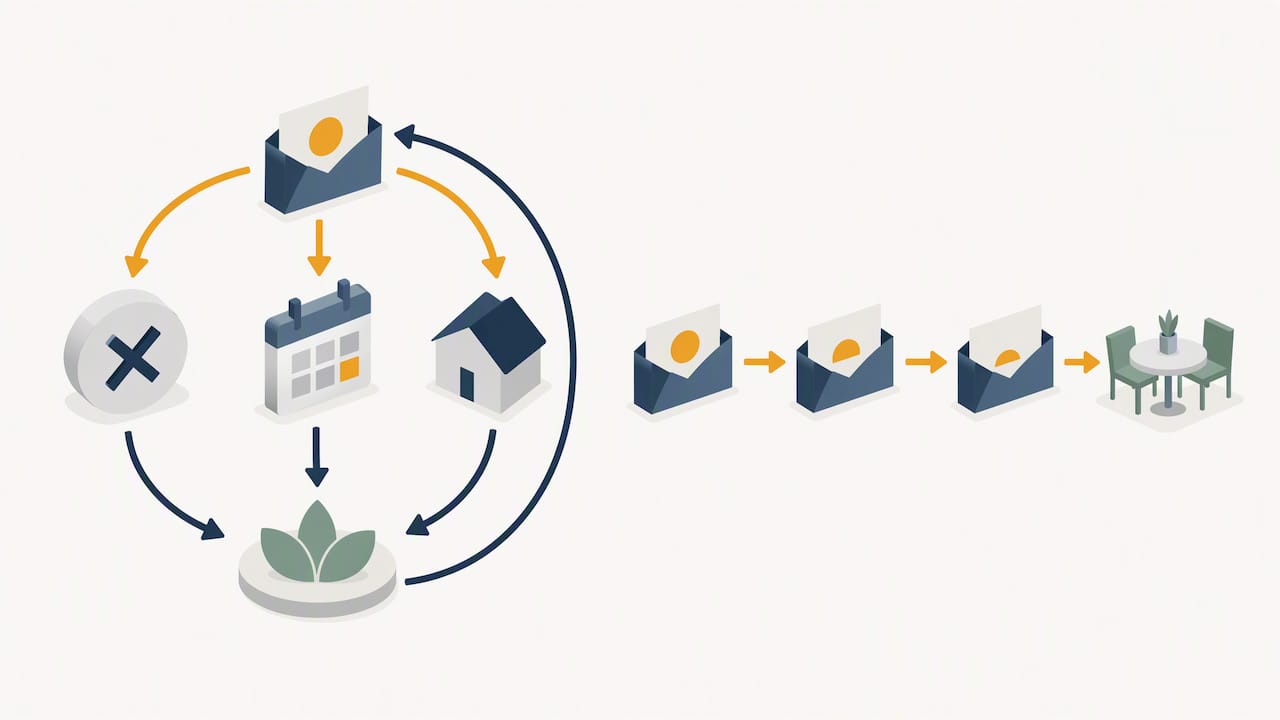
A date involving social anxiety tends to have higher negative emotion and lower authenticity on average, according to daily-diary research on dating interactions, which supports taking smaller steps rather than bigger pushes.
A workable stepped plan looks like this:
- Validate the discomfort before proposing anything.
- Negotiate a first step that feels genuinely comfortable, not just tolerable.
- Use tiny exposures with an agreed exit signal, so the partner never feels trapped.
- Reward progress, not performance: showing up and staying calm counts, even if the outing is short.
If avoidance is frequent, intense, or tied to panic symptoms, a licensed clinician can help identify whether targeted anxiety treatment would help. Our piece on avoidant partner profiles walks through how these patterns show up day to day.
Red flags and when to seek professional help
Some patterns go beyond logistics or anxiety and need more than a communication tweak.
- Contempt or mockery when the topic of connection comes up.
- Repeated stonewalling that never resolves, even after breaks and repair attempts.
- Coercion or control around your time, money, or outside relationships.
- Substance use tied to the avoidance pattern.
- Any signs of self-harm or safety concerns, which call for immediate professional support, not a self-led plan.
If you see any of these, a self-guided pilot isn’t the right starting point. Consider proposing couples therapy directly, and lean on resources like our guide to breaking the emotional withdrawal cycle for language that opens the door without triggering more defensiveness.
A one-week pilot to try before escalating
Clinicians often suggest a short pilot before bigger interventions: validate the discomfort, offer one micro-date, check in briefly afterward, and reinforce whatever went well. Repeat daily or every other day for a week. Short pilots lower defensiveness because they ask for very little and give you real data instead of assumptions about what your partner will or won’t do. Structured tools are built around this same idea: small, observable steps that build evidence before either partner commits to something bigger.
— Carlos
Where to get help: resources for reluctant partners
We built our tools for exactly this gap between wanting connection and knowing how to rebuild it. If logistics are the main issue, Stop the Fighting: The Couples Communication & Conflict Resolution Course gives you scripts for the conversation itself. If stonewalling or withdrawal is the pattern, our couples therapy workbook is a low-commitment place to start. For couples who have tried the small steps and need more guided support, our private coaching sessions offer direct, personalized help.

Start with whichever feels smallest. A workbook you can open tonight is a reasonable first move before booking anything bigger.
FAQ
Can a loveless marriage survive?
A marriage with low connection can often rebuild it, especially when both partners are willing to try small, consistent steps like shared leisure time. Shared leisure and protected couple time are linked to higher relationship satisfaction in longitudinal research, though outcomes vary with financial stress and other pressures.
Why do I feel like I’m always doing something wrong in my relationship?
That feeling often points to a demand-withdraw pattern, where one partner pursues conversation and the other retreats, leaving the pursuer feeling blamed by default. Clinicians note that withdrawal can be a de-escalation strategy rather than rejection, and shifting from criticism to curiosity tends to change how a partner responds, according to research on demand-withdraw dynamics.
What are some red flags I should be aware of in a relationship?
Watch for contempt, repeated stonewalling that never resolves, coercive control, or avoidance tied to substance use. Any sign of self-harm or safety concerns calls for immediate professional help rather than a self-led communication plan.
How do I communicate to my partner that I’m unhappy?
Use a soft startup: describe the specific moment, name your own feeling, and make one small request instead of a general complaint. Scripts like this reduce defensiveness compared to blanket statements such as “we never spend time together.”
Sources
- Do couples who play together stay together? A longitudinal dyadic examination of shared leisure, financial distress, and relationship outcomes
- Safety behavior use during dating interactions: associations with social anxiety
- Time for Each Other: Work and Family Constraints Among Couples
- Buying (quality) time: time-saving purchases and relationship satisfaction
Recommended
- 6-Hour Couples Intensive
- Six Therapist Backed Communication Exercises Couples Can Do Tonight
- 5 Therapist Backed Couples Conversation Scripts to Use Tonight
- Stop Escalation in 20–45 Min: Therapist Scripts for Couples’ Time Outs