
Stop Contempt in Marriage: A Therapist’s Plan for the Next Fight
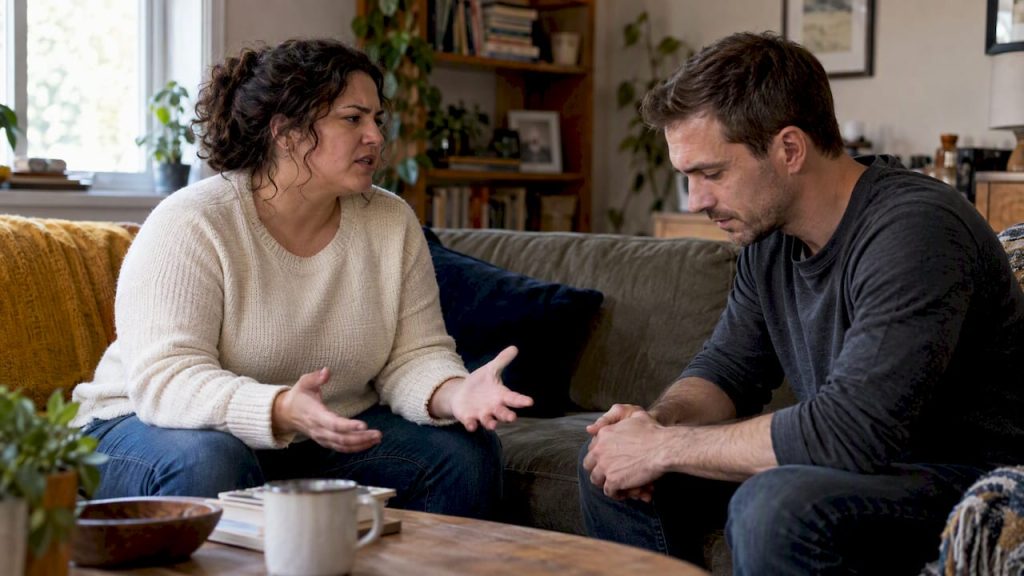
Stop contempt the moment you notice it: press a mutual pause before words turn hostile, then return and use an “I feel” complaint instead of blame, and name one specific thing you appreciate about your partner. These are brief, practiced moves, not a personality overhaul, and the daily habit work that locks in the change comes next.
TL;DR:
- An occasional eye roll during a stressful week is not a crisis; concern rises when contempt becomes more frequent, intensifies, or appears automatically.
- Accumulated resentment, unmet needs, money strain, parenting demands, lost sleep, and unresolved fights can fuel contempt, while physiological flooding makes calm discussion harder.
- A written reappraisal exercise lasting 21 minutes prevented declines in marital quality over two years by prompting partners to reflect neutrally on a disagreement.
- A randomized trial involving 742 couples found that online relationship programs improved satisfaction, reduced conflict, and increased emotional support compared with a waitlist.
- Persistent contempt, repeated failed repair attempts, threats, or violence call for outside support, and safety concerns take priority over communication exercises.
Table of Contents
- What contempt looks like: verbal and nonverbal signs to watch for
- Why contempt matters: brief research summary and real risks
- Common causes and triggers of contempt
- Concrete strategies to stop contempt in the moment and repair afterward
- Daily habits and rituals to rebuild respect and prevent contempt from returning
- When to seek help and which research-backed interventions to consider
- How the F.I.G.H.T. Plan® maps to stopping contempt
- A therapist’s note on getting unstuck
- Ready to put these skills into daily practice?
- FAQ
- Sources
What contempt looks like: verbal and nonverbal signs to watch for
Contempt rarely announces itself. It shows up in small gestures that signal superiority or disgust toward a partner, which is what separates it from ordinary frustration.
Watch for these patterns:
- Eye-rolls, sneering, or a curled lip when your partner is speaking
- Dismissive hand gestures, turning away, or exaggerated sighs
- A flat, mocking, or condescending tone of voice
- Sarcasm, name-calling, or jokes that land as insults
- “Always” and “never” accusations that frame your partner as a character flaw rather than a one-time mistake
A single eye-roll during a stressful week is not a crisis. The red flag is the pattern: contempt that shows up more often, escalates in intensity, or appears as a quick, almost involuntary microexpression before either partner has said a word.
Why contempt matters: brief research summary and real risks
Contempt is not just an unpleasant habit. Observational research has linked frequent facial expressions of contempt and disgust to lower marital satisfaction and higher risk of relationship dissolution, with some longitudinal work treating these expressions as a measurable predictor rather than a vague warning sign. That does not mean a marriage with visible contempt is doomed. It means the pattern deserves attention now, while it is still reversible.
There is real urgency here too: dyadic research has tied contemptuous communication to increased risk of intimate partner violence for both partners involved. The encouraging part is that brief, targeted interventions have shown measurable, lasting benefits, which is the foundation for everything in the next few sections.
Common causes and triggers of contempt
Contempt rarely appears out of nowhere. It tends to build from a mix of accumulated hurt and daily pressure.
- Resentments that went unspoken for months or years
- Chronic unmet needs around attention, respect, or partnership
- Everyday stressors like money strain, parenting load, or lost sleep
- Physiological flooding, the racing heart and shutdown feeling that makes calm conversation nearly impossible
- A missing repair cycle, where fights end without resolution and simply pile up
Each of these lowers your tolerance for your partner’s flaws. Once contempt enters a fight, it tends to provoke defensiveness, which triggers more contempt, and the cycle feeds itself unless something interrupts it.
Concrete strategies to stop contempt in the moment and repair afterward
The goal in an active conflict is not to win the argument. It’s to stop the contempt cycle before it does damage that takes weeks to repair.
- Call a mutual time-out. Agree in advance on a signal (a word or hand gesture), pause for at least 20 to 30 minutes so your body can calm down, and commit out loud to returning to the conversation rather than dropping it.
- Use a complaint, not a criticism. Structure it as “I feel [emotion] when [specific behavior] happens, and I need [specific request].” For example: “I feel dismissed when you check your phone during dinner, and I need us to put phones away for that half hour.” Or: “I feel anxious when bills go unopened, and I need us to review them together on Sundays.”
- Apply the antidotes to contempt. Notice one thing your partner does well, state a specific appreciation out loud, and drop the sarcastic jokes that pass as humor but land as insults.
- Try a brief reappraisal exercise. A controlled study found that a 21-minute written reappraisal exercise prevented declines in marital quality over a two-year follow-up, simply by asking partners to reflect on a recent disagreement from a neutral third party’s perspective.
- Repair afterward. Acknowledge what happened, apologize for the specific behavior rather than a vague “I’m sorry you’re upset,” take one small reparative action, and name the new habit you’ll practice next time.
Pro Tip: Keep your complaint script written on your phone. In the heat of an argument, reading it out loud beats improvising one.
Daily habits and rituals to rebuild respect and prevent contempt from returning
A single good conversation will not undo months of contempt. What works is a short daily practice that keeps noticing and appreciation ahead of resentment.
- A nightly habit of naming one thing your partner did well: “I noticed you handled that call calmly” or “Thank you for starting dinner”
- A weekly check-in where small frustrations get aired before they calcify into contempt
- Swapping sarcastic comments for a curious question: “What’s going on?” instead of a mocking jab
- A two-minute daily gratitude exchange, said out loud rather than assumed
Some couples use scheduled reminders to keep these habits consistent when daily life gets busy. Verbal appreciation said often and specifically does more to shift relationship tone than one grand gesture a year.
Pro Tip: Set a recurring daily reminder for a two-minute noticing practice. Consistency matters more than the size of the gesture.
When to seek help and which research-backed interventions to consider
Some signs mean it’s time to bring in outside support rather than keep troubleshooting alone: contempt that persists despite real effort, any threats or violence, physiological flooding that never settles, or repair attempts that keep failing.
Evidence-based options exist beyond traditional weekly therapy. A large randomized trial of web-based relationship programs involving 742 couples found significant improvements in satisfaction, conflict reduction, and emotional support compared with a waitlist group, which suggests structured online programs can help couples who cannot access or afford long-term therapy. Brief reappraisal exercises and targeted communication courses have shown similar promise in controlled research.
If you or your partner are experiencing threats, coercion, or violence, contact the National Domestic Violence Hotline or review resources from the Department of Justice Office on Violence Against Women. Safety comes before any communication exercise.
How the F.I.G.H.T. Plan® maps to stopping contempt
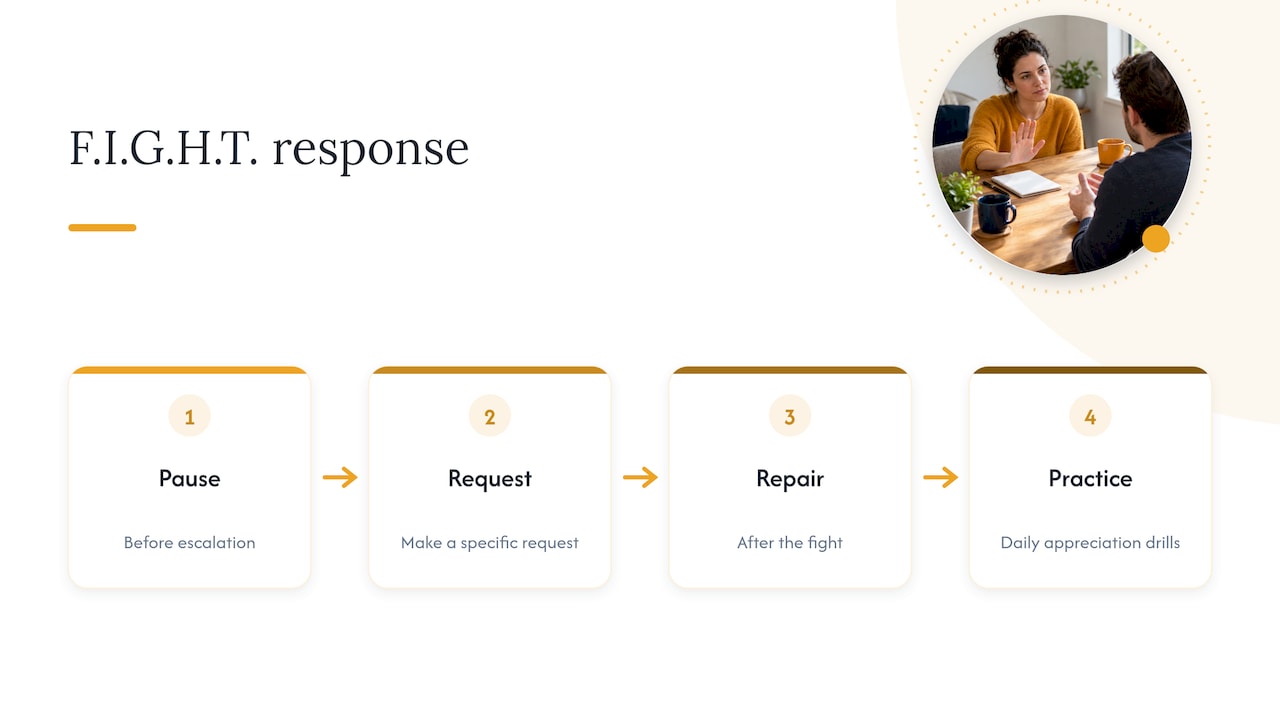
The F.I.G.H.T. Plan® framework we built mirrors the sequence above: a structured pause before escalation, a complaint skill that replaces blame with a specific request, a repair sequence for after the fight, and daily drills that turn appreciation into habit rather than an afterthought. Our Stop the Fighting course walks couples through these skills with scripts and worksheets, and our conflict resolution worksheets give you something concrete to practice tonight.
A therapist’s note on getting unstuck
Couples who feel stuck in contempt often believe the damage is permanent. It usually isn’t, but it does take deliberate practice to reverse. If you only do one thing this week, start a two-minute daily noticing practice: say one specific, true thing you appreciate about your partner, out loud, every day.
— Carlos
Ready to put these skills into daily practice?
If reading about the complaint script and repair sequence made sense but doing it under pressure feels harder, that gap is exactly what structured practice closes. Our Stop the Fighting: The Couples Communication & Conflict Resolution Course walks you through the pause, the complaint skill, and the repair sequence with guided scripts. Couples who want personalized coaching can book Online Couples Coaching to work through entrenched patterns with direct feedback, and anyone who wants a low-cost starting point can use our 10-Minute Conflict Resolution Worksheets tonight.

- Stop the Fighting course: best for couples ready to learn the full complaint-and-repair system together
- Online Couples Coaching: fits couples who want a professional guiding them through recurring contempt patterns
- Conflict resolution worksheets: a quick, low-friction way to practice scripts before your next disagreement
Visit our shop to find the resource that matches where you are right now.
FAQ
What is the disillusionment phase in a relationship?
The disillusionment phase is a stage where early romantic idealization fades and partners start noticing flaws, unmet expectations, and recurring friction. It commonly triggers the first real test of a couple’s conflict skills, since small irritations that were once overlooked start surfacing as complaints.
What are some common challenges that couples face in their marriage?
Money stress, parenting disagreements, mismatched expectations around chores or intimacy, and poor repair after arguments are among the most common challenges. Left unaddressed, these pressures are also common triggers for contempt, since chronic stress lowers patience and tolerance for a partner’s mistakes.
How to make a marriage work?
Marriages tend to improve when couples replace criticism with specific complaints, repair conflicts instead of letting them pile up, and keep a steady habit of appreciation and curiosity about each other. Brief, structured interventions, including web-based relationship programs, have shown measurable improvements in satisfaction and conflict reduction for couples who practice consistently.
What is a marriage in crisis?
A marriage in crisis typically shows persistent contempt, repeated failed repair attempts, chronic emotional distance, or the presence of threats or violence. These signs suggest it’s time to seek professional support rather than attempt to resolve the pattern alone, especially when physiological flooding or safety concerns are present.
Sources
- Randomized trial results for OurRelationship and ePREP (psychological science)
- Correlation of disgust and contempt expressions with conjugal dissatisfaction (SCIRP)
- The relation between contempt, anger, and intimate partner violence (Journal article)
Recommended
- Stop Arguing With Your Husband in 10 Minutes Using Therapist Scripts
- Marriage and Divorce: A Practical Guide to Saving Your Relationship
- Stop Escalation in 20–45 Min: Therapist Scripts for Couples’ Time Outs
- How to Deal With Issues in a Relationship Right Now