
Why Premarital Counseling Improves Outcomes for Couples

Premarital counseling is a structured, therapist-guided process that reduces divorce risk by 30 to 31% while equipping couples with communication and conflict resolution skills before marriage begins. This is why premarital counseling improves outcomes in measurable, lasting ways. The process goes far beyond pre-wedding conversations. It gives you and your partner a professional framework to address finances, family expectations, intimacy, and emotional connection before those topics become sources of resentment. Couples who complete premarital counseling enter marriage with a shared language for conflict, a clearer understanding of each other’s values, and a proven set of tools for navigating hard moments together.
Why premarital counseling improves outcomes: the core mechanisms
Premarital counseling works because it targets the specific patterns that destroy marriages before they take hold. The most damaging of these is the demand-withdraw cycle, where one partner pushes for resolution while the other shuts down. Left unchecked, this pattern erodes trust and emotional safety over years. A skilled counselor identifies this dynamic early and teaches both partners how to interrupt it.

The communication skills taught in premarital counseling are not abstract theory. They are practical techniques: how to pause a conversation before it escalates, how to clarify what you actually need instead of attacking your partner’s behavior, and how to repair after a disagreement without letting resentment accumulate. Emotional regulation during conflict is one of the most transferable skills counseling provides. Couples who can self-regulate during disagreements are far less likely to say things they cannot take back.
Counseling also teaches repair strategies, which are the specific moves couples make after conflict to restore connection. Repair is the skill most couples never learn on their own. Without it, every argument leaves a small residue of unresolved hurt, and those residues compound over time.
Key communication skills developed in premarital counseling include:
- Active listening without interrupting or preparing a rebuttal
- Expressing needs directly rather than through criticism or withdrawal
- Using repair attempts to de-escalate tension mid-conflict
- Recognizing emotional triggers before they control your response
- Agreeing on a pause signal both partners respect when conversations overheat
Pro Tip: Practice the communication tools from counseling during low-stakes conversations, not just during arguments. Couples who rehearse these skills in calm moments use them automatically when tension rises.
What topics does premarital counseling actually cover?
The impact of premarital counseling comes largely from the specific topics it forces couples to address before marriage creates urgency. Most couples avoid these conversations because they feel risky. Counseling provides a safe, structured environment to work through them without the pressure of an active crisis.
Here are the four areas that premarital counseling consistently addresses:
-
Finances. Money is the leading source of marital conflict. Counseling helps couples discuss joint versus separate accounts, debt disclosure, spending styles, and savings goals. Open financial conversations before marriage reduce the likelihood that money becomes a proxy battle for power and control.
-
Family roles and traditions. How will you handle holidays? What role will in-laws play in your decisions? Who manages the household? These questions carry deep emotional weight because they connect to identity and loyalty. Counseling surfaces these expectations before they collide.
-
Parenting plans. Do you want children? If so, how many, and what does discipline look like? Couples who discover major disagreements here after marriage face a much harder conversation than couples who work through it beforehand.
-
Intimacy and emotional connection. Aligning on physical and emotional intimacy is one of the most avoided conversations in premarital life. Counseling creates space to discuss libido differences, emotional closeness needs, and what each partner requires to feel desired and secure.
| Topic | Why it matters before marriage |
|---|---|
| Finances | Prevents money from becoming a power struggle |
| Family expectations | Aligns loyalty and boundary decisions early |
| Parenting plans | Surfaces major value differences before they become crises |
| Intimacy | Reduces shame and misalignment around physical and emotional needs |
Does premarital counseling work? What the research shows
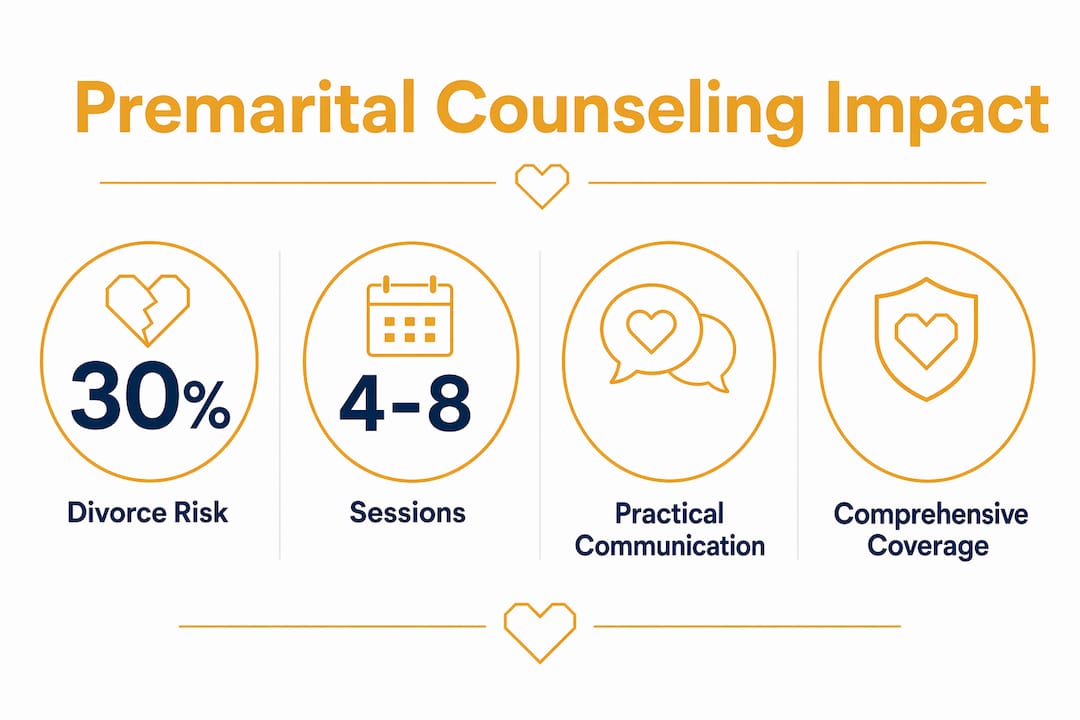
The evidence on premarital counseling success rates is consistent and compelling. Couples who complete a structured premarital program experience a 30 to 31% lower divorce risk compared to couples who skip it. That is not a marginal improvement. It represents a significant shift in the statistical likelihood that a marriage will survive.
Beyond divorce prevention, couples report higher marital satisfaction and better long-term communication quality after completing premarital counseling. Satisfaction is not just about happiness. It reflects how well partners feel understood, respected, and connected over time. Counseling builds the relational infrastructure that sustains those feelings through job changes, health challenges, parenting stress, and financial pressure.
One of the less-discussed benefits is behavioral. Couples who complete premarital counseling are significantly more likely to seek professional help early when problems arise during marriage, rather than waiting until the relationship is in crisis. This matters because early intervention is far more effective than late-stage repair. The average couple waits six years after problems begin before seeking therapy. Premarital counseling shortens that gap.
“Premarital counseling is the most influential factor for sustainable marital success.” — Expert consensus across therapeutic communities and longitudinal research, per Premarital Education and Later Relationship Help-seeking
The preventative maintenance mindset is what separates couples who thrive from couples who merely survive. Counseling does not promise a conflict-free marriage. It builds the skills to manage conflict constructively so that durable relationship skills carry couples through the inevitable hard seasons.
How to get the most out of premarital counseling
Knowing the benefits of premarital counseling is one thing. Showing up prepared to do the actual work is another. The couples who gain the most from counseling treat it as skill development, not a formality before the wedding.
Here is how to approach it effectively:
-
Choose the right counselor. Look for a licensed marriage and family therapist, licensed professional counselor, or licensed clinical social worker with specific experience in premarital work. Your values, communication style, and cultural background matter. A counselor who does not understand your context will miss important dynamics.
-
Enter with openness, not a performance. Counseling is not a test you pass by saying the right things. The couples who benefit most are the ones willing to be honest about fears, past wounds, and unspoken expectations. If you are managing your image in the room, you are wasting the session.
-
Treat it as ongoing development. One of the most common mistakes couples make is viewing premarital counseling as a box to check. The emotional regulation skills you develop in counseling require practice after the sessions end. Build habits around the tools you learn.
-
Stay curious about your partner. Counseling often surfaces things you did not know about the person you plan to marry. That is not a red flag. That is the process working. Approach new information with curiosity rather than defensiveness.
-
Use counseling to learn your conflict patterns. Most couples enter marriage with no awareness of how they fight. Understanding your own patterns, and your partner’s, is one of the most protective things you can do before saying “I do.” You can also explore how to diffuse conflict as a complementary resource.
Pro Tip: Before your first session, each partner should independently write down three topics they feel anxious about discussing. Bring those lists to the counselor. The overlap and the gaps will tell you exactly where the work needs to happen.
Key takeaways
Premarital counseling improves marriage outcomes because it builds communication skills, surfaces critical expectations, and reduces divorce risk by 30 to 31% before the pressures of married life begin.
| Point | Details |
|---|---|
| Divorce risk reduction | Couples who complete premarital counseling are 30 to 31% less likely to divorce. |
| Communication skills | Counseling teaches conflict repair, emotional regulation, and active listening before bad habits form. |
| Critical topic coverage | Finances, family roles, parenting, and intimacy are addressed before they become sources of resentment. |
| Early help-seeking | Counseled couples seek professional support sooner during marriage, improving intervention outcomes. |
| Preventative mindset | Counseling builds durable relationship skills, not a promise of conflict-free marriage. |
What I’ve seen after years of working with couples
I have sat across from hundreds of couples at every stage of their relationship, and the pattern is consistent. The couples who did premarital counseling carry themselves differently in hard moments. They have a shared vocabulary for conflict. They know how to call a timeout without it feeling like abandonment. They know how to come back to a conversation after cooling down without pretending nothing happened.
The couples who skipped it often arrive in my office years later fighting the same three arguments on a loop, with no framework for breaking the cycle. The content of the argument changes. The structure never does. That is what unaddressed conflict patterns look like after a decade.
What I want engaged couples to understand is that premarital counseling is not a signal that something is wrong. It is a signal that you take the marriage seriously enough to prepare for it. You would not start a business without a plan. You would not train for a marathon without a coach. Marriage deserves the same intentionality.
The couples I have seen build the strongest marriages are not the ones who never fight. They are the ones who learned early how to fight well, repair quickly, and stay emotionally connected through difficulty. Premarital counseling is where that foundation gets built. If you are engaged and wondering whether it is worth the time and investment, the research and my own experience give you the same answer: it is.
— Carlos
Build on your counseling foundation with Couplesfightschool
Premarital counseling gives you the foundation. What you do with it after the sessions end determines how strong your marriage becomes. Couplesfightschool, founded by licensed mental health professionals Carlos Todd and Natasha Pemberton-Todd, offers online coaching for couples designed to extend and deepen the skills you build in premarital counseling. The Fight Less Love More course gives you a structured, psychology-backed system for managing conflict and strengthening emotional connection at every stage of your relationship. Whether you are preparing for marriage or reinforcing what you learned in counseling, Couplesfightschool has the tools to help you build something that lasts.
FAQ
What is premarital counseling?
Premarital counseling is a structured, therapist-guided process that helps engaged couples develop communication skills, align on expectations, and build conflict resolution tools before marriage. It is typically conducted by a licensed marriage and family therapist or licensed professional counselor.
Does premarital counseling actually reduce divorce rates?
Yes. Couples who complete premarital counseling experience a 30 to 31% lower divorce risk compared to couples who do not. Multiple studies confirm this reduction is linked to improved communication and conflict management skills.
How many sessions does premarital counseling take?
Most premarital counseling programs run between four and eight sessions, though the number varies by counselor and the couple’s specific needs. Some structured programs like PREP (Prevention and Relationship Enhancement Program) follow a fixed curriculum across multiple sessions.
What topics are covered in premarital counseling?
Premarital counseling typically covers finances, family roles, parenting expectations, intimacy, communication styles, and conflict patterns. The goal is to surface and align on major life decisions before marriage creates urgency around them.
Why do couples seek premarital counseling?
Why couples seek premarital counseling varies, but the most common reasons are wanting to improve communication, address known areas of tension, and build a strong relational foundation before marriage. Research confirms that couples who complete counseling also report higher marital satisfaction over the long term.
Recommended