
Walking on Eggshells? Start With Safety, Then Use Scripts

Walking on eggshells in a relationship means living in constant alertness and changing your behavior to avoid a partner’s emotional volatility. If you feel unsafe, start with safety planning and contact The Hotline before anything else. If not, begin with the emotional-regulation steps and negotiated time-outs below, which let you pause tense moments without fighting.
TL;DR:
- A stressful week differs from months of editing yourself; persistent silence, preemptive apologies, and monitoring a partner’s moods point to a lasting pattern.
- If you live with threats or coercive control, plan exit routes and a code word; leaving can raise injury risk, so contact The Hotline first.
- Agree on a time out signal and separation period while calm, then return when promised; stop testing boundaries if your partner punishes them.
- Couples therapy fits only when both partners are safe and willing; with violence or coercive control, seek individual safety services first.
Table of Contents
- How do you know you are walking on eggshells?
- Why does the eggshell dynamic form and keep going?
- When does walking on eggshells become abuse?
- What can you do today to feel emotionally safer?
- How do you set boundaries and change the pattern over time?
- When should you get outside help?
- A clinician’s note on realistic expectations
- Which Couples Fight School options fit your situation?
- FAQ
- Sources
How do you know you are walking on eggshells?
Everyone is careful around a partner sometimes. The pattern becomes a problem when caution is constant and costs you your authenticity. Common signs include:
- Constant worry about how your partner will react to ordinary news, like a change of plans.
- Staying silent about things that bother you because speaking up never seems worth the fallout.
- Apologizing preemptively, saying sorry for things you have not done wrong.
- Anticipating anger by reading their tone, footsteps or the way they close a door.
- Avoiding certain topics, such as money, family or the future.
- Hypervigilance around moods, where you rehearse sentences before saying them and plan your day around their temperament.
A bad week after a stressful job loss is different from months of editing yourself. If you rarely feel free to be yourself at home, that is the pattern this article describes.
Why does the eggshell dynamic form and keep going?
Walking on eggshells is often a survival-based response to emotional volatility. In its systemic form, one partner becomes responsible for managing the other’s emotions to prevent outbursts. Power and fear sit at the center, and hypervigilance keeps you scanning for threats.
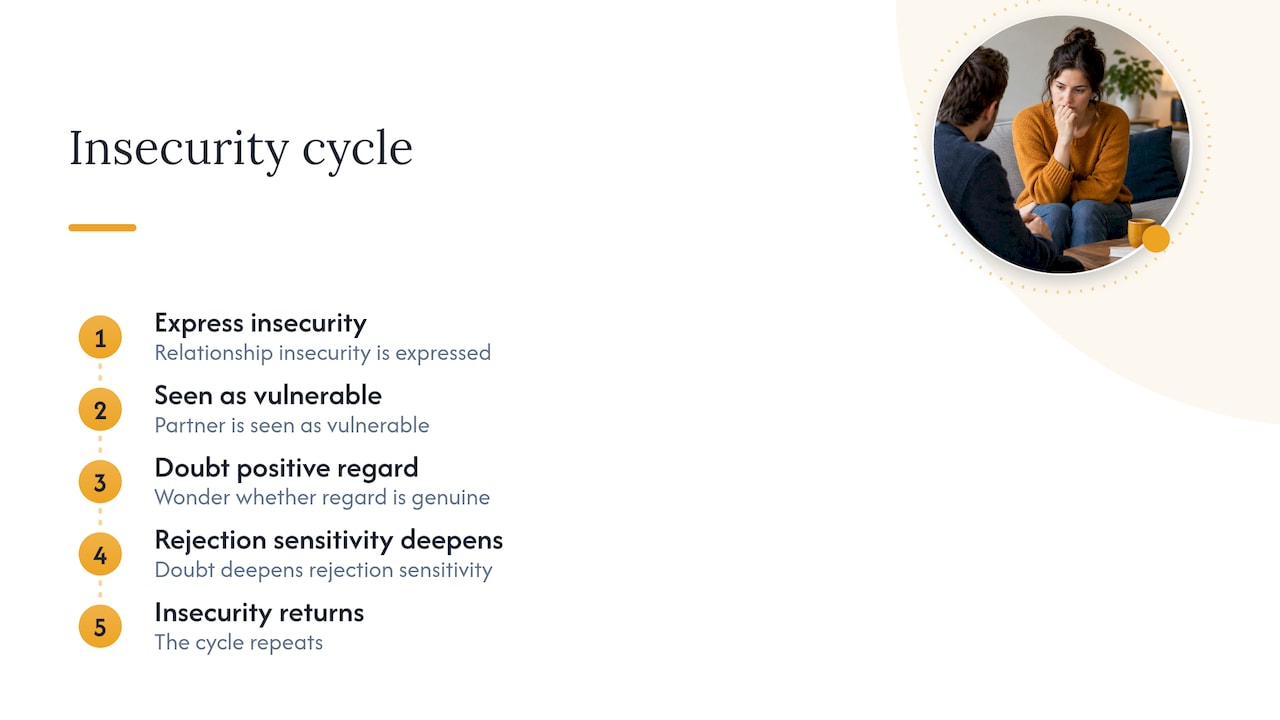
Insecurity can feed the loop from both sides. Researchers describe a self-perpetuating cycle in which expressing relationship insecurity leads a partner to be seen as vulnerable, which breeds doubt about whether positive regard is genuine. That doubt deepens rejection sensitivity, and the cycle repeats.
Mood disorders, personality factors or substance use can raise volatility and make change harder. For a deeper primer on how attachment styles shape these patterns, this partner article on attachment and toxic relationship patterns is a useful read. Our own overview of what emotional safety means covers the other side of the coin.
When does walking on eggshells become abuse?
Red flags include threats, coercive control, sexual coercion and physical intimidation. The CDC’s national survey brief documents that psychological aggression and coercive control are forms of intimate partner violence and that IPV affects millions of people across the country.
The CDC’s intimate partner violence data brief treats psychological aggression and coercive control as IPV, not as ordinary conflict. If your fear is about your partner’s behavior, take it seriously.
The Hotline recommends a living safety plan if you live with a partner who makes you feel this way. Steps to consider:
- Identify safe areas of your home, ideally with an exit path, and avoid rooms with only one way out.
- Set up a code word with trusted friends or family that means you need urgent help.
- Document incidents in a place your partner cannot access.
- Contact The Hotline or a local service to build the plan with a trained advocate.
Escalation is real: abusers may test and increase tactics, and many survivors need several attempts to leave. The time of leaving is often when the risk of serious injury rises, so plan carefully and document everything.
What can you do today to feel emotionally safer?
You cannot control your partner, but you can lower your own anxiety and build options. The Hotline’s emotional safety planning suggests a private safe place, supportive people, small achievable steps and self-care. Try these:
- Ground yourself with slow breathing: in and out slowly.
- Take brief pauses before replying to a heated message.
- Claim a private safe space, such as a quiet room or a particular chair, for emotional regulation.
- Use a negotiated time-out, where you agree in advance on a nonverbal signal and a set separation time before returning to the conversation.
- Keep a short checklist of trusted contacts, inconspicuous items to carry and simple documentation.
Pro Tip: Agree on your time-out signal during a calm moment, never mid-argument.
Our guides to emotional regulation and quick de-escalation tools walk through these skills in detail.
How do you set boundaries and change the pattern over time?
Small, repeatable experiments work better than one big confrontation. Try this sequence:
- Start with an I-statement. Say “I feel tense when voices get raised, and I want us to talk about this calmly” instead of “You always yell.”
- Propose the time-out. Try: “I need a short break. I will come back and we will finish this.”
- Return on time. Come back when you said you would, and start with one thing you heard from your partner.
- Run micro-experiments. Share one small honest opinion a day and note whether the reaction is safe.
- Escalate safely if boundaries are refused. If your partner mocks, punishes or ignores a boundary, stop testing and return to your safety plan and outside support.
Our therapist scripts for time-outs give word-for-word versions.
When should you get outside help?
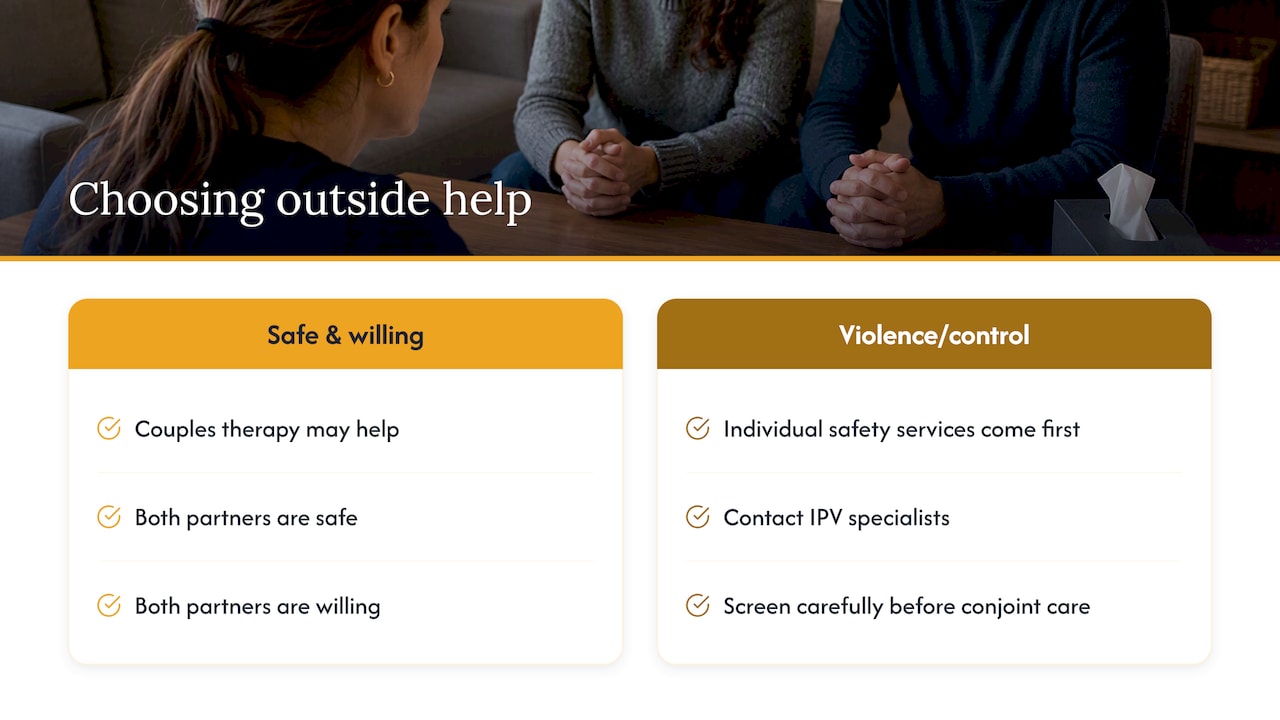
Couples therapy can help when both partners are safe and willing. When there is violence or coercive control, individual safety services and IPV specialists come first. The American Psychological Association notes that Domestic Violence–Focused Couples Therapy prioritizes safety planning, mindfulness-based emotional regulation and structured communication, and that conjoint treatment may be contraindicated until violence ends and safety is established. That makes careful screening essential.
If you are unsure, contact The Hotline for safety planning. A discreet first step is searching for a therapist or advocate on a device your partner cannot see. Our psychological safety plan offers a structured path once you are safe.
A clinician’s note on realistic expectations
Your anxiety makes sense, and it does not mean you are overreacting. Change is possible but often slow, and you cannot force a partner to change. Focus on safety first, then on small, testable steps you control. We built our tools and coaching to help you practice these skills with support.
— Carlos
Which Couples Fight School options fit your situation?
If you are safe and want to practice, we offer formats for different needs:
- Workbooks, like our couples therapy workbook, for self-guided practice.
- Self-paced courses that teach time-outs, boundary scripts and emotional regulation, with prices listed in our shop.
- Coaching, including online couples coaching, for hands-on support. Current prices are on our site.

If your situation feels volatile, use emergency resources first, then come back when you are ready to practice.
This article is general information, not a substitute for advice from a qualified doctor. Consult a qualified healthcare professional about your own circumstances before acting on anything here.
FAQ
How do you stop walking on eggshells in a relationship?
Start by building your own safety and regulation skills: grounding, brief pauses and a private space. Then introduce boundaries with I-statements and a negotiated time-out. If your partner punishes boundaries, prioritize safety planning.
Is walking on eggshells a sign of a toxic relationship?
It can be. Chronic fear of a partner’s reaction is a common feature of coercive and volatile dynamics, though stress or insecurity can also play a part. The key question is whether you feel safe being yourself.
How do you leave a toxic relationship when you live together?
Plan before you act. The Hotline advises a living safety plan with exit routes and a code word, and warns that leaving is often the riskiest time. Contact them for tailored help.
How do you approach your partner about an issue?
Choose a calm moment, use an I-statement and keep it to one topic. Agree on a time-out signal first so either of you can pause. If raising issues feels unsafe, talk with a professional before trying.
Sources
- Safety Planning While Living with an Abusive Partner – The Hotline
- Apa
- Pubmed
- The National Intimate Partner and Sexual Violence Survey: 2023/2024 Intimate Partner Violence Data Brief
Recommended
- 6 Research Backed Conflict De-escalation Techniques with Ready Scripts
- 5 Therapist Backed Couples Conversation Scripts to Use Tonight
- Build Emotional Safety With 9 Behaviors to Practice Tonight
- Relationship Boundary Examples: 30 Scripts to Set Healthy Limits